
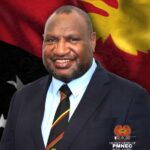
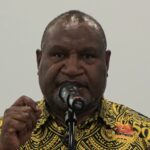
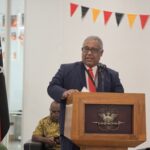
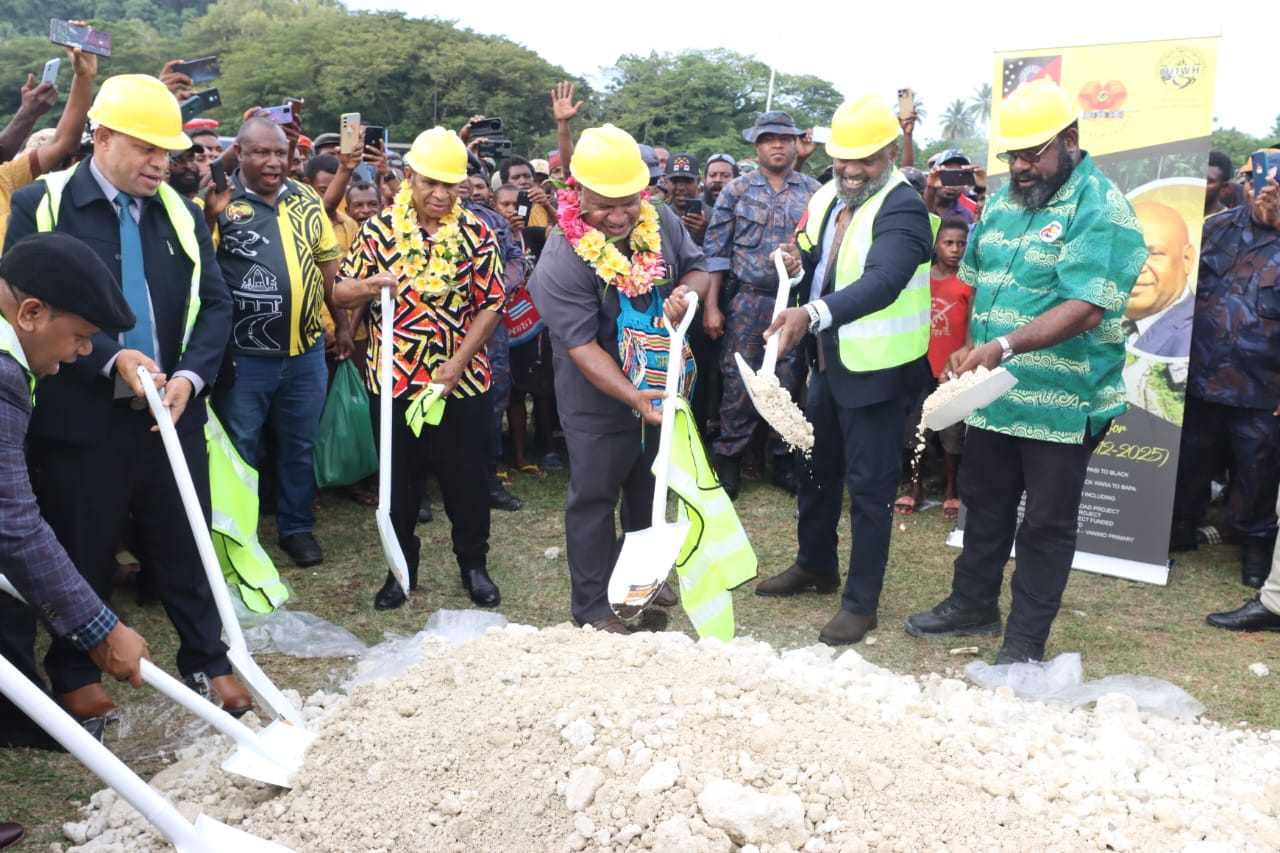

Prime Minister Hon. James Marape has described the Connect PNG Programme as the most significant national infrastructure initiative since Independence, saying the launch and commissioning of major road infrastructure projects across the Greater Sepik Region marks another milestone in the Government’s commitment to connect rural communities, unlock economic opportunities and ensure no Papua New Guinean is left behind.
Speaking at the official launching and commissioning of major road infrastructure projects for the Greater Sepik Region in the Momase Corridor under the Connect PNG Programme in Vanimo today, Prime Minister Marape said the Government was not simply building roads, but laying the foundation for Papua New Guinea’s next 50 years of economic growth and national development.
He said Connect PNG was creating permanent economic corridors that would connect people to markets, schools, health services, government services and investment opportunities while bringing rural communities into the mainstream economy.
“Our vision is clear. No part of Papua New Guinea must remain isolated,” Prime Minister Marape said.
“We are building roads because roads bring development. Roads bring education, health services, trade, investment and jobs. Roads unite our people and strengthen our nation.”
The Prime Minister said more than 85 per cent of Papua New Guinea’s population lived in rural areas and the Government had a responsibility to ensure those communities enjoyed the same opportunities as people living in towns and cities.
“For too long, development has been concentrated around urban centres while many rural communities remained disconnected. Connect PNG is changing that.”
Prime Minister Marape said the Government’s long-term vision was to create a national road network that would unlock agriculture, forestry, fisheries, tourism, manufacturing and small and medium enterprise development throughout the country.
He said improved road access would allow farmers to transport their produce more efficiently, encourage private investment and reduce the cost of doing business.
“When roads arrive, opportunities arrive,” he said.“Coffee reaches export markets. Cocoa reaches buyers. Fresh food reaches urban centres. Tourists can travel. Businesses invest. Communities prosper.”
Prime Minister Marape said roads should not be viewed as political projects but as long-term economic infrastructure that would continue generating benefits for generations.
“Every kina invested in roads returns many more kina in economic activity. This is not expenditure; this is investment in Papua New Guinea’s future.”
The Prime Minister said Papua New Guinea possessed abundant natural resources and enormous economic potential, but much of that potential remained untapped because of inadequate infrastructure.
“Our fertile land, forests, fisheries, tourism attractions and natural resources cannot fully contribute to the national economy if they remain inaccessible.”
Prime Minister Marape thanked Sandaun Governor Hon. Tony Wouwou for working closely with the National Government to advance development in the province.
He also commended Vanimo-Green MP and Minister for Tourism, Arts and Culture Hon. Belden Namah for his long service to the people of Sandaun and Papua New Guinea, describing him as one of the country’s most experienced and respected political leaders.
The Prime Minister acknowledged the leadership of Works and Highways Minister Hon. Peter Tsiamalili Jr, Nuku MP and Public Service Minister Hon. Joe Sungi, Aitape-Lumi MP Hon. Anderson Mise, Department of Works and Highways Secretary Gibson Holemba, the Sandaun Provincial Administration, provincial ministers, council presidents and public servants whose combined efforts were delivering major infrastructure projects throughout the province.
Prime Minister Marape said the Greater Sepik Region was strategically positioned to become one of Papua New Guinea’s most important economic growth corridors because of its agricultural potential, forestry resources, fisheries, tourism attractions and proximity to Indonesia.
He said improved transport infrastructure, together with the proposed Vanimo Special Economic Zone, would create new opportunities for trade, downstream processing, manufacturing and investment. However, he stressed that infrastructure alone would not create prosperity.
“A free trade zone without production achieves nothing,” he said.
“Our people must produce coffee, cocoa, oil palm, livestock, fisheries products and manufactured goods. Investors come where there is production and reliable infrastructure.”
He encouraged landowners to invest in commercial agriculture, livestock, downstream timber processing, tourism enterprises and other productive industries that would generate employment and create wealth within the province.
Prime Minister Marape said Connect PNG had become a long-term national commitment backed by legislation that commits future governments to continue funding the programme beyond the 2027 National General Election.
“This programme belongs to Papua New Guinea, not to one political party,” he said. “Whoever forms government in the future must continue this work because the vision has been set.”
Comparing Papua New Guinea with countries such as Japan and New Zealand, the Prime Minister said the country still had a significant infrastructure gap despite its vast land area of approximately 460,000 square kilometres.
He said Papua New Guinea had historically developed only about 10,000 kilometres of roads, but the Government had significantly expanded the network since taking office and remained committed to delivering more than 20,000 kilometres of connected roads over the next two decades.
“This is how we open up our country and create the backbone of our economy.”
Reflecting on his own upbringing in one of Papua New Guinea’s remote rural communities, Prime Minister Marape said his childhood experiences continued to shape his determination to ensure no citizen was disadvantaged because of where they were born.
He recalled a tragic experience in 1978 while living in the remote Oksapmin area, when his mother lost a baby during childbirth because there was no road access and no timely medical assistance.
“I know what it means to grow up without roads and basic services,” he said.
“As a young boy in remote Oksapmin, I witnessed my mother lose her son while giving birth because help could not reach us in time. That experience has stayed with me throughout my life and reminds me that remoteness should never determine whether our people live or die.”
“That experience drives my commitment to ensure every province, every district and every community has the opportunity to participate in our country’s development.”
Prime Minister Marape called on the people of Sandaun to maintain peace, educate their children and take advantage of the opportunities that improved infrastructure would create.
He urged local communities to embrace agriculture, tourism, forestry, fisheries and small business development, saying roads alone could not create prosperity without productive people.
“The Government will continue building the roads, but our people must build the businesses, farms and industries that will travel on those roads,” he said.
Prime Minister Marape said Connect PNG represented a transformational national investment that would continue opening up Papua New Guinea long after the country’s 50th anniversary of Independence.
“We are connecting our people, strengthening our economy and building a better future for the next generation.
“We will continue, one kilometre at a time, until every part of Papua New Guinea is connected and no citizen is left behind.”