

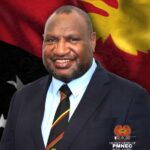

Prime Minister Hon. James Marape has announced that tomorrow’s Government House announcements will include one of the most significant restructures of Papua New Guinea’s central government machinery since his Government took office, with major changes to ministerial portfolios, senior departmental leadership, and the functions of key economic agencies.
Prime Minister Marape said the reforms were aimed at making government faster, more accountable and better focused on delivering results for the people.
“Tomorrow’s announcements are not simply about a Cabinet reshuffle or a few ministerial appointments,” Prime Minister Marape said.
“We are undertaking a broader restructuring of government. This includes functional realignments across central agencies, ministerial portfolio changes, adjustments within the State-Owned Enterprise sector, and changes to departmental leadership where performance has fallen short of Government’s expectations.”
The Prime Minister confirmed that a number of departmental heads who had failed to meet Government expectations had been asked to vacate their positions.
“We appoint people to deliver outcomes. Where departments have consistently failed to perform, we have taken the necessary decisions to bring in new leadership.”
He said several ministers would also be assigned new portfolios to better align experience and capability with Government priorities during the remaining months of the current parliamentary term.
Major Reform Of Treasury, Finance And Planning
Prime Minister Marape said one of the centrepieces of the reforms was a comprehensive realignment of the responsibilities of the Departments of Treasury, Finance and National Planning.
He said the current overlap between the three agencies had created unnecessary duplication, blurred accountability and diverted attention from their core responsibilities. “For too long Treasury, Finance and Planning have all been involved in processing payments and issuing warrants. Everyone has been printing cheques while nobody has been concentrating on the bigger picture of managing our economy.”
Under the reforms:
• The Department of Finance will become the Government’s sole authority for processing payments, issuing cheques and managing warrants under the Public Finance Management Act. As the Section
32 authority, Finance will become the single gateway for government payments and cash management.
• The Department of Treasury will relinquish its warranting functions and instead concentrate on its core responsibilities of revenue policy, revenue modelling, tax strategy, macroeconomic management, fiscal sustainability and growing the national economy.
• The Department of National Planning will cease involvement in payment processing and instead be refocused on its primary mandate of national development planning, ensuring the Medium-Term Development Plan IV, annual budgets and sector plans remain aligned with Vision 2050 and the
Government’s long-term development priorities.
“We want Planning planning, Treasury managing the economy, and Finance managing government
finances. Each department must focus on what it was created to do.”
The Prime Minister said all government payments would continue to flow through Finance, while departments, provinces and districts would be responsible for implementing approved programs.
Stronger Monitoring Of Government Spending
Prime Minister Marape also announced an expanded role for the National Monitoring and Coordination Authority (NMCA).
Rather than duplicating the work of Treasury or Planning, NMCA will focus on monitoring how public funds are actually spent after they are released.
“Their responsibility is to follow the money trail,” Prime Minister Marape said.
“They will verify that government funding reaches its intended destination and delivers the outcomes approved by Government.”
He said NMCA would engage independent accounting, engineering and technical firms where necessary to verify the quality and effectiveness of public expenditure.
“This is about ensuring every kina appropriated by Parliament delivers value for our people.”
Reforming State-Owned Enterprise Governance
The Prime Minister also confirmed major structural reforms to the governance of State-Owned Enterprises. He said Kumul Consolidated Holdings Limited (KCH) would continue as the State’s holding company, but unnecessary layers of bureaucracy would be removed.
“KCH will continue as the parent holding company, but our State-Owned Enterprises will have clearer reporting lines to the responsible minister and their own boards.”
“The holding company should provide strategic oversight, not create unnecessary administrative bottlenecks.”
He added that some State-Owned Enterprises may in future report directly to other responsible ministers where appropriate, improving efficiency and speeding up decision-making.
Building A Better Government
Prime Minister Marape said the reforms were designed not only to improve performance during the remaining months of the current Government, but to leave a stronger institutional framework for future administrations.
“We are repositioning the central agencies so they focus on strategy, policy, economic management and oversight, instead of being consumed by administrative processes.”
“My objective is that whoever forms government after the 2027 National General Election inherits a public service structure that is more efficient, more accountable and better equipped to support departments, provinces and districts in delivering services.”
The Prime Minister said full details of the Cabinet reshuffle, ministerial portfolio changes, departmental leadership changes and agency restructures would be announced following formal proceedings at Government House tomorrow.