
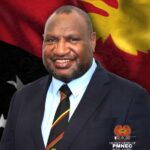
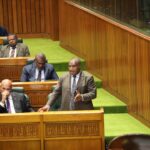
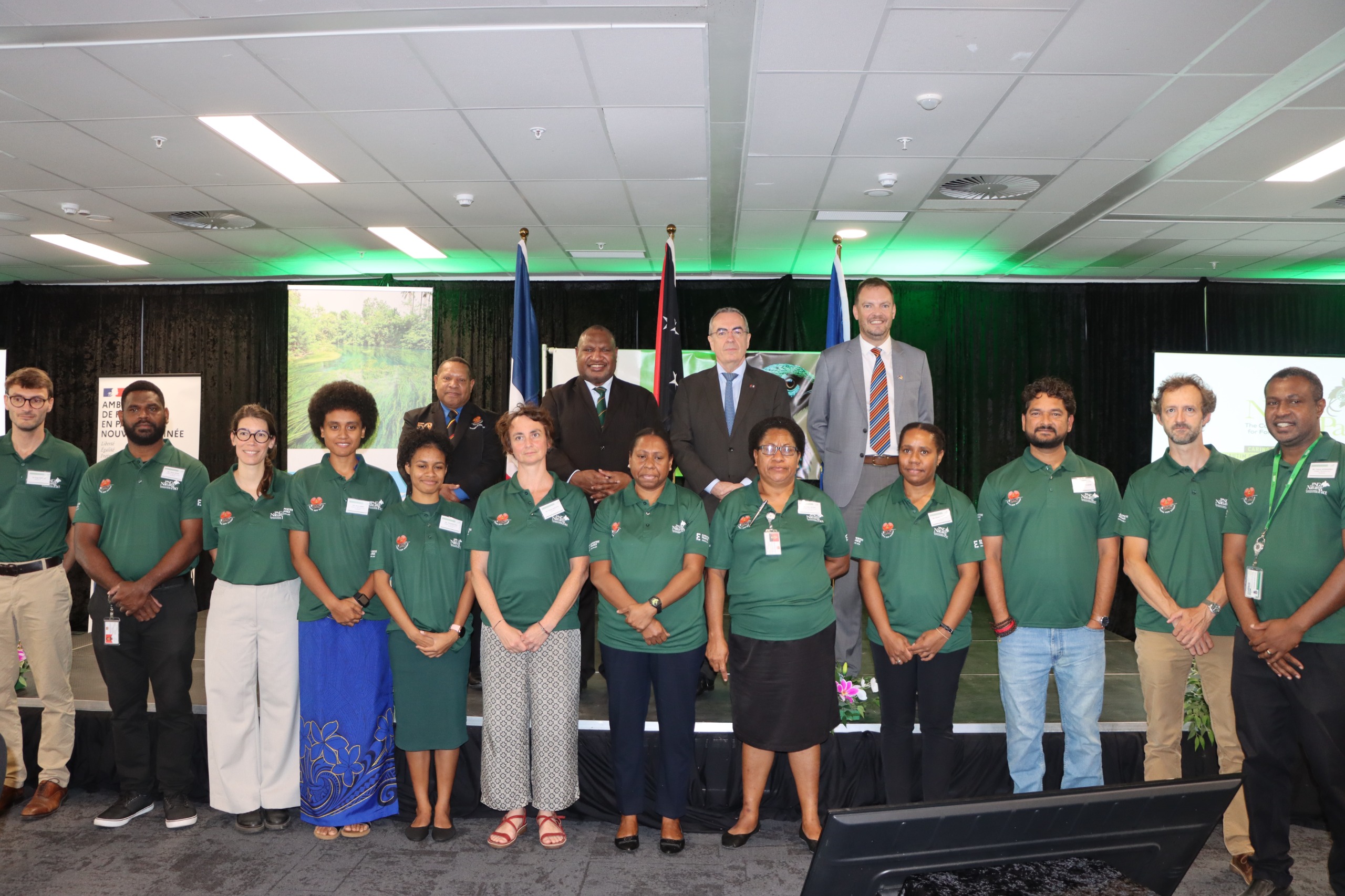

Prime Minister Hon. James Marape today launched the Inaugural PNG Nature Pact Workshop at APEC Haus in Port Moresby, calling for stronger global partnerships to protect forests, oceans and biodiversity while creating sustainable economic opportunities for Papua New Guinea’s customary landowners and local communities.
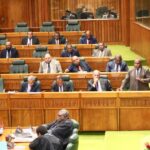
The workshop was attended by French Ambassador to Papua New Guinea H.E. Pierre Fournier, European Union Head of Cooperation Hans Lambrecht, senior government officials, provincial representatives, development partners, conservation organisations and international agencies involved in climate, forestry and biodiversity programmes.
Delivering the keynote address, Prime Minister Marape said Papua New Guinea was uniquely positioned as custodian of some of the world’s largest remaining tropical forests and one of the richest concentrations of biodiversity on Earth, making conservation a national responsibility with global significance.
“Our forests produce oxygen, absorb carbon emissions and sustain life. They are among the world’s greatest natural assets and we have a responsibility to protect them while ensuring our people benefit from sustainable development.”
Prime Minister Marape thanked the European Union and the Government of France for supporting Papua New Guinea’s conservation agenda through the Forest, Climate Change and Biodiversity Programme, the Solwara, Graun na Laip Bilong Ol Pipol Project and the PNG Nature Pact initiative.
He acknowledged the European Union’s investment of €54.7 million (approximately K257 million), France’s contribution of €20 million (approximately K94 million) and additional seed funding of €9 million (approximately K42 million) towards conservation and biodiversity initiatives, describing the support as one of the largest conservation and climate partnerships ever assembled for Papua New Guinea.
“This partnership demonstrates that our international partners recognise the importance of Papua New Guinea’s forests, oceans and biodiversity to the future of our planet.
“They are supporting us not only as development partners but as partners in protecting one of the world’s most important remaining forest and ocean ecosystems.”
Prime Minister Marape said conservation efforts must recognise the realities faced by customary landowners, who often turn to logging and resource extraction in pursuit of better services and economic opportunities.
“The forests belong to our people. They have legitimate aspirations for development. Our challenge is to create alternative revenue streams that allow forests to remain standing while still improving livelihoods.”
The Prime Minister announced that responsibility for coordinating the Country Package initiative had been transferred to the Department of Prime Minister and NEC to underscore its national importance and ensure stronger coordination across government agencies.
He also called on the National Forest Authority, the Conservation and Environment Protection Authority, provincial governments and local-level governments to take a more active role in identifying, mapping and protecting natural resources while ensuring local communities benefit from conservation programmes.
Prime Minister Marape warned against poorly regulated carbon trading activities and stressed the need for transparency, integrity and tangible benefits for customary landowners.
As part of the Government’s long-term conservation strategy, Prime Minister Marape reiterated Papua New Guinea’s commitment to protecting the country’s remaining intact forests.
“Our policy objective is to conserve as much as 70 per cent of Papua New Guinea’s remaining virgin forests while ensuring sustainable use of areas designated for development.”
The Prime Minister said the Government’s vision was to create sustainable income streams for landowners through conservation rather than relying solely on one-off returns from logging.
“Our trees are the homes of our biodiversity. While people often place value on gold, oil, gas and timber, the true value of our forests extends far beyond what can be harvested today.
“When a tree is cut down, the benefit may be realised only once. When a forest is preserved and managed sustainably, it can continue providing environmental, economic and social benefits for generations.”
Prime Minister Marape cited the Managalas conservation initiative in Oro Province as an example of the type of approach the Government wanted to promote, where communities could generate sustainable income while preserving forests and biodiversity.
He encouraged provincial governments and forest managers to identify remaining untouched forest areas and develop conservation partnerships that would allow landowners to benefit from keeping forests intact.
The Prime Minister also highlighted opportunities for coastal and island provinces to participate through the protection of mangroves and marine ecosystems, noting that mangrove forests are among the world’s most important biodiversity and carbon-rich environments.
Prime Minister Marape said Papua New Guinea’s forests and oceans were among the country’s greatest natural assets, supporting extraordinary biodiversity and providing nature-based solutions to climate change through carbon storage, environmental protection and sustainable livelihoods.
He said protecting forest and ocean ecosystems was not only important for Papua New Guinea but also for global efforts to combat climate change and biodiversity loss.
Prime Minister Marape noted that Papua New Guinea contains approximately six per cent of the world’s biodiversity and some of the largest remaining tropical forests in the Asia-Pacific region.
The workshop brought together representatives from government agencies, provincial administrations, development partners, conservation organisations and international institutions to discuss implementation of the PNG Nature Pact and Country Package initiative.
The initiative has emerged from several years of collaboration between Papua New Guinea, France, the European Union and other development partners and aims to coordinate conservation financing, climate action, biodiversity protection and sustainable development programmes to maximise benefits for communities while safeguarding critical ecosystems.
The workshop was held a day after Papua New Guinea and France marked the 50th anniversary of diplomatic relations and followed Prime Minister Marape’s official visit to France last month, during which environmental cooperation and the PNG Nature Pact featured prominently in discussions with French President Emmanuel Macron.
Prime Minister Marape said Papua New Guinea’s partnership with France had grown significantly in recent years, spanning conservation, climate action, sustainable development, infrastructure, security and economic cooperation. He welcomed France’s strong support for Papua New Guinea’s efforts to protect its forests and biodiversity, noting that President Macron had demonstrated a keen interest in strengthening cooperation with Papua New Guinea and the wider Pacific region.
International partners reaffirmed their support for Papua New Guinea’s conservation agenda through ongoing investments in forest conservation, biodiversity protection, climate resilience, sustainable development and capacity-building initiatives, with France and the European Union among Papua New Guinea’s key partners in advancing the PNG Nature Pact.
Prime Minister Marape said the growing support from international partners demonstrated global recognition of Papua New Guinea’s importance in addressing climate change, biodiversity loss and environmental degradation.
“Papua New Guinea is championing a nature-based solution to climate change. We are protecting forests, oceans and biodiversity not only for ourselves but for all humanity.
“I invite the world to join us. Together we can keep our planet habitable, sustainable and prosperous for future generations.”
Prime Minister Marape said Papua New Guinea was ready to lead by example but could not do so alone.
“We are custodians of some of the world’s last great forests, extensive ocean ecosystems and some of the richest biodiversity on Earth. By working together, we can ensure these natural assets continue to sustain our people and contribute to the wellbeing of the planet for generations to come.”