
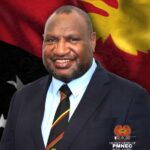

Prime Minister Hon. James Marape has congratulated Paradise Company Limited on the opening of its upgraded Queen Emma Chocolate Factory, hailing the 100 per cent Papua New Guinean-owned company as a model for turning the Government’s downstream-processing policy into economic reality.
Prime Minister Marape officially opened the upgraded factory, which has increased chocolate processing capacity twenty-fold, from 10 tonnes to 200 tonnes a month.
“I am privileged to witness a historic new chapter in the downstream processing of Papua New Guinea cocoa into finished products by Paradise Foods,” Prime Minister Marape said.
“I commend this 100 per cent Papua New Guinean-owned company for converting our Government’s policy intentions into reality.
“We now have a modern cocoa-processing facility that adds value to our cocoa here in Papua New Guinea, creates more employment for our people and positions us to sell finished PNG products into the biggest markets of the world.”
The K18.6 million project comprises K11.5 million provided by the European Union through the EU-STREIT PNG Programme with the Food and Agriculture Organisation (FAO), matched by K7.1 million from Paradise.
Prime Minister Marape said the investment was exactly the type of downstream processing his Government had been advocating as part of its policy to move PNG away from exporting raw commodities towards producing higher-value finished products.
“For too long, we have grown cocoa in our villages, exported the raw beans and allowed much of the value to be added overseas,” he said.
“Paradise Foods is showing us that we can grow it here, process it here, manufacture it here, package it here and sell the finished product to the world.
“The global market for cocoa and chocolate products is enormous. Europe, North America and Asia contain millions of consumers, and more than US$100 billion is spent annually on chocolate products globally.
“Papua New Guinea produces some of the world’s finest cocoa. We must position ourselves to capture a much greater share of this global industry instead of remaining primarily an exporter of raw cocoa beans.”
Prime Minister Marape said Paradise Foods was 100 per cent Papua New Guinean-owned, with its ownership ultimately representing the retirement savings of Papua New Guineans.
Nambawan Super and Comrade Trustees acquired the company from Arnott’s in 2007. Today, more than 99 per cent of Paradise’s workforce of over 1,200 people are Papua New Guineans.
“This is Papua New Guinean capital at work — employing Papua New Guineans, buying from Papua New Guinean farmers and manufacturing Papua New Guinean products,” Prime Minister Marape said.
“I commend Chairman Anthony Smaré, the board, management and staff of Paradise, as well as the European Union, FAO and all partners who have contributed towards making this investment possible.
“I also commend Paradise for having the confidence to invest in Papua New Guinea and in our people.”
Paradise, with the support of Nambawan Super, has invested more than K200 million over the past 12 years to expand production capacity across its ice cream, snacks, biscuits and culinary businesses.
Prime Minister Marape said the Government would work with Paradise Foods to ensure national policies on freight support, commodity price support and agriculture complemented the expansion of downstream processing.
“I pledge that our Government will work with Paradise Foods on how our freight support and price support policies can help our cocoa growers remain in cocoa production and get their produce economically to this factory,” he said.
“If we support our growers at the production end and connect them efficiently to processors such as Paradise Foods, we can ramp up production, increase exports and earn much more for our country.
“The factory cannot operate without cocoa, and the cocoa cannot come without our farmers. Our policies must therefore connect the farmer in the village right through to the factory and ultimately to the international consumer.”
As production expands, the factory is expected to require more than 2,000 tonnes of cocoa beans annually, representing more than K43 million flowing directly and reliably to more than 10,000 smallholder farming families across four provinces.
Prime Minister Marape said this demonstrated how downstream processing could directly improve livelihoods in rural communities.
“When our farmers have reliable markets and fair returns, they will remain on their land and continue producing,” he said.
“The benefits then multiply throughout the economy — farmers earn more, factories employ more Papua New Guineans, our superannuation funds grow, Government collects more revenue and the country earns more from exports.”
Prime Minister Marape also proposed that the Government explore a partnership with Nambawan Super to encourage cocoa growers and other farmers to build long-term savings from their agricultural income.
“I have proposed that Government work with Nambawan Super on a model where our growers can contribute some of their earnings into superannuation savings, with Government examining the possibility of matching those savings with State contributions,” he said.
“We must encourage our farmers not only to work and produce, but also to save for their future.
“A hardworking cocoa farmer should have the opportunity to build retirement savings just like a teacher, nurse, police officer or other salaried worker.
“Agriculture must become a pathway not only to income today, but also to financial security tomorrow.”
Prime Minister Marape said the upgraded facility demonstrated the substantial value that could be retained within PNG through local processing.
Cocoa exported raw at around K25 per kilogram can be transformed locally into cocoa butter, cocoa mass, cocoa liquor and chocolate products valued at around K55 to K60 per kilogram — representing significantly more value retained within Papua New Guinea.
“This is what economic independence looks like in practical terms,” Prime Minister Marape said.
“We must stop being satisfied with exporting raw materials and buying back finished products at much higher prices. We must increasingly become a country that produces, processes, manufactures and exports.
“This is what we mean by taking back our economy — ensuring that more of the value created from our natural resources remains here with our people.”
Prime Minister Marape also welcomed Paradise’s longer-term ambition to establish a large-scale, state-of-the- art chocolate processing plant in Lae capable of producing up to 1,000 tonnes of processed cocoa and chocolate per month, with the potential to bring K500 million in export revenue into PNG.
“I want Queen Emma chocolate and other quality PNG-made products to reach supermarkets and consumers throughout Australia, Asia, Europe, North America and other international markets,” Prime Minister Marape said.
“Every Queen Emma chocolate sold overseas represents PNG cocoa, a PNG farmer, PNG employment and PNG income.
“This factory is proof that Papua New Guineans can take ownership of the entire value chain — from the farmer growing cocoa in the village to the finished chocolate carrying the name of Papua New Guinea into the global marketplace.
“Congratulations to Paradise Foods, its shareholders, management and workers, our cocoa farmers, the European Union, FAO and all development partners involved.
“This is the direction Papua New Guinea must take: grow it in PNG, process it in PNG, make it in PNG and sell it to the world.”