
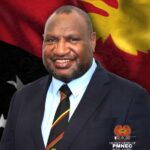


Prime Minister Hon. James Marape has warmly welcomed Australian Deputy Prime Minister and Minister for Defence Hon. Richard Marles to Papua New Guinea today, saying Relations between the two closest neighbours have reached unprecedented levels of trust, cooperation and practical engagement.
Prime Minister Marape said Mr Marles’ latest Visit comes at an important point in the Relationship, just over a month after the historic Papua New Guinea–Australia Mutual Defence Treaty — the Pukpuk Treaty — formally Entered Into Force on 8 July 2026, elevating the two countries from longstanding Defence Partners to formal Allies. He said one of the most significant opportunities flowing from the new Defence Relationship was the shared ambition to progressively open Pathways for up to 10,000 Papua New Guineans to serve in the Australian Defence Force, giving thousands of young Papua New Guineans access to employment, world- class military training and skills, as well as a potential pathway to Australian citizenship through ADF service. “I want to welcome Deputy Prime Minister of Australia, the Honourable Richard Marles, to Port Moresby and Papua New Guinea once again,” Prime Minister Marape said. “The Australia–Papua New Guinea Relationship could not be better. We have Ministers from both sides visiting each other, Deputy Prime Ministers visiting each other, and Prime Ministers visiting each other regularly. We are moving deeper into our Relationship.” Prime Minister Marape said the frequency of high-level Visits between the two Governments was itself an indication that the Relationship had moved beyond traditional Diplomacy into an increasingly integrated Partnership founded on geography, history, mutual respect, security and shared economic interests. He said the Relationship had achieved major advances in recent years under his Government and the Government of Australian Prime Minister Hon. Anthony Albanese, with Cooperation now spanning Defence and Security, Policing, Education, Infrastructure, Labour Mobility, Trade and Investment, Health, Disaster Response, Sport and stronger People-to-People connections. “The Relationship between Papua New Guinea and Australia is not simply a Relationship between two Governments. It is a Relationship between neighbours, families, businesses, Churches, communities, Defence Forces and generations of people whose histories have been intertwined,” Prime Minister Marape said. “Today we are taking that historical Relationship and building a modern Partnership suited for the next 50 years.”
PUKPUK TREATY TAKES RELATIONSHIP TO HISTORIC NEW LEVEL
Prime Minister Marape said one of the most significant achievements in the Bilateral Relationship had been the conclusion of the Pukpuk Treaty, which was signed by Prime Minister Marape and Prime Minister Albanese in Canberra (Australia) on 6 October 2025. The Treaty elevated the Relationship to a formal Alliance and was described by both Governments as historic: it is Papua New Guinea’s first Alliance with another country and Australia’s first new Alliance in more than 70 years. Following completion of domestic processes in both countries, Prime Ministers Marape and Albanese announced during their Annual Leaders’ Dialogue in Brisbane (Australia) on 8 July 2026 that the Treaty had formally Entered Into Force. Under the Treaty, Papua New Guinea and Australia recognise that an armed attack on either country would represent a danger to the Peace and Security of both, requiring them to consult, cooperate and, where necessary, act together to meet the common danger. The Treaty also establishes a framework for deeper Defence cooperation, capability development, interoperability and integration between the Papua New Guinea Defence Force and Australian Defence Force, while explicitly protecting the sovereignty of both nations and respecting the sovereignty, independence and territorial integrity of other countries in the Region. Prime Minister Marape said Deputy Prime Minister Marles, in his dual capacity as Australian Minister for Defence, had played a particularly important role in bringing the Defence Relationship to its present level. “Deputy Prime Minister Marles is no stranger to Papua New Guinea. He has had a connection with our country going back many years, and I have personally known him since my earlier years in Parliament,” Prime Minister Marape said. “His leadership in the Defence portfolio and the work he has undertaken with our Defence leadership have helped bring the Papua New Guinea Defence Force and Australian Defence Force closer together.”
10,000 PAPUA NEW GUINEANS — A MAJOR NEW OPPORTUNITY THROUGH THE ALLIANCE
Prime Minister Marape said the planned Pathway for up to 10,000 Papua New Guineans to serve in the Australian Defence Force represented one of the most significant new Employment, Training and Skills opportunities created through the deepening Relationship between PNG and Australia. He said this was not a small Programme involving only a handful of Papua New Guineans, but a long-term ambition capable of opening doors for thousands of young men and women who meet ADF Recruitment Standards. “One of the major tangible outcomes we are working towards is opening the door for up to 10,000 young Papua New Guineans to serve in the Australian Defence Force,” Prime Minister Marape said. “This is a significant opportunity for our people. We are talking about thousands of Papua New Guineans being given an opportunity to enter a highly professional Defence Force, receive world-class training, earn an income, acquire qualifications and skills, and build careers that can transform their lives and the lives of their families.”
Prime Minister Marape said the Pathway was particularly important for PNG’s growing young population and the large number of Students and Trainees entering the workforce every year. “Papua New Guinea has a very young population, and every year thousands of young people come out of our Schools, Universities and Technical Institutions looking for opportunities,” he said. “The Australian Defence Force Pathway creates another very important avenue for Employment and Professional Development. The figure of 10,000 is significant. If progressively realised over the coming years, that means 10,000 Papua New Guineans with jobs, training, discipline, internationally recognised skills and exposure to one of the most professional Defence Forces in the world.”
Australian Deputy Prime Minister Marles has publicly confirmed that the two countries share an ambition to work towards that scale of Recruitment over time, while stressing that the Programme would be developed progressively and carefully. The Australian Government has also confirmed that serving in the ADF can provide a Pathway to Australian Citizenship for eligible Non-Australian recruits, reflecting Australia’s Policy that those who serve permanently in its Defence Force ultimately become Australian Citizens. Prime Minister Marape welcomed this additional opportunity. “For Papua New Guineans who qualify, enter the Australian Defence Force and meet Australia’s requirements, there is also the opportunity of a pathway towards Australian Citizenship,” Prime Minister Marape said. “That is a significant life opportunity for our young people. They can serve, develop their careers, acquire skills and qualifications and, subject to Australian laws and requirements, have the opportunity to become Australian citizens. This shows the depth of trust that now exists between Papua New Guinea and Australia. We are moving beyond talking about friendship and partnership into arrangements that directly affect the lives and futures of our people.”
RECRUITMENT PATHWAY ALREADY BEING IMPLEMENTED
The Pukpuk Treaty specifically provides for Expansion and Modernisation of Defence Relations, including a shared ambition to establish Recruitment Pathways allowing Citizens of one country to serve in the Defence Force of the other. Following the Signing of the Treaty, Australian and PNG Defence Ministers established a Bilateral Taskforce to progress the Recruitment Pathway. As an initial step, eligible Papua New Guinean Citizens who are Permanent Residents in Australia became able to apply to join the ADF from 1 January 2026. Australia and Papua New Guinea are continuing work on the next phase, including how direct Recruitment from Papua New Guinea into the Australian Defence Force may operate. Prime Minister Marape said Deputy Prime Minister Marles’ Visit was, therefore, particularly important in maintaining momentum. “The process has started, and Deputy Prime Minister Marles comes again to Papua New Guinea as we work to make sure that we are moving faster rather than slower in this space,” Prime Minister Marape said. “We want to progress the work properly so that qualified Papua New Guineans can access these opportunities.” Prime Minister Marape said the Initiative would further deepen Defence interoperability because Papua New Guineans serving professionally within the ADF would develop experience, technical knowledge and capabilities within an increasingly integrated PNG–Australia Defence environment.
FROM AGREEMENTS TO TANGIBLE RESULTS
Prime Minister Marape said Mr Marles’ Visit was especially important because the Government wanted major Bilateral Agreements reached at Prime Ministerial and Ministerial level to translate into concrete results for ordinary citizens. “On a serious note, the work now is about entrenching the headline Government-to-Government Agreements we have reached and making sure they work in the respective Sectors,” Prime Minister Marape said. “We do not want Agreements simply sitting on paper. Our people must see the benefits through employment, training, security, education, infrastructure, business and stronger institutions.”
Prime Minister Marape particularly acknowledged the close working relationship between Australian Deputy Prime Minister Marles and Papua New Guinea Deputy Prime Minister Hon. John Rosso. “I appreciate the relationship between Deputy Prime Minister Marles and our Deputy Prime Minister John Rosso,” he said. “They have worked to anchor much of our leadership conversations into actual tangible realities. One of those tangible realities is the work now underway to open opportunities for thousands of Papua New Guineans through service in the Australian Defence Force.” The Prime Minister said this close engagement between Ministers and Senior Officials on both sides demonstrated the maturity of the Relationship and ensured that commitments made between Leaders were followed through at Implementation level.
PNGDF WILL ALSO BE STRENGTHENED
Prime Minister Marape stressed that opening opportunities for Papua New Guineans in the Australian Defence Force would not come at the expense of developing the Papua New Guinea Defence Force. “We will not abandon our own Defence Force,” Prime Minister Marape said. “Our Government is committed to strengthening the PNG Defence Force across its land, maritime and aviation capabilities, including building its personnel strength, infrastructure, technology and professional capability so that it can effectively defend our sovereignty and serve our people.” He said the Government envisaged a stronger PNGDF operating alongside a stronger ADF Relationship, rather than one developing at the expense of the other. “The Papua New Guineans who take up opportunities in the Australian Defence Force will be Members of the ADF. At the same time, we will continue recruiting, training and building our own Papua New Guinea Defence Force,” Prime Minister Marape said. “We want a stronger PNGDF with greater land-force capacity, a stronger maritime capability, a stronger aviation capability and modern technology. The two objectives complement each other — strengthening PNG’s own sovereign Defence Force while also creating opportunities for Papua New Guineans through our Alliance with Australia.”
Australia has already made substantial investments in PNGDF infrastructure and capability. These include the Redevelopment of HMPNGS Tarangau at Lombrum Naval Base in Manus, joint training and exercises, maritime cooperation and other equipment and infrastructure programmes. The Redevelopment of Lombrum, officially opened during a previous Visit by Deputy Prime Minister Marles in August 2025, was described by Australia as its largest Security Infrastructure Project delivered in the Pacific and was designed to strengthen PNGDF sovereign maritime capability and provide greater opportunities for joint training, exercises and ship visits.
BROADER EMPLOYMENT PARTNERSHIP WITH AUSTRALIA
Prime Minister Marape said the potential 10,000 ADF opportunities should also be viewed alongside a broader Government strategy to dramatically increase employment, training and skills opportunities for Papua New Guineans in Australia. He said more than 5,000 Papua New Guineans were already participating in Labour Mobility arrangements, and the Government’s ambition was to substantially expand that number over time. “We already have more than 5,000 Papua New Guineans working through Labour Mobility, and we want to expand that to 10,000, 15,000 and even 20,000,” Prime Minister Marape said. “Australia will require skilled, semi-skilled and other workers into the future, and Papua New Guinea has a young population that can help meet some of those needs.”
The Prime Minister said Papua New Guineans possessed important advantages as prospective Workers in Australia, including English-Language ability, geographic proximity and longstanding social and cultural familiarity between the two countries. Papua New Guineans are English speakers. We have longstanding historical and cultural links with Australia, and we are only a short flight away from home,” Prime Minister Marape said. “Australia can become an important alternate employment market for many of our young Papua New Guineans coming out of our School and Training systems. This is one of the spaces I have been working strongly on.” Prime Minister Marape said that, when taken together, Labour Mobility and the proposed ADF Recruitment Pathway could potentially open tens of thousands of Employment and Training opportunities for Papua New Guineans over the longer term. “This is what I mean when I say our Relationship with Australia must produce tangible results,” he said. “Defence Cooperation must produce opportunities. Labour Mobility must produce opportunities. Education Partnerships must produce opportunities. Trade and Investment must produce opportunities. Our relationship must ultimately improve the lives of our people.” He said the Government would continue pursuing similar opportunities with other Partners, including New Zealand.
RELATIONSHIP HAS MOVED BEYOND AID
Prime Minister Marape said the evolution of Relations with Australia was also consistent with his long-standing Policy of moving Papua New Guinea progressively from a traditional Aid-Recipient Relationship towards an Economic Partnership centred on Trade, Investment, Employment, Skills and Shared Prosperity. He said a stronger Papua New Guinea was ultimately in Australia’s interest, just as a strong and prosperous Australia was important for PNG. “Our Relationship must increasingly be about growing together,” Prime Minister Marape said. “It is about Government-to-Government Relations, but it must also be about Business-to-Business links and People-to-People links. It must translate into more jobs for our young people, greater investment into Papua New Guinea, better infrastructure, stronger institutions, greater trade and a stronger Papua New Guinea economy.”
The Prime Minister said the Comprehensive Strategic and Economic Partnership, the Bilateral Security Agreement and now the Pukpuk Treaty demonstrated how rapidly the Relationship had expanded in depth and ambition over recent years. He said Australia remained Papua New Guinea’s closest neighbour and one of its most important Development, Economic and Security Partners, while Papua New Guinea continued to pursue its independent Foreign Policy of being ‘friends to all and enemies to none’. “The Pukpuk Treaty does not take away Papua New Guinea’s sovereignty,” Prime Minister Marape said. “It strengthens our sovereign capacity. Papua New Guinea remains an independent nation making its own decisions in its own national interest, while working closely with Australia where our interests, geography and history naturally bring us together.”
MARLES A LONG-STANDING FRIEND OF PNG
Prime Minister Marape also acknowledged Deputy Prime Minister Marles’ longstanding personal connection with Papua New Guinea. He said Mr Marles had visited PNG numerous times over many years and had developed a strong understanding of the country and its people. Prime Minister Marape recalled meeting Mr Marles many years ago during his own earlier term in Parliament and said the relationship had since developed alongside the wider Government-to-Government partnership. Deputy Prime Minister Marles has himself previously described Papua New Guinea as feeling like his “second home”, noting during a 2025 visit that PNG was the country he had visited most outside Australia. Prime Minister Marape said the Australian Deputy Prime Minister’s repeated Visits demonstrated more than Diplomatic Protocol. “Richard Marles knows Papua New Guinea, he understands our people, and he has invested considerable time into this relationship,” Prime Minister Marape said. “I acknowledge him not only as the Deputy Prime Minister and Defence Minister of Australia, but as someone who has consistently taken a personal interest in building the relationship between our countries.”
MARAPE–ALBANESE RELATIONSHIP HAS DRIVEN STRONGER PARTNERSHIP
Prime Minister Marape also acknowledged the leadership of Australian Prime Minister Hon. Anthony Albanese, saying their close working relationship had helped take PNG–Australia Relations to levels not previously seen. “I have a very excellent working relationship with Prime Minister Albanese, and our Governments have been able to take some major decisions together because there is trust between us,” Prime Minister Marape said. The two Prime Ministers held their sixth Australia–Papua New Guinea Annual Leaders’ Dialogue in Brisbane (Australia) on 8 July 2026, where they formally marked the Entry Into Force of the Pukpuk Treaty and described the Alliance as entering a new era based on strategic trust, mutual respect, sovereignty and equal partnership. Importantly, the Leaders also welcomed progress through the Joint Taskforce on Recruitment of PNG Citizens into the ADF and discussed the opportunity for young Papua New Guineans to gain employment and specialised training through a career in the Australian Defence Force. Prime Minister Marape said this was the kind of Relationship Papua New Guinea wanted with Australia as both countries looked beyond PNG’s first 50 years of Independence. “Our two nations have shared history, shared geography and increasingly a shared responsibility for the Peace, Security and Prosperity of our part of the world,” he said. “We entered our second 50 years as an independent nation with our Relationship with Australia stronger than it has ever been. The challenge now is to convert that strength at the political level into benefits that ordinary Papua New Guineans and Australians can actually see and experience. The potential for 10,000 Papua New Guineans to enter the Australian Defence Force is precisely the type of tangible opportunity that demonstrates how far this Relationship has progressed.”
FRIENDSHIP EXTENDS BEYOND FORMAL MEETINGS
Prime Minister Marape said he would also engage Deputy Prime Minister Marles informally during the Visit, including through the friendly Golf engagements that have become part of exchanges between Senior Leaders of the two countries. “I look forward to engaging Deputy Prime Minister Marles, including over a friendly round of Golf,” Prime Minister Marape said. “He is a very good golfer, but we will see what happens when the PNG Leadership meets the Australian Leadership on the course.” Prime Minister Marape said such informal engagements complemented formal Government discussions and reflected the genuine friendship that now existed between Leaders on both sides. He concluded by again welcoming the Australian Deputy Prime Minister and his delegation to Papua New Guinea. “I warmly welcome Deputy Prime Minister Richard Marles back to Papua New Guinea,” Prime Minister Marape said. “Our Relationship with Australia could not be better, but our responsibility now is to make it even more productive for our people. We have moved from Neighbours, to Partners, and now formally to Allies. But above all, we remain two Peoples connected by geography, history, shared sacrifice and friendship. The prospect of up to 10,000 Papua New Guineans serving in the Australian Defence Force — with employment, training, skills and a potential pathway to Australian citizenship — is a major opportunity for our young people and a powerful demonstration of the trust that now exists between our two countries. As we enter the next 50 years, we want this Relationship to produce greater Security, more Jobs, stronger Defence capability, more Trade and Investment, better opportunities for our young people and greater prosperity for both Papua New Guinea and Australia. Deputy Prime Minister Marles has been an important part of taking this Relationship forward, and I welcome him once again to Papua New Guinea.”