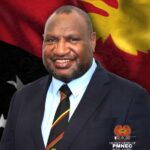
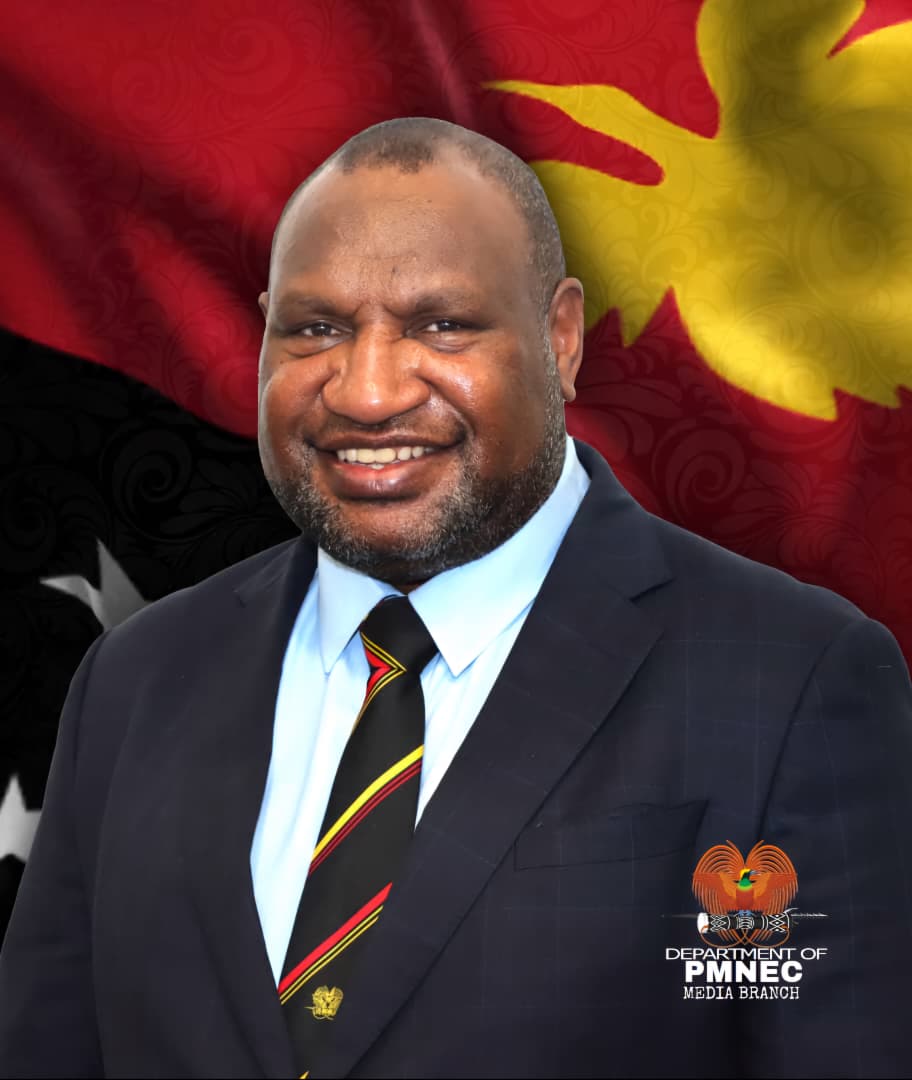

Prime Minister Hon. James Marape will travel to Funafuti, Tuvalu, tomorrow to attend the special Pre-COP31 Leaders’ event and hold a bilateral meeting with Tuvalu Prime Minister Hon. Feleti Teo.
The Leaders’ event in Tuvalu forms part of the official COP31 Pre-COP programme being delivered by Fiji, Tuvalu and Australia from October 5–8, ahead of COP31 in Antalya, Türkiye, in November.
Prime Minister Marape said his visit would demonstrate Papua New Guinea’s solidarity with Tuvalu and other Small Island Developing States facing the serious impacts of climate change and rising sea levels.
“Tomorrow I will travel to Funafuti to stand with the Government and people of Tuvalu as a fellow Pacific nation,” Prime Minister Marape said.
“Tuvalu is one of the smallest countries in the world in terms of population and land area, yet it is on the frontline of a global climate crisis that it has contributed very little towards.
“Sea-level rise threatens its land, communities, identity and future. Papua New Guinea must stand with our Pacific brothers and sisters.”
Prime Minister Marape said Papua New Guinea had consistently supported practical solutions that would allow the people of Tuvalu to remain in their homeland rather than being forced to relocate because of rising sea levels.
He said that during the Pacific Islands Forum Leaders’ Meeting in Funafuti in 2019, he advocated the use of land reclamation, engineering and technology to help protect Tuvalu’s territory and enable its people to remain in their country.
“My position since 2019 has been that relocation should not be the first answer,” Prime Minister Marape said. “We must explore every possible option to reclaim and protect land so that the people of Tuvalu can remain in their own country, retain their sovereignty and identity, and continue living in their homeland.
“Modern engineering, science and technology give us opportunities to reclaim land, strengthen coastlines and build greater resilience against rising sea levels.”
Prime Minister Marape said Papua New Guinea has committed K5 million to assist Tuvalu with land reclamation, and his bilateral meeting with Prime Minister Teo would provide an opportunity to discuss progressing this assistance.
“We want our K5 million contribution to translate into practical assistance for Tuvalu,” he said.
“This is Papua New Guinea demonstrating through action, and not words alone, that Pacific nations must stand together.”
Prime Minister Marape said Tuvalu’s situation should also send a strong message to major economies and major greenhouse-gas emitters.
“Papua New Guinea contributes only a small share of global greenhouse-gas emissions, yet we are prepared to assist our fellow Pacific nations,” he said.
“Those countries and corporations with much larger carbon footprints must also step forward and contribute meaningfully towards climate adaptation, land reclamation, coastal protection and resilience.
“The countries that have contributed least to climate change should not be left alone to carry its greatest burden.”
Prime Minister Marape said the Pre-COP31 meetings provide an important opportunity for the voices of Pacific Island nations and Small Island Developing States to be heard ahead of COP31 in Türkiye.
“The voice of the Pacific must emerge strongly from these meetings,” he said.
“But we need more than voices and statements. We need action, climate financing and technology. Major emitting nations must take responsibility and assist countries already living with the consequences of climate change.”
Prime Minister Marape commended Australia for its leadership in ensuring Pacific priorities are elevated in the COP31 process.
Australia will lead the COP31 negotiations, while Türkiye will host COP31 in Antalya from November 9–20.
Prime Minister Marape said the same climate challenges confronting Tuvalu were also affecting vulnerable island and coastal communities in Papua New Guinea.
“What is happening in Tuvalu is also relevant to Papua New Guinea,” he said.
“We have our own small islands, atolls and coastal communities facing rising seas, coastal erosion and other climate-related challenges.
“The same approach — using science, engineering, technology, land reclamation and coastal protection — must be considered for vulnerable communities in our own country.
“Climate change is not something in the distant future. For many Pacific communities, it is already here.
“Papua New Guinea will continue to stand with Tuvalu and the rest of our Pacific family in calling for practical global action that protects our people, our land, our sovereignty and our future.”