
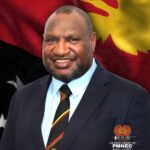


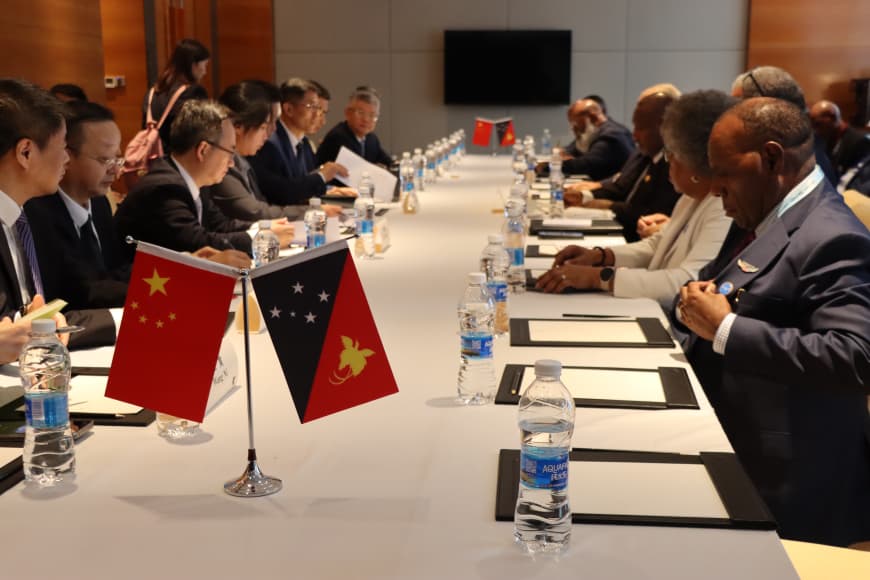

Prime Minister Hon. James Marape has reaffirmed the Government’s commitment to attracting investment that delivers greater value for Papua New Guinea, emphasising that all proposed resource developments must comply with the country’s laws and regulatory processes.
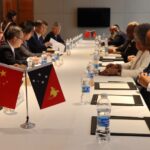
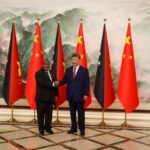
The Prime Minister made these remarks during a meeting with China Minmetals Chairman Chen Dexin on the margins of APEC Leaders’ Week in Shenzhen, China.
Mr Chen briefed the Prime Minister on Ramu Nickel-Cobalt Project operations, its contribution to the national economy, and its support for communities in project-affected areas.
He also presented the company’s proposed US$1.6 billion Phase II expansion, which aims to approximately double the operation’s existing production capacity and expressed interest in further downstream processing.
Government’s position
Prime Minister Marape welcomed the opportunity to consider further investment in the project but made clear that government support must be consistent with Papua New Guinea’s development priorities and established approval processes.
He emphasised that the Government’s priority is to encourage further downstream processing to retain more value from the country’s mineral resources. The Prime Minister indicated that consideration of tax incentives would focus on investments that advance this objective.
Minister for International Trade and Investment Hon. Richard Maru supported this position, advising that the government would not extend tax holidays for existing mining projects while incentives would be available for qualifying downstream processing investments.
Company requests and next steps
During the meeting, Mr Chen sought government assistance in progressing the regulatory requirements for the proposed Phase II expansion and matters relating to Special Mining Lease (SML) 14, with the aim of advancing both concurrently.
He also requested consideration of tax incentives similar to those provided during the project’s initial development.
Prime Minister Marape said he would take the company’s report and requests under advisement, with the aim of providing a response within three weeks. He stressed that this consideration would not bypass or compromise Papua New Guinea’s statutory and regulatory requirements.
The proposed expansion remains subject to the necessary government approvals, mining leases and permits, and agreements with key stakeholders. No approval of the expansion or commitment to tax incentives was made at the meeting.
Project background
The Ramu Nickel-Cobalt Project in Madang Province is managed by Ramu NiCo Management (MCC) Limited within the China Minmetals/MCC group. Its operations comprise the Kurumbukari open-pit mine, a 135-kilometre slurry pipeline and the Basamuk refinery, together with supporting infrastructure. The operation produces mixed hydroxide precipitate, an intermediate nickel-cobalt product rather than finished metal. Any proposed investment in further downstream processing would, therefore, need to be distinguished from the project’s existing processing activities.
According to a disclosure by joint-venture partner Nickel 28 dated 15 April 2026, the Phase II proposal has been submitted to Papua New Guinea’s Mineral Resources Authority.