

Prime Minister Hon. James Marape has renewed his Government’s full commitment to the Reset@50 Agenda, saying Papua New Guinea must use the lessons of its first 50 years of Independence to strengthen implementation, accountability and evidence-based decision-making as the country enters its next 50 years.
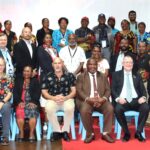
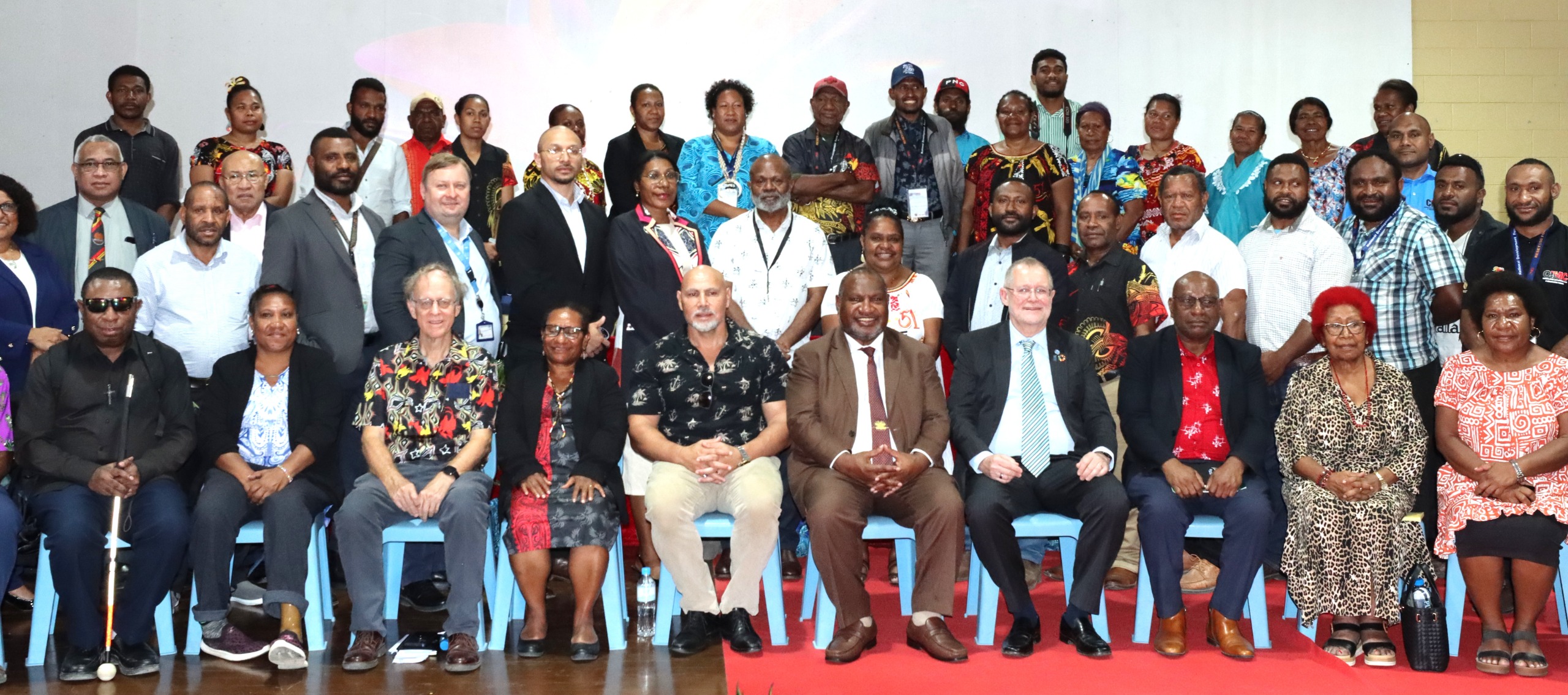
Prime Minister Marape made the remarks today while officiating at the Official Closing Ceremony of the Reset@50 Forum Week, hosted by the Consultative Implementation and Monitoring Council (CIMC) at the Dr John Momis Hall, Somare Institute of Leadership and Governance (SILAG), Waigani. The Forum was held under the theme: “Unpacking the Reset@50 Agenda – What Must We Do Better in the Next 50 Years?” Prime Minister Marape commended CIMC and its Partners for providing an independent platform through which Civil Society, Government, Development Partners, the Private Sector and communities can contribute to National Policy and Development. He expressed his Government’s strong commitment to supporting CIMC while protecting its independence and its important role as a voice of society. “CIMC, you have my 100 per cent support,” Prime Minister Marape said, adding that constructive criticism must continue to be grounded in evidence and reliable economic and social statistics. The Prime Minister compared CIMC to the wind that helps guide a sailing vessel, saying those entrusted with “captaining a ship called PNG” must be able to hear and respond to the voices of society and steer the country towards development rather than personal or sectional interests.
RESET IS NOT ABOUT STARTING AGAIN
Prime Minister Marape stressed that Reset@50 does not mean discarding Papua New Guinea’s achievements or taking the country back to the beginning. “It is not about resetting PNG back to zero, rather, it’s about fine-tuning, propelling us,” he said. “Learning from the last 50 years of gains and downsides, we’re resetting it, we’re tuning it, so that we go forward with what we must do.” He said the Reset@50 process provides an opportunity for Papua New Guinea to honestly assess its first 50 years: what the country has done well, what has not worked, where it has fallen short, and most importantly, what must be done better going forward. With Papua New Guinea preparing to celebrate its 51st Independence Anniversary on Wednesday, 16 September, Prime Minister Marape said the country was at an important generational turning point. Drawing on the Biblical Jubilee principle in Leviticus Chapter 25, he said the 50th year provided an opportunity to take stock, reset and prepare for the next phase of the national journey. “Two days from today, we are stepping onto our 51st, the first year of the next 49,” Prime Minister Marape said. He called on Papua New Guineans aged over 50 to pass their experience, knowledge and wisdom to younger generations so that they understand the direction the country must take.
IMPLEMENTATION REMAINS PNG’S BIGGEST CHALLENGE
Prime Minister Marape said Papua New Guinea has developed many Plans, Policies and good intentions over the years, but the major challenge has been turning them into tangible results for the people. “We’ve got many Plans, we’ve got many good Policies, we’ve got many good intents. Our biggest problem has always been implementation,” he said.
He said the Government had established mechanisms to strengthen delivery and ensure public resources produce measurable outcomes. Using the analogy of a dartboard, Prime Minister Marape said Government expenditure and development interventions must increasingly be directed towards clearly defined targets. “Any Government resource must be hitting the bull, so to speak. And that’s our bigger challenge, making sure that we are hitting the target,” he said. Prime Minister Marape identified weak accountability, corruption, poor planning, weak implementation and decisions sometimes driven by opinion rather than evidence among the longstanding weaknesses that the country must confront as it moves forward. He also pointed to Papua New Guinea’s Human Development performance as evidence that greater effort is required, challenging public officials and professionals to ask whether they are working to the best of their ability and delivering the results expected of them.
“NOT THE NEXT ELECTION, BUT THE NEXT GENERATION”
Prime Minister Marape stressed that the Reset@50 Programme must transcend individual Governments and political cycles. He said the work identified through Reset@50 should remain part of the National Development Agenda regardless of the outcome of the 2027 National General Election, because the Reforms are ultimately about Papua New Guinea’s long-term future. The Prime Minister also challenged Leaders across Government, Parliament, the Judiciary, Churches, Businesses, communities and families to recognise that National development is a shared responsibility. “You don’t have to be Prime Minister to do this job,” he said, stressing that every Papua New Guinean has a contribution to make to the country’s future.
Prime Minister Marape concluded in an emotional way (shedding a few tears) by reminding Leaders that the decisions being made today must ultimately serve PNG’s children and future generations. “It is not about your next Election, but the next generation,” he said. “For those of us in the public sphere, what is it we’re doing for them? Let’s just start by resetting ourselves, putting others ahead of ourselves.” He made these concluding remarks following the showing of two short Videos providing a glimpse of his most recent Highway Trip from Port Moresby to Gulf Province, Morobe Province, some of the Highlands Provinces and through to Kikori in Gulf Province, which were included as part of his official speech, including one Video depicting children of a very remote Primary School singing the National Anthem of Papua New Guinea.