
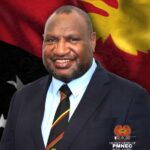
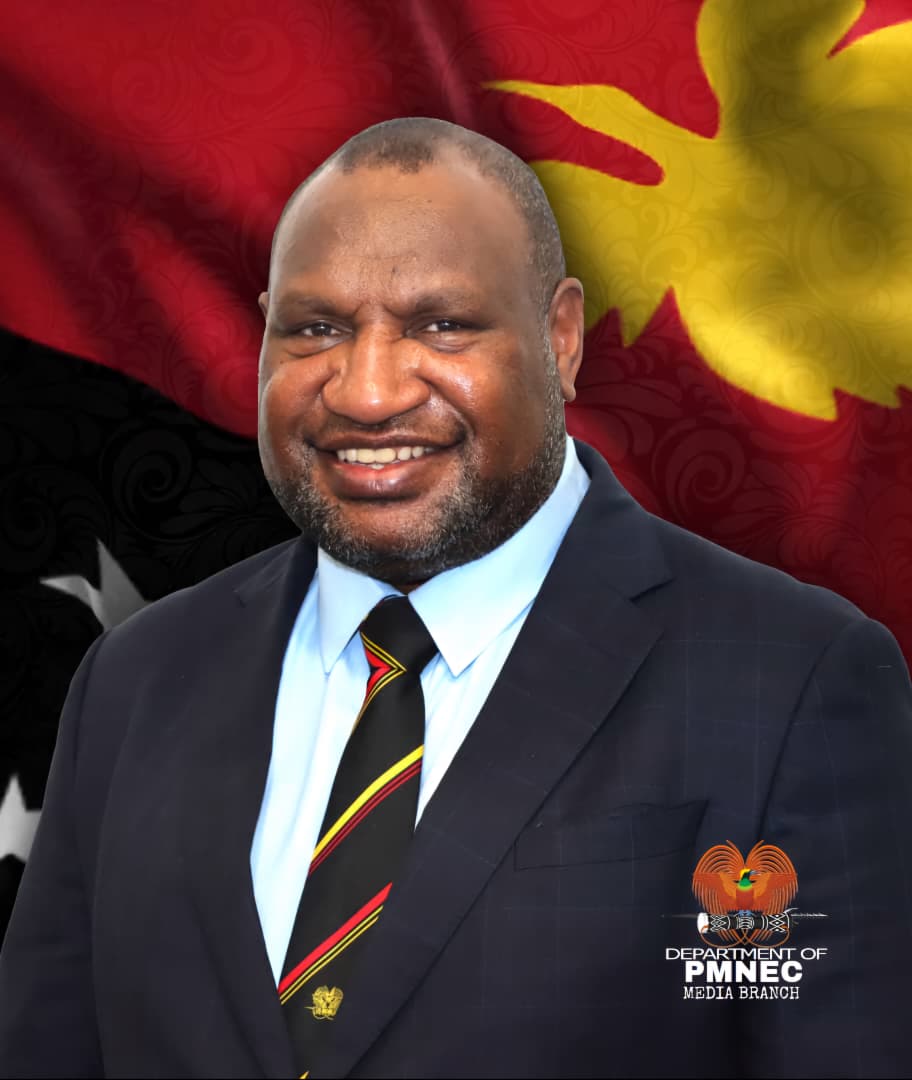

Prime Minister Hon. James Marape says the Government’s Connect PNG Programme is not only about building roads, but developing an integrated national network of electricity transmission lines, telecommunications, ports, airports and airstrips to unlock economic opportunities across Papua New Guinea.
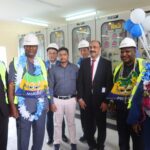
Following Friday’s official completion ceremony of the K263 million Japan International Cooperation Agency (JICA)-supported Ramu Transmission System Reinforcement Project in Lae, Prime Minister Marape said the Marape-Rosso Government was taking a holistic approach to national infrastructure development.
“Connect PNG is not only about roads. It is about all the necessary enabling infrastructure that will connect our country and stimulate economic growth,” he said.
“We must build roads, power transmission lines, fibre-optic networks, ports, airports and airstrips together. These are the backbone infrastructures that will carry Papua New Guinea into the next 50 years.”
Prime Minister Marape said the Marape-Rosso Government had invested more than K1.9 billion since taking office in 2019 in developing and strengthening the 132kV electricity transmission network along the major economic corridor stretching from Lae through Yonki and Mount Hagen towards Tari in Hela Province.
He said this represented a major stage of a much larger national electricity infrastructure development programme aimed at progressively connecting Papua New Guinea’s major population centres, resource-rich regions and industrial hubs.
The Prime Minister said the Government was also pursuing further transmission development from Yonki towards Hides in Hela Province, with China Exim Bank financing forming part of the investment arrangements.
He said the completed K263 million JICA-supported Ramu Transmission System Reinforcement Project, which includes approximately 134 kilometres of additional 132kV transmission line, 326 transmission towers and major substation upgrades, was an important component of the Government’s broader strategy to strengthen electricity transmission capacity and reliability.
“This is a massive investment in our national electricity infrastructure. We want power generated along these corridors to feed into the main grid, while substations and distribution networks deliver electricity to our towns, districts, industries and communities,” he said.
Prime Minister Marape said the long-term vision was to establish an interconnected electricity network capable of serving an estimated five to six million people across the central economic corridor and adjoining regions.
He said the Highlands Highway, electricity transmission network and fibre-optic telecommunications infrastructure together provided the essential foundation for economic development across a region accounting for approximately 60 per cent of the country’s economic activity and population.
The Prime Minister outlined plans to progressively extend electricity transmission infrastructure from Lae towards Madang, Bogia and Wewak, from Bulolo through Garaina towards Popondetta, and through Gulf Province towards Kerema, Port Moresby and Alotau.
He said the national strategy would also include a proposed transmission connection between Kimbe in West New Britain and Kokopo in East New Britain, as well as electricity networks along the east coast of New Ireland, across Bougainville, and in Manus Province from Momote to Drauke on the west coast of the island.
“Our vision is that within the next 10 years, we progressively develop the major electricity transmission corridors that will support a truly connected Papua New Guinea,” he said.
“Roads must connect to ports and airports. Electricity lines and fibre-optic networks must follow these economic corridors.”
Prime Minister Marape called on provincial governments to partner with the National Government, PNG Power Limited, landowners and private investors to extend electricity distribution networks into district towns, rural communities and emerging economic centres.
He said the major transmission infrastructure would provide opportunities for additional electricity generation along the corridors, with power fed into the main grid and distributed through substations to towns, industries and communities.
He encouraged investment in hydroelectricity, geothermal, solar and other renewable energy sources to meet the growing demand for reliable and affordable electricity.
The Prime Minister said the country’s central economic corridor contained substantial agricultural, forestry, mining, petroleum and other natural resources, alongside a significant proportion of Papua New Guinea’s population.
He said coordinated infrastructure development would create opportunities for downstream processing of agricultural products, fisheries, forestry resources and minerals, while encouraging manufacturing, investment and employment.
“These industries need reliable electricity, good roads, access to ports and modern telecommunications. These are the key enablers of economic diversification,” he said.
“Our greatest asset is our people, who own the land and resources of this country. It is the Government’s responsibility to provide the infrastructure that enables them to turn those resources into economic opportunities.”
Prime Minister Marape said the Marape-Rosso Government remained committed to building the backbone infrastructure necessary to support economic growth over the next 50 years.
“We are not building infrastructure simply for the sake of building infrastructure. We are building the foundation for a stronger, more diversified economy where our people can work, produce, manufacture, trade and prosper,” he said.