
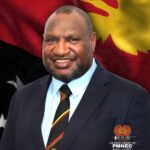

Prime Minister Hon. James Marape has commended the Papua New Guinea Internal Revenue Commission (IRC) for its strong Revenue Collection performance in 2026, with K16.5 billion already collected against the revised Annual Target of K20.3 billion, as the Marape-Rosso Government continues its efforts towards delivering a Balanced National Budget in 2027.
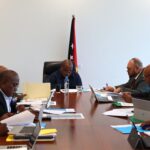
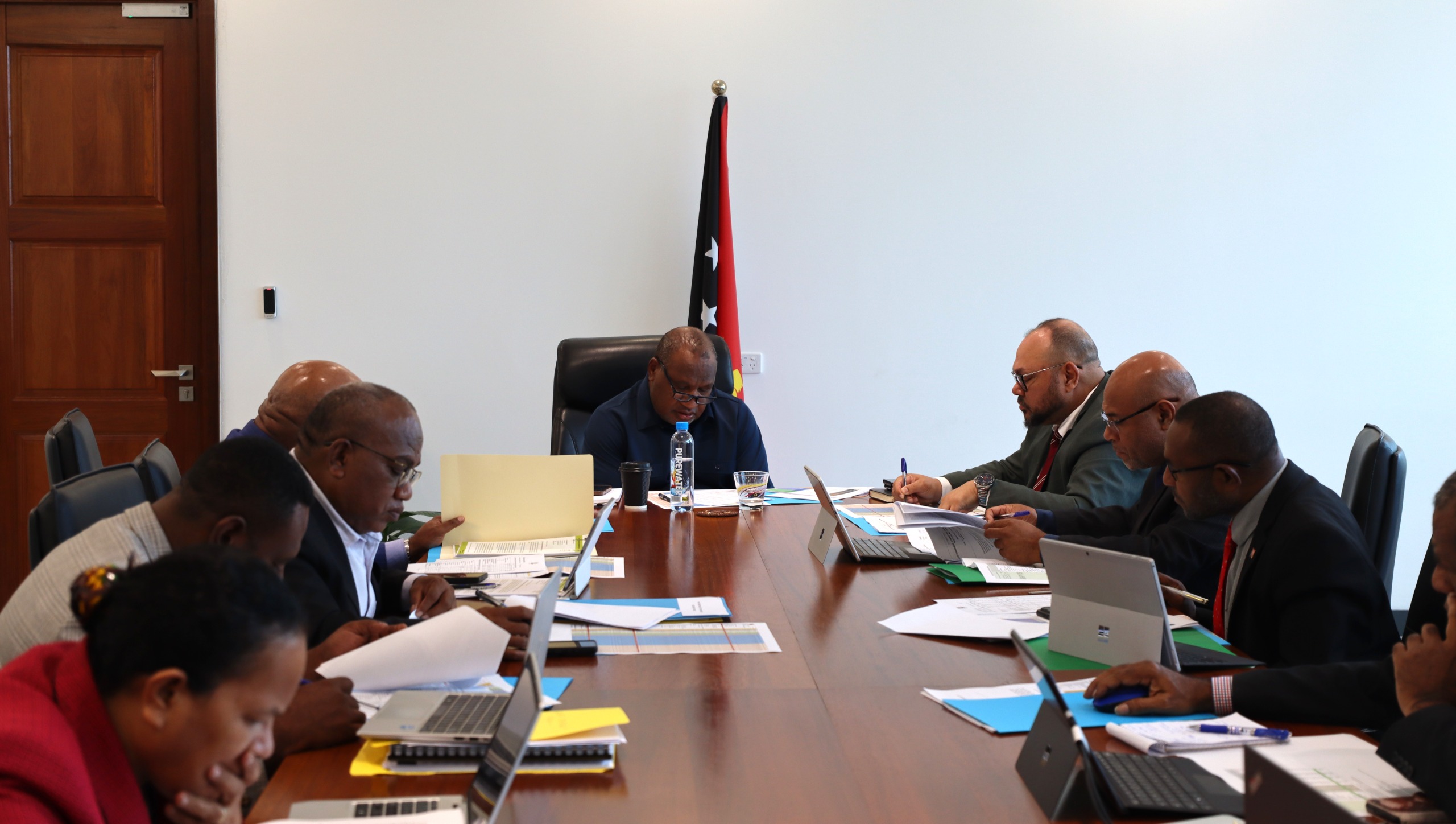
Prime Minister Marape made the announcement today following the Budget Management Committee (BMC) Meeting he chaired at Melanesian Haus in Waigani, attended by Minister for Finance Hon. Thomas Opa, Senior Officials from the Departments of Treasury and Finance, PNG Customs Chief Commissioner David Towe, and other Government representatives. The Prime Minister revealed that IRC had already achieved approximately 81 percent of its revised 2026 Revenue Collection Target, demonstrating encouraging progress despite difficult global economic conditions and ongoing domestic fiscal pressures.
“At this stage, in the projected Revenue Budget of K20.3 billion, IRC has already collected K16.5 billion, representing 81 percent of the revised Supplementary Budget Target,” Prime Minister Marape said. “This is the first time we have asked IRC to collect Revenue of around K20 billion, and they are progressing well towards that target. I want to commend IRC for the tremendous work they are doing in collecting Revenue for our Government and our country.”
The Prime Minister explained that the original 2026 Budget had projected IRC Collections of approximately K17.8 billion, before the target was revised upwards to K20.3 billion under the Supplementary Budget. Against the original forecast, the K16.5 billion already collected represents approximately 92.7 percent of the Initial Annual Projection. He noted that the reported Collections did not include certain Transfers associated with Goods and Services Tax (GST) arrangements involving Provincial Governments.
Sustained Revenue Growth reflects Institutional Reforms
Prime Minister Marape said IRC’s performance reflected the Government’s continued investment in Revenue administration, improved compliance, modern information and communications technology systems, and stronger institutional capacity. IRC has recorded substantial growth in Revenue Collections over recent years. In 2020, annual collections stood at approximately K8 billion, before increasing to around K16.6 billion in 2024 and K17.3 billion in 2025. The 2025 outcome represented an increase of approximately K700 million, or 4 percent, over 2024 Collections, despite operational challenges and wider economic pressures.
Prime Minister Marape said these improvements demonstrated the importance of building stronger National Institutions capable of generating domestic revenue.
“Our Government continues investing in ICT systems to eliminate the ‘black economy’ and ensure that everyone pays their fair share of tax,” he said. “I want to thank all taxpayers, from our major taxpayers to every individual taxpayer in our country, for paying their taxes on time and complying with our taxation requirements. In a difficult economic year, we are still collecting Revenue where it matters most.”
The Prime Minister said stronger Tax administration would remain central to broadening the Revenue base, reducing leakages, improving compliance and ensuring the country increasingly finances its development priorities through internally generated Revenue.
Strong Revenue must be matched with Spending Discipline
Despite the encouraging Collections, Prime Minister Marape cautioned against complacency, stressing that Government Expenditure must remain strictly controlled.
“Just because we are collecting this much Revenue must not give us a false sense of security,” he said. “Government is still subsidising the Cost of Fuel, and we are experiencing difficult economic conditions. We must ensure that funding is available for our Provinces, Districts and National Government to assist our people, particularly during this period of Disasters and other challenges.”
The Prime Minister directed Government Departments and Agencies to operate strictly within approved Budget Allocations and avoid introducing unplanned Expenditure commitments.
“No new contracts that are unplanned or unbudgeted must be introduced,” he said. “We must complete projects that have already been supported, maintain fiscal consolidation and ensure Government spending remains responsible.”
Government maintains focus on 2027 Balanced Budget
Prime Minister Marape said IRC’s performance would support the Government’s broader Fiscal Consolidation programme and its ambition to achieve a Balanced National Budget in 2027. He said the Government remained committed to containing the Fiscal Deficit at approximately 1 percent while strengthening Revenue Collection and controlling Expenditure.
“We are maintaining our Fiscal Consolidation Strategy, sticking to the 1 percent Deficit target, and hopefully bringing Government spending to a Balanced Budget next year,” he said.
The Prime Minister acknowledged that 2027 would present additional challenges, including the National General Election, requiring careful financial management. He also directed greater attention towards Non-Tax Revenue, including Dividends and Earnings from State-Owned Enterprises, State-Owned Companies and Statutory Bodies.
“Where possible, Dividends and Earnings from our State-Owned Enterprises, Companies and Statutory Bodies must return to the State to support our National Budget,” he said.
Prime Minister Marape said the weekly BMC Meetings would continue closely monitoring Revenue, Recurrent Expenditure, the Public Investment Programme and overall Budget Implementation.
“IRC is leading the way, and I commend its leadership, management and hardworking officers. We must continue improving efficiency, strengthening compliance and collecting the Revenue necessary to finance essential services and grow our economy.”