
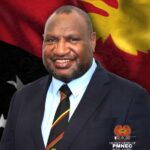
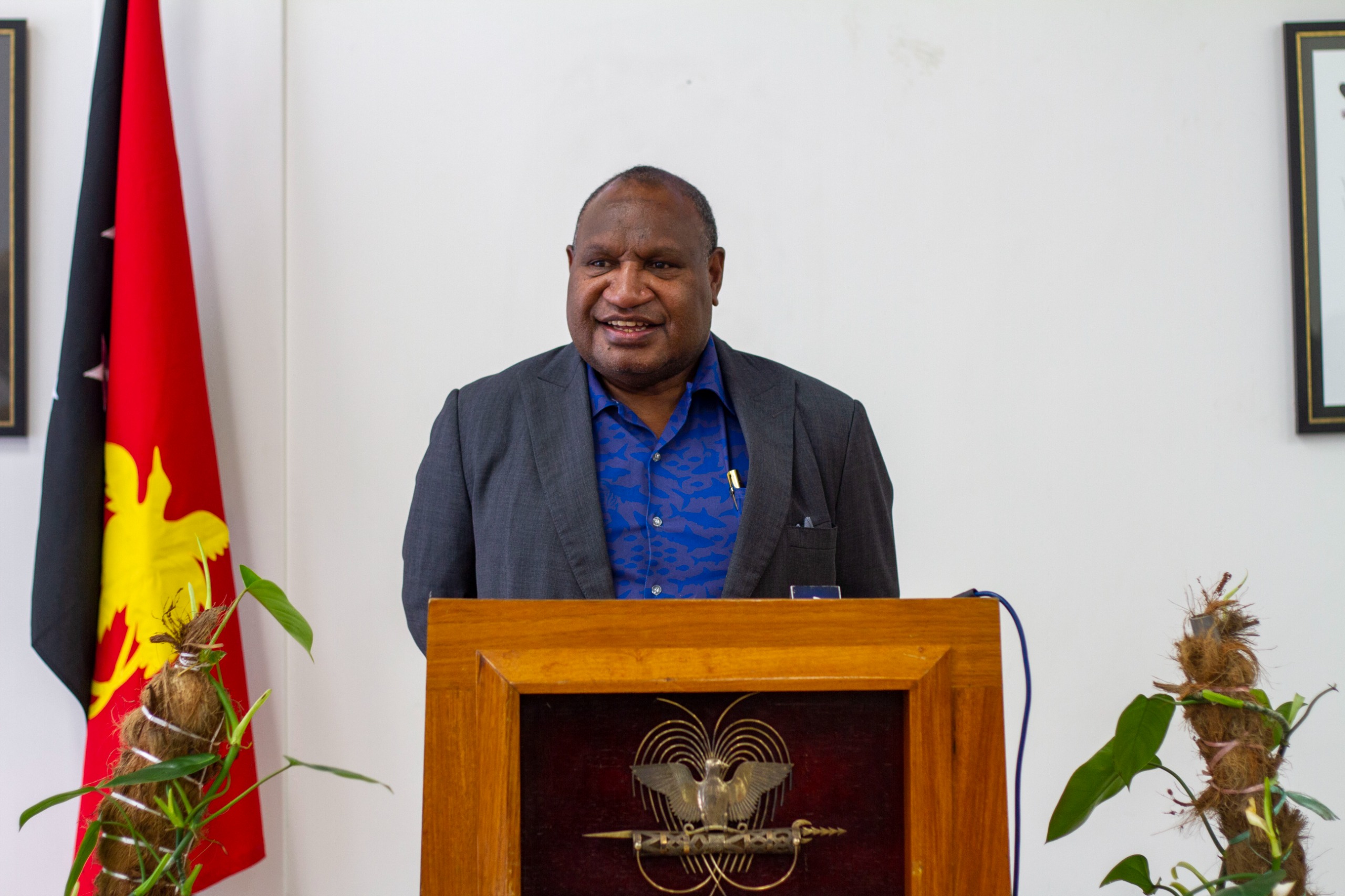

Prime Minister Hon. James Marape says Papua New Guinea will look at adapting climate-resilience solutions being used in Tuvalu to protect its own vulnerable island and atoll communities from rising seas, water shortages, isolation and other impacts of climate change.
Prime Minister Marape said this following his return from Tuvalu and Fiji, where he attended Pre-COP31 meetings and witnessed first-hand climate adaptation work being undertaken in Tuvalu.
He said the Government would give particular attention to vulnerable and remote island communities, including Mortlock, Carteret and Nissan islands, as well as other small and outlying atolls.
“What I saw in Tuvalu has relevance to our own people living on small islands and atolls. We cannot talk about helping our Pacific neighbours while neglecting our own vulnerable island communities,” Prime Minister Marape said.
“We will work with our universities and technical experts to look at basic land-reclamation and coastal-protection designs, desalination for clean water, solar electricity and other practical climate-resilience solutions that can be adapted to PNG conditions.
“Our objective is to help our people remain in their own island communities wherever this is practical and sustainable, rather than allowing climate change and isolation to determine their future.”
Prime Minister Marape said reliable sea transport must also form part of the programme.
“For our remote island communities, climate resilience is not only about protecting land. It is also about ensuring reliable transport so people can access health, education, markets, government services and the rest of Papua New Guinea,” he said.
“We must make sure these communities are not left behind, are not isolated and have the infrastructure and services necessary to continue living on their traditional islands.”
Prime Minister Marape said the initiative would form part of the Government’s broader climate-change work under the Medium Term Development Plan IV (MTDP IV).
“MTDP IV requires us to engage seriously in climate-change-related activities both within Papua New Guinea and internationally. That is exactly what we are doing,” he said.
“I went to Tuvalu and saw what is being done there. We will take those lessons, work with our own technical institutions and communities, and localise practical solutions for Papua New Guinea.
“Our small island and atoll communities are part of Papua New Guinea. They must never be forgotten or left behind as we respond to climate change.”