

ON THE SEVENTH (7) YEAR PERFORMANCE REPORT
I. OPENING AND INTRODUCTION
Mr Speaker, the Honourable Members of Parliament, and the People of Papua New Guinea.
Mr Speaker,
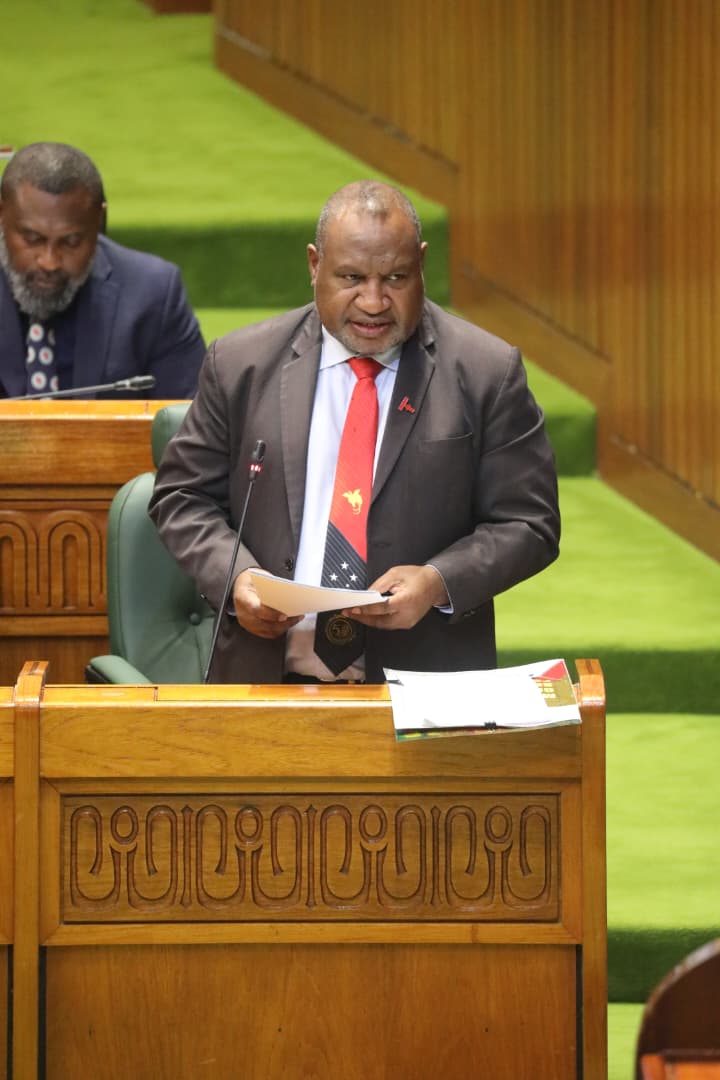
I rise today to deliver what is, for our Government, a moment of deep reflection and profound gratitude — the 7th Year Performance Report of the Marape–Rosso Government, covering the period 2019 to 2025. This is a Whole-of-Government Performance Review, presented with full transparency to this Parliament and, through this Parliament, to every woman, man and child of Papua New Guinea.
Mr Speaker,
Our guiding frameworks have been the Medium-Term Development Plan IV (MTDP IV), and our long-term national compass, Vision 2050. These are not mere policy documents; they are the architectural blueprints of a new Papua New Guinea — a K200 billion economy, an educated and healthy population, a nation respected on the world stage, and communities where no-one is left behind.
Mr Speaker,
This report is prepared around the key government sectors: this includes the Infrastructure, Economic, Law and Order, Health, Education, Social and Community Development, and Administrative Governance — including the achievements of our
22 provinces and 96 districts. I shall address each in turn.
II. INFRASTRUCTURE SECTOR
Mr Speaker,
Nation-building begins with infrastructure. Roads, bridges, ports, airports, power and connectivity are the arteries through which commerce flows, students travel to school, patients reach hospitals, and farmers bring their produce to market. Our Government’s infrastructure record over seven years is the most ambitious in Papua New Guinea’s post-Independence history.
A. Connect PNG — Roads and Highways
Mr Speaker,
Our flagship Connect PNG programme has been the centrepiece of our infrastructure ambitions. We committed over K20 billion to road infrastructure, spanning 16,580 kilometres of the national road network. This programme encompasses the rehabilitation and upgrading of national highways, provincial roads, and rural access roads across all regions of the country.
The Highlands Highway: Upgrades and rehabilitation work on the critical Port Moresby–Lae–Highland’s corridor has progressed significantly, improving the supply chain for the Highlands agriculture sector and reducing travel times for millions of Papua New Guineans who depend on this economic lifeline.
Rural Access Roads: Feeder and district roads have been upgraded across all 22 provinces, connecting communities to markets, schools, and health facilities that were previously inaccessible.
Wutung Border Post: Rehabilitation and commissioning of the Wutung Border Post have improved cross-border trade and security with Indonesia.
B. Ports, Airports, and Maritime Infrastructure
Mr Speaker,
We have invested in upgrading ports and airports that are critical to our trade, tourism, and logistics. Works have been completed and are also underway at major port facilities and provincial airstrips, improving connectivity for the extractive sectors, agricultural exports, and passenger movement. The ADB CADIP Program has been good for our comprehensive airport upgrade.
C. Energy and Electricity Access
Mr Speaker,
Expanding electricity access to our rural and peri-urban communities has been a priority under our electrification programs. We have pursued solar, hydro, and grid extension projects across the country, recognising that power is the foundation of modern enterprise and quality of life.
D. Digital Connectivity and ICT
Mr Speaker,
Our investment in digital infrastructure — submarine cables, terrestrial fibre, and mobile towers — has expanded internet and mobile connectivity to communities across PNG. This digital backbone supports our economic diversification, e- government services, financial inclusion, and educational platforms. The recent licensing of Starlink will be transformational.
E. Housing and Urban Development
Mr Speaker,
After nearly three decades without a comprehensive housing policy, our Government launched the PNG National Housing Policy 2023–2033. This ten-year strategic framework guides affordable social housing, urbanisation management, housing standards, and industry governance. The National Housing Corporation has progressed the NHC Headquarters Redevelopment Project, with concept design launched in September 2025, and 36 housing units currently under construction targeting 100 completed homes in early 2026. The NHC Bill 2026 has been completed and is ready for submission to the First Legislative Council.
Mr Speaker,
We have partnered with the Department of Lands and Physical Planning to facilitate Urban Development Leases and streamline land access for housing development. The e-Lands system is being implemented to digitise all land title registration, and a National Land Audit is currently underway to establish a reliable baseline for future land policy.
F. Infrastructure Expenditure
Mr Speaker,
Over the 2019–2025 period, the Government allocated K17.5 billion to the Infrastructure Sector, with approximately K11.93 billion in actual expenditure. The lower execution rate reflects the complexity of major project procurement, environmental assessments, and multi-year contracting timelines. Capital project arrears of approximately K2.6 billion and SME payment arrears of K2.4 billion remain priorities for resolution under our ongoing fiscal management reforms.
III. ECONOMIC SECTOR
The story of our economic management is the story of Papua New Guinea finally asserting ownership over its own destiny. We came to office determined that our people should benefit equitably from the immense natural wealth of our land and seas. We have delivered on that determination.
A. Mining and Petroleum — Taking Back Our Resources
Porgera Gold Mine
Mr Speaker,
One of the most consequential decisions of my Government was the renegotiation of the Porgera Gold Mine agreement. After the previous operating agreement expired in April 2020, we stood firm on behalf of our people, refusing to renew on terms that did not give Papua New Guinea its fair share.
The result: Papua New Guinea now holds a 51 percent equity stake in the Porgera Joint Venture — a historic assertion of resource sovereignty. The State’s dividends from Porgera have reached USD 400 million. This is what it means to Take Back PNG. Porgera reopened, Papua New Guineans are employed, and the nation is now the majority owner of its own gold.
Wafi-Golpu Gold and Copper Project
Mr Speaker,
Negotiations on the Wafi-Golpu gold and copper project in Morobe Province are progressing on terms that protect the interests of our landowners, local communities, and the national government. The projected benefits to Papua New Guinea are estimated at PGK 45.6 billion over the life of the mine. When developed, Wafi-Golpu will be one of the largest gold-copper mines in the world and a transformative investment for our nation.
LNG and Oil and Gas
Our LNG sector continues to be a major contributor to national revenue. The Oil and Gas (Amendment) Act 2025 and the National Petroleum Authority Act 2025 — passed in the first sitting of 2025 — strengthen the governance and regulatory framework of our petroleum industry, ensuring that PNG receives its proper share of resource revenues and that the sector is managed with transparency and accountability.
B. Agriculture — The Other Resource Sector
Oil Palm
Mr Speaker,
Our agricultural sector — anchored by oil palm — has been a quiet economic powerhouse. Oil palm export revenue reached K3.01 billion, with cumulative export earnings of K32.1 billion over our term. This sector employs hundreds of thousands of Papua New Guineans in New Britain and other growing regions. The proposed Bill to effectively regulate this resource sector is still in the consultation stage.
Coffee, Cocoa, and Copra
We enacted the Coffee Industry Act 2025, modernising the legislative framework for our premium coffee sector. Our cocoa, copra, and rubber industries have benefited from sustained policy support, with the Government committed to moving up the value chain and processing more of our agricultural commodities within PNG before export.
C. Fiscal Management and Revenue
Mr Speaker,
We inherited a difficult fiscal position and have had to navigate global economic disruptions — the COVID-19 pandemic, international commodity price volatility, and inflationary pressures. Our fiscal consolidation program, supported by an IMF arrangement that accessed approximately K3.8 billion in concessional financing, has stabilised the macroeconomic environment.
Over the 2019–2025 review period, total government expenditure was distributed as follows: Economic Sector — K5.3 billion; Infrastructure Sector — K11.93 billion; Social Services Sector — K20.2 billion; Law and Order Sector — K11.8 billion; Administrative Sector — K39.36 billion; and Provincial and Sub-National Programs — K23 billion.
Mr Speaker,
Debt servicing obligations over the same period amounted to approximately K125.6 billion, reflecting the weight of the national debt portfolio. Fiscal repair remains a priority, and we are implementing revenue reforms — including the new Income Tax Act 2025 and Tax Administration Act — to modernise the tax framework and strengthen compliance.
The migration of the Integrated Financial Management System (IFMS) to a cloud- based platform was completed in May 2025, improving fiscal transparency, system stability, and data security across government. We are also implementing a Treasury Single Account framework to consolidate government bank accounts, strengthen cash management, and reduce opportunities for financial mismanagement.
D. International Trade, Investment, and Diplomacy
Mr Speaker,
Our foreign policy — Friends to All, Enemies to None — has expanded PNG’s international partnerships and attracted new investment. We have signed bilateral agreements, deepened ties with ASEAN, Pacific Island Forum partners, and major economies including Australia, China, the United States, Japan, and Indonesia. The Special Economic Zones framework is being developed in collaboration with the Department of Lands and Physical Planning to attract foreign direct investment in manufacturing and processing industries.
E. Financial Systems and Banking
Mr Speaker,
The Central Banking (Amendment) Act 2025 strengthens the Bank of Papua New Guinea’s regulatory framework. The establishment of the Financial Analysis and Supervision Unit (FASU) within BPNG has enhanced anti-money laundering and counter-terrorism financing oversight. Agency-generated Non-Tax Revenues exceeded K1 billion in 2025, and we are digitising revenue collection systems to improve transparency and compliance.
IV. LAW AND ORDER SECTOR
Mr Speaker,
Peace and security are prerequisites for development. A mother cannot send her child to school, a farmer cannot take produce to market, and a business cannot invest, if they fear for their safety. Our Government has made law and order a foundational investment, not an afterthought.
Law and Order Sector expenditure over 2019–2025 reached K11.8 billion, with a sector budget execution rate of 97 percent — the highest of any sector — demonstrating our unwavering commitment to security and justice.
A. Royal Papua New Guinea Constabulary (RPNGC)
Mr Speaker,
Under the Security and Police Administration Programme (SPAP) 2023–2025, we invested K542 million into the modernisation of the Royal Papua New Guinea Constabulary. This investment funded the upgrading and construction of over 50 police stations across the country — bringing policing facilities closer to communities that have never previously had a local police presence.
Police force numbers have been increased, professional standards strengthened, and the Bomana School of Excellence developed as a centre for advanced police training. We are reviewing the Police Act to modernise the legal framework governing our constabulary and have modernised fine and fee collection systems to improve operational funding.
B. Courts and the Judiciary
Mr Speaker,
The Waigani Law Courts were officially opened at a cost of K653 million — a landmark investment in our justice infrastructure. The National Court recorded 12,690 new case filings, reflecting both the growing demand for formal justice services and improved access. Magisterial Services and village courts have been strengthened to improve dispute resolution from the grassroots level upward.
The National Judicial and Legal Services have been strengthened, and we have delivered the Appropriation (Judiciary Service 2026) Act to provide sustainable funding for an independent and effective judiciary.
C. Anti-Corruption — ICAC and the National Strategy
Mr, Speaker,
Combating corruption is a personal and governmental priority. Papua New Guinea was the first Pacific country to ratify the United Nations Convention Against Corruption in 2007, and we have prosecuted this commitment relentlessly. Our National Anti- Corruption Strategy 2010–2030 is now in its second Plan of Action, structured around 15 Programmes of Work.
Major institutional achievements include the enactment of the Proceeds of Crime Act, Extradition Act, and Whistle-blower Act 2020. The Independent Commission Against Corruption (ICAC) was established under the Organic Law on ICAC 2020, with ICAC Oversight Committee members formally appointed in 2025. The FASU has identified 3,000 suspicious transactions and referred them to relevant agencies for investigation.
The ARROW initiative — bringing together the Office of Public Prosecutor, FASU, RPNGC, and ICAC — is conducting coordinated asset recovery operations, supported by a dedicated trust account for recovered proceeds of crime. In 2025, PNG signed the UNCAC Coalition Transparency Pledge, committing to stronger transparency and civil society engagement in anti-corruption efforts. Corruption risk assessments have been conducted in six provincial administrations and 16 national agencies.
D. Correctional Services
Mr Speaker,
Our Correctional Services have focused on rehabilitation, not merely punishment. Prison infrastructure has been modernised and expanded. We are establishing juvenile rehabilitation centres to address youth offending through education and behavioural reform rather than incarceration. Prison industry programs are being developed to provide detainees with vocational skills for reintegration into productive society upon release.
E. Maritime Sovereignty and Transnational Crime
The National Oceans Policy 2020–2030 was approved by NEC in 2019 and the National Oceans Office established. PNG signed the Biodiversity Beyond National Jurisdiction (BBNJ) Treaty in June 2025, advancing our international ocean governance commitments. We are pursuing accession to the UN Convention Against Transnational Organized Crime (UNTOC) and have already criminalised the core offences of money laundering, corruption, and obstruction of justice.
F. Defence
The Papua New Guinea Defence Force has undergone force rehabilitation, improved discipline, and expanded bilateral defence cooperation with Australia, New Zealand, China, Japan, Indonesia, India, the United Kingdom, and through UN peacekeeping operations. The Pukpuk Treaty with Australia — part of our bilateral defence relationship — is expected to support the engagement of 10,000 young Papua New Guineans from 2026.
V. HEALTH SECTOR Mr Speaker,
A healthy population is a productive population. Health is not a cost — it is an investment in human capital, in national resilience, and in the future of Papua New Guinea. Our Government has expanded health infrastructure, modernised procurement systems, and increased investment in preventive care, even as we navigate a complex and growing disease burden.
A. Health Infrastructure Expansion
We have invested substantially in health facility construction and rehabilitation across all 22 provinces. New district hospitals, rural health centres, and aid posts have been established in communities previously underserved by formal health services. Medical equipment, ambulances, and essential supplies have been procured and distributed to facilities across the country.
B. Disease Burden — TB, HIV, and Malaria
Papua New Guinea continues to confront a complex disease burden. In 2024, tuberculosis cases were estimated at approximately 46,000 nationwide, resulting in approximately 3,400 deaths — making TB one of the leading causes of preventable mortality in our country. HIV prevalence remains at 1.5 percent of the adult population. Malaria continues to be a significant public health challenge in many provinces.
We are scaling up TB treatment programs, strengthening HIV prevention and antiretroviral therapy access, and investing in malaria vector control and treatment. These diseases are preventable and treatable — and our Government is committed to reducing their burden on our communities.
C. Maternal and Child Health
Skilled birth attendance currently stands at 42 percent — meaning that the majority of births in Papua New Guinea still occur without trained medical supervision. The maternal mortality ratio remains high at approximately 171 deaths per 100,000 live births. Immunisation coverage continues to fall below national targets.
We are investing aggressively to change these numbers. Funding for vaccines has increased dramatically — from K3.4 million in 2024 to K26.6 million in 2026. In 2026, we introduced the Human Papillomavirus (HPV) vaccine for the first time in Papua New Guinea, marking a major milestone in preventing cervical cancer and improving women’s health outcomes. Immunisation programs, community health worker deployment, and maternal health services are being expanded across all provinces.
D. Non-Communicable Diseases
Non-communicable diseases (NCDs) — cardiovascular disease (approximately 10 percent of disease burden), diabetes (10 percent), cancers (11 percent), and injuries (11 percent) — represent a growing public health challenge driven by urbanisation, changing lifestyles, tobacco use, alcohol consumption, and unhealthy diets. Treatment costs for NCDs are increasing rapidly. We are investing in prevention, health education, and community awareness programs to address the root causes of NCD prevalence.
E. Mental Health
Mental health has been a neglected area of our health system for too long. Our Government is strengthening mental health services, increasing access to counselling and psychiatric care, and embedding mental health within our primary health care framework.
F. Health Governance and Legislation
Modernising the legal framework governing our health system is essential. Legislative reforms are progressing to strengthen institutional clarity, enhance regulatory enforcement, and improve accountability within the health sector. Updated health legislation will provide stronger regulatory authority for health institutions, enhance compliance with public health standards, and support improved management of health investments. The Social Services Sector — which includes health, education, and social programs — achieved approximately 92 percent execution of its revised budget, with total expenditure reaching K20.2 billion over the review period.
VI. EDUCATION SECTOR Mr Speaker,
Education is the most powerful investment a government can make. It is the multiplier of all other development interventions. An educated child is a healthier adult, a more productive worker, a more engaged citizen, and a stronger foundation for national development. Our Government’s investment in education represents one of our proudest achievements.
A. Government Free Education Programme (GFEP) — Universal Primary Education
The Government Free Education Programme has been the cornerstone of our education commitment. Under GFEP, we have enrolled 2,565,713 students across the country in subsidised schooling, with total disbursements of K877 million. Annual education subsidy expenditures under the Government Tuition Fee Subsidy (GTFS) component increased steadily from approximately K602 million in 2019 to K1.01 billion in 2025 — reflecting our year-on-year increase in commitment to free education. Total GTFS spending over the review period reached K4.6 billion.
No Papua New Guinean child should be denied an education because their family cannot afford school fees. That is the principle behind GFEP, and it has been operationalised at historic scale.
B. Higher Education Loan Programme (HELP) — University Access
Mr Speaker,
In 2023, we introduced the Higher Education Loan Programme (HELP) to extend government support to tertiary students. Under HELP, 53,958 students have been supported through subsidised education loans, with total disbursements of K284.7 million. The initial allocation of approximately K89 million in 2023 has grown as the programme has scaled to meet the demand of Papua New Guinea’s university-aged population.
HELP ensures that a bright young Papua New Guinean from a remote province does not have to abandon their university aspirations because of financial circumstances. We are investing in the next generation of doctors, engineers, teachers, lawyers, and leaders.
C. Technical and Vocational Education
Technical and vocational education and training (TVET) institutions have received sustained investment to expand enrolments and improve the quality of skills training. We are working to align TVET programmes with labour market demand — particularly in construction, agriculture, ICT, health, and the extractive sectors.
D. Education Infrastructure
School classrooms, laboratories, libraries, and teacher housing have been constructed and rehabilitated across all provinces and districts. Sub-national education funding through DSIP and PSIP has channelled resources to community- level school improvements.
E. Teacher Development and Welfare
Teachers are the backbone of our education system. Our Government has addressed teacher salary arrears, invested in teacher training, and improved accommodation and working conditions for teachers serving in remote areas.
F. National Youth Engagement Strategy
Recognising that 42 percent of Papua New Guinea’s population of 10,185,363 people are below 18 years of age, our Government has backed the National Youth Engagement Strategy 2025–2029 with K100 million in dedicated funding. The Permanent Parliamentary Committee on Youths and Children was established in May
2025 to provide sustained parliamentary oversight of youth policy. The Pacific Australia Labour Mobility Scheme has enabled over 3,000 Papua New Guineans to access overseas employment opportunities, gaining skills and remittances that benefit their families and communities.
VII. SOCIAL AND COMMUNITY DEVELOPMENT SECTOR Mr Speaker,
Economic growth and infrastructure are means to an end — that end is the wellbeing and dignity of our people. The Social and Community Development Sector covers the breadth of our Government’s investment in human wellbeing: gender equality, child protection, community empowerment, cultural identity, church partnerships, sports, labour standards, and disaster preparedness.
A. Gender Equality and Women’s Empowerment
Our Government enacted the PNG Gender Equality and Women’s Empowerment Policy 2025–2035, providing a decade-long strategic framework for advancing women’s rights, economic participation, and political representation. K1.5 million was disbursed in 2025 to GBV-focused civil society organisations, and the National Safehouse Baseline Report was launched on 4 July 2025. We have established 56 safe houses across 17 provinces, providing refuge and support for survivors of gender- based violence.
Curbing Gender-Based Violence (GBV) and Sorcery Accusation Related Violence (SARV) remains one of our most urgent social priorities. A nationwide multi- stakeholder campaign — involving government agencies, churches, civil society, and development partners — is underway. The UNFPA’s awareness and training programme has reached 7,000 people with practical skills to address GBV and SARV.
B. Church–State Partnership
The Church–State Partnership Programme remains one of the most effective mechanisms for delivering services to remote communities. Our Government disbursed K10.9 million under this programme in the review period, convened two Church Development Council meetings, and allocated K5 million for Jubilee campaigns alongside K20 million in annual support for church-led service delivery across health, education, and community development.
C. Child and Family Protection
The National Office of Family and Child Support Services has strengthened governance and service delivery systems for child protection. Key milestones include the establishment of the National Child and Family Services Council, formation of governance committees, and rollout of the Child Protection Information Management System (CPIMS). Child and Family Services Councils have been established in Morobe and Enga Provinces, with plans to expand to all 20 provinces.
The Lukautim Pikinini Act 2015 continues to be implemented, providing legal protection for children. The National Disability Service Act 2025 has been enacted, and the National Policy on Disability adopted to protect the rights of persons with disability.
D. Sports and the NRL Franchise
Sport is central to Papua New Guinea’s national identity and social cohesion. Our Government has backed the Mighty Chiefs NRL Franchise with K100 million annually over five years — a transformative investment that will see Papua New Guinea competing at the highest level of rugby league and inspiring a generation of young Papua New Guineans.
E. Labour Standards and the Minimum Wage
After more than a decade without review, our Government delivered the National Minimum Wage Board Review, increasing the hourly minimum wage from K3.50 to K5.00 effective 1 January 2026. This determination — the result of K4.5 million invested in comprehensive provincial and regional consultations — is a direct response to the calls of workers, businesses, and the broader community for a living wage.
In 2025, 352 labour inspections were conducted and 1,855 complaints registered, of which 539 cases were settled. A total of 186 Trade Licenses, 248 Inflammable Liquids Licenses, and 152 Explosives Licenses were issued, generating K6.3 million in revenue against a K4.67 million projection.
F. Disaster Management and Preparedness
The National Disaster Centre has strengthened national and sub-national preparedness under the Disaster Management Act 1984. With support from the International Organization for Migration, a Provincial Disaster Committee capacity assessment has commenced across all 22 provinces. We have improved high-level coordination, enhanced response capabilities, and maintained operational discipline in the face of natural disasters that have tested communities across our country.
G. Cultural Preservation
The Somare Memorial Museum is near completion — a monument to our founding father and the history of our nation. We are preserving Papua New Guinea’s extraordinary cultural heritage — our 800-plus languages, our arts, our traditions — as a source of national pride and a resource for tourism and international engagement.
H. Community Development Expenditure
Sector-wide social protection expenditure, covering education subsidies (K5.2 billion total), HELP loans (K284.7 million), church partnerships, and social programs, reflects our commitment to investing in people as the primary driver of national development.
VIII. PROVINCES AND DISTRICTS — DELIVERING TO THE GRASSROOTS Mr Speaker,
National policy means nothing unless it reaches every ward, every village, and every household across Papua New Guinea’s 22 provinces and 96 districts. Our Government has invested unprecedented resources in sub-national development, accompanied by significant institutional reforms to improve accountability, reduce leakage, and ensure that development funds translate into real improvements in community wellbeing.
A. District and Provincial Service Improvement Programs
Since 2019, capital investment funding through the Service Improvement Program (SIP) — comprising the District Service Improvement Program (DSIP), Provincial Service Improvement Program (PSIP), and Local-Level Government Service Improvement Program (LLGSIP) — has provided approximately K1.19 billion annually to our 22 provinces and 96 districts.
Total DSIP and PSIP payments between 2019 and 2025 amounted to approximately K6.4 billion, with annual allocations peaking at K960 million in both 2022 and 2025. Additional district and provincial infrastructure programs introduced in 2024 allocated approximately K1.5 billion over two years. When combined with DSIP and PSIP, total sub-national infrastructure investment reached approximately K9.4 billion between 2019 and 2025.
Mr Speaker,
Constitutional grants to sub-national governments over the same period totalled approximately K343.5 million, with approximately 81 percent of funds successfully utilised. District support grants of K362 million and special intervention programs of K613 million provided additional targeted support.
C. Decentralisation Reforms
The Department of Provincial and Local Level Government Affairs reviewed 30 resolutions adopted at the 2023 Governors’ Conference. Of these, 14 have been implemented administratively, while 16 require legislative amendments currently being progressed. The Bipartisan Parliamentary Committee on Decentralization and Autonomy has developed proposals for a new provincial government system, submitted to Cabinet for consideration.
To improve monitoring of provincial and district operations, 20 senior technical officers will be deployed to provincial administrations to provide technical support, monitor program implementation, and ensure alignment with national policy priorities. A digitised National Ward Record System has been developed and is being rolled out, with ward recorders and councillors trained to collect accurate community-level data.
D. Local Government and Electoral Preparations
Mr Speaker,
Six newly established electorates are being prepared for participation in the 2027 National General Election. In collaboration with the PNG Electoral Commission, we are updating the national voter roll and undertaking electoral boundary realignments. Four Restoration Authorities have been established to address governance challenges in specific regions, and new local governments and wards are being operationalised.
E. Land Governance for Sub-National Development
A National Land Audit is currently underway to map the precise distribution of state- owned and customary land across the country. The Department of Lands and Physical Planning is implementing the e-Lands digital registration system, requiring all existing title holders to register their titles electronically. Provincial land administration capacity audits are also being conducted. Revenue from land administration reached K75.2 million in the previous year, with a target of K200 million as digital systems become fully operational. The Bougainville Land Authority has been successfully established as a pilot for decentralised land administration.
IX. LEGISLATIVE ACHIEVEMENTS Mr Speaker,
Governance must be underpinned by modern, fit-for-purpose legislation. The Parliament passed more than 32 Acts of Parliament in the last six years, demonstrating a whole-of-government legislative program of remarkable breadth and ambition.
This legislative output — spanning taxation, petroleum, land, disability, community development, financial governance, and the budget — reflects a deliberate whole-of- government approach to structural reform and positions Papua New Guinea for sustained economic growth and improved institutional performance.
X. INTERNATIONAL RELATIONS AND REGIONAL ENGAGEMENT Mr Speaker,
Our foreign policy — Friends to All, Enemies to None — has elevated Papua New Guinea’s profile and influence on the world stage. As the largest Pacific Island country, PNG has a responsibility and an opportunity to lead in regional forums and global conversations.
We have deepened bilateral partnerships with Australia through the Pukpuk Treaty on defence cooperation, with China through development financing and investment partnerships, with the United States on security and diplomatic engagements, and with Japan, Indonesia, India, New Zealand, and the European Union. We have engaged actively in APEC, the Pacific Islands Forum, the United Nations, and the Commonwealth.
Our ratification of the BBNJ Treaty, participation in UNCLOS implementation, engagement with the UNTOC process, and signing of the UNCAC Coalition Transparency Pledge demonstrate our commitment to rules-based international governance and sustainable ocean management.
The Pacific Australia Labour Mobility (PALM) Scheme has created economic pathways for Papua New Guinean workers in Australia and the Pacific region. More than 3,000 Papua New Guineans have already benefited from overseas employment under this arrangement, with skills and remittances flowing back to their communities.
XI. THE ROAD AHEAD — RESET@50 AND VISION 2050
Mr Speaker,
We are not resting on seven years of achievement. Our greatest work lies ahead.
As we passed the 50th anniversary of Papua New Guinea’s Independence in 2025, we are now implementing the Reset@50 Roadmap — a bold agenda to reset our nation’s economic and governance foundations for the next half-century. Our ambition is a K200 billion economy that provides opportunity, dignity, and prosperity for every Papua New Guinean.
The priorities of our forward agenda are clear:
• Completing the Connect PNG road network and infrastructure investment program,
• Finalising Wafi-Golpu, Frieda River, and other major resource project agreements on terms that maximise national benefit,
• Achieving full operationalisation of ICAC and the anti-corruption architecture,
• Expanding the GFEP and HELP education programs to reach every eligible student,
• Accelerating health infrastructure delivery and achieving measurable reductions in TB, HIV, and maternal mortality,
• Implementing the National Housing Policy and expanding affordable housing programs,
• Enacting the new Income Tax Act and Tax Administration Act to modernise and broaden our revenue base.
• Achieving the K200 million annual target from land administration revenues through the e-Lands system,
• Preparing for the 2027 National General Election with updated voter rolls and new electorate preparations,
• Delivering the Chiefs NRL Franchise and associated youth development programmes and,
• Implementing the Reset@50 land governance framework through the Land Partnership Program (through an NEC Decision No. 226 of 2025)
XII. CONCLUSION Mr Speaker,
Seven years ago, I accepted the responsibility of leading this great nation. I made a promise — to Take Back PNG for our people, and to Take PNG to the World. This Performance Report is my accounting of that promise.
We have renegotiated resource agreements so that Papua New Guinea owns the majority of its own gold at Porgera.
We have built 16,580 kilometres of road network and invested K20 billion in the infrastructure that connects our people.
We have educated 2,565,713 students under the Government Free Education Programme and given 53,958 university students access to the Higher Education Loan Programme.
We have invested K542 million in modernising the police force. We have established ICAC to fight corruption at its source. We have increased the minimum wage.
We have enacted 32 Acts of Parliament in a single year. We have signed the BBNJ Treaty, deepened international partnerships, and raised Papua New Guinea’s standing in the world.
We have not achieved everything we set out to do. There are provinces still waiting for better roads. There are children in communities not yet fully served by our education programmes.
There are patients in facilities that still lack essential medicines. There are corruption cases that must still be prosecuted. There are reforms not yet complete.
But Mr Speaker,
The trajectory is clear. The foundations are laid. The institutions are being built. The policies are in place. The resources are being directed to where they are needed most.
Papua New Guinea is on the move. Our people deserve nothing less than our best efforts — and our Government’s best efforts are, and will remain, fully committed to the service of every Papua New Guinean, in every province, in every district, in every village, in every home.
I commend this 7th Year Performance Report — the 2025 Whole-of-Government Performance Review — to this Parliament and to the people of Papua New Guinea. God bless Papua New Guinea.
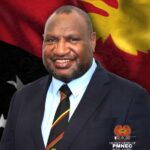
Hon. James Marape, GCL, MP
Prime Minister of Papua New Guinea