

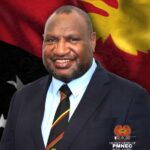

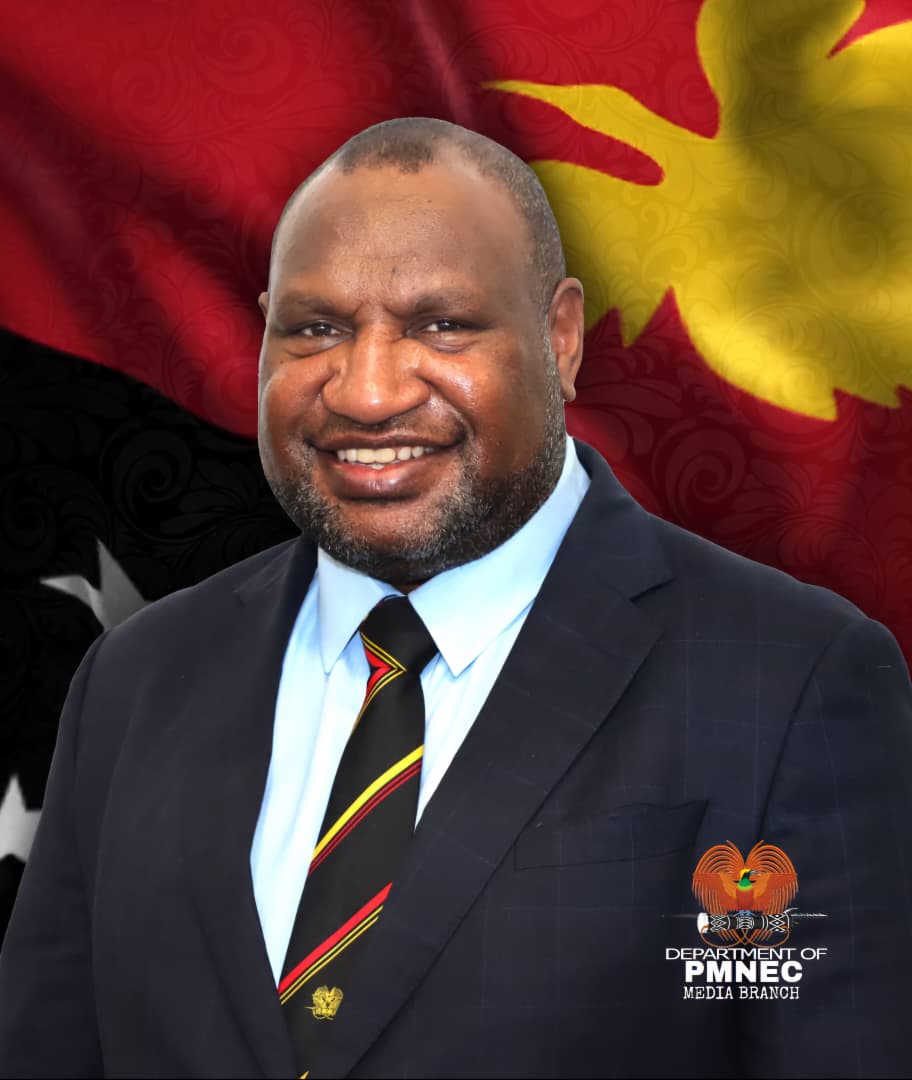

Prime Minister Hon. James Marape has welcomed the latest Westpac PNG Economic Update and Outlook as further independent confirmation that Papua New Guinea’s Economy remains resilient, is continuing to grow, and is moving in a positive direction under the Marape-Rosso Government.
Prime Minister Marape said the Westpac Report, released on 17 June 2026 and recently highlighted by The National, provides credible economic evidence that Papua New Guinea has withstood major Global and Domestic pressures while maintaining solid Growth, improving Foreign Exchange conditions, strengthening Export Earnings and attracting major Investment. Westpac forecasts real Gross Domestic Product growth of 4.6 per cent in 2026, following an estimated expansion of approximately 5.5 per cent in 2025. The Growth is being supported by both the Resource and Non-Resource Sectors of the Economy. Prime Minister Marape said the figures demonstrate that the Government’s Economic Policies and Reforms since taking Office in 2019 are progressively producing results. “I urge all doomsayers and naysayers to check the statistics, study our historical economic data, and compare Papua New Guinea’s performance with other Economies in the Region and around the world,” Prime Minister Marape said. “The independent assessment from Westpac is clear: our Economy is resilient, it is growing, foreign exchange conditions are improving, our exports are earning more, and major investments are progressing. This is not political propaganda. This is an assessment by one of the major financial institutions operating in Papua New Guinea and across the Region.”
PNG GROWING ABOVE THE GLOBAL AVERAGE
Prime Minister Marape said Westpac’s projected growth rate of 4.6 per cent for PNG in 2026 compares favourably with the wider
Global Economic Outlook. The World Bank’s June 2026 Global Economic Prospects Report forecasts global economic growth of only
2.5 per cent in 2026, amid geopolitical conflict, increased energy costs, trade uncertainty and weaker conditions in many developed and developing economies. This means Westpac’s 4.6 per cent growth projection for PNG is approximately 2.1 percentage points above the projected Global Growth Rate. Prime Minister Marape said this comparison was important because PNG is achieving Growth while many larger and more Developed Economies are confronting slowing activity, inflationary pressure, higher fuel costs and tighter financial conditions. “When the Global Economy is projected to grow by only 2.5 per cent and Papua New Guinea is forecast by Westpac to grow by 4.6 per cent, fair-minded people must acknowledge that our country is performing comparatively well,” he said. “We are not claiming that every challenge has disappeared. We are saying that the fundamentals are improving and that the Economy has demonstrated remarkable resilience despite COVID-19, international conflicts, inflation, natural disasters and global commodity volatility.” The Prime Minister also noted that other international institutions have issued different Growth projections based on their respective methodologies. The International Monetary Fund projected Growth of 3.8 per cent for PNG in
2026, while the Asian Development Bank projected 3.6 per cent. Importantly, both institutions also recognised PNG’s economic
resilience and the positive effects of macroeconomic reforms. “Whether the projection is 3.6 per cent, 3.8 per cent or Westpac’s 4.6 per cent, all credible forecasts point to continued positive Economic Growth,” Prime Minister Marape said. “The debate should therefore not be about whether PNG is growing. The evidence shows that it is. The important task is to ensure that Economic Growth is translated into jobs, better services, stronger businesses and improved living standards for our people.”
RESOURCE AND NON-RESOURCE SECTORS SUPPORTING GROWTH
The Westpac Report said PNG’s Economic Growth is being supported by both Resource and Non-Resource activities. Non-Resource Sectors, particularly Agriculture, Industry, Communications and Services, have continued to provide momentum, with increased activity also being observed in Provincial Centres. Prime Minister Marape said this was consistent with the Government’s Policy of growing the Economy beyond its traditional dependence on oil, gas, gold and other extractive industries.
“Our vision since 2019 has been to grow a Broad-Based Economy in which Agriculture, Fisheries, Forestry, Tourism, Manufacturing, Downstream Processing, Communications and Small-to-Medium Enterprises play a much larger role,” he said. “The Report’s recognition of expansion in Agriculture, Industry and Services shows that Growth is not confined only to major Resource Projects.” Westpac also identified Communications as one of the fastest-growing areas of the National Economy, supported by improvements in digital connectivity, including the roll-out of Starlink services and the Pukpuk-1 submarine cable. Prime Minister Marape said these developments complement the Government’s National Digital Transformation Agenda and its focus on expanding internet access, digital government services, financial inclusion and business opportunities throughout the country.
FOREIGN EXCHANGE CONDITIONS IMPROVING
One of the most significant findings in the Westpac Report is the continued improvement in Foreign Exchange availability. Westpac reported that Foreign Exchange conditions have improved materially, with faster clearing times and better market liquidity. The Report attributed this progress partly to Reforms supported by the International Monetary Fund and actions taken by the Bank of Papua New Guinea. Prime Minister Marape said Foreign Exchange shortages had been one of the most persistent constraints affecting Businesses and Importers for many years. “When our Government took Office in 2019, businesses were waiting for extended periods to access Foreign Currency, and the accumulated backlog was placing enormous pressure on commerce and investment,” he said. “We made the difficult but necessary decision to confront this structural problem instead of pretending it did not exist. The fact that Westpac is now reporting materially improved Foreign Exchange conditions, compressed clearing times and stronger liquidity demonstrates that the Reforms are taking effect.” The Prime Minister said the Government would continue working with the Bank of Papua New Guinea, Commercial Banks, Exporters, Resource Companies and Development Partners to further improve market access and ensure businesses can obtain Foreign Exchange more efficiently.
STRONG EXPORT EARNINGS
Westpac reported that PNG’s Liquefied Natural Gas Exports remained steady, with approximately 3.73 million tonnes exported by May 2026. Higher Global Prices have supported Export receipts. Gold Exports have also strengthened significantly because of higher prices and strong production performance from major Mining operations. The Agriculture Sector has benefited from strong Cocoa Export Earnings, while Coffee has continued to contribute following a favourable price cycle. Prime Minister Marape said the results demonstrate the strategic importance of supporting both major Resource Projects and the Renewable Agriculture Economy. “Our LNG, Gold, Cocoa and Coffee Exports are bringing Foreign Currency into the country, supporting businesses, strengthening Government revenue and sustaining livelihoods,” he said. “We will continue encouraging increased production, better market access, downstream processing and greater participation by Papua New Guinean companies and landowners.” The Prime Minister said the Government’s Policy remained focused on securing a greater national benefit from natural resources while investing in Agriculture and other renewable industries that directly involve rural communities.
INFLATION REMAINS RELATIVELY CONTAINED
Westpac reported that Annual Inflation stood at approximately 2.24 per cent in the March quarter of 2026, although price pressures varied between different parts of the country. Prime Minister Marape said the Government remained conscious of the pressures faced by families, particularly the cost of food, transport, housing and essential services. The Government introduced a K1 billion Fuel-Price Stabilisation programme to cushion consumers and businesses from the effects of increased international fuel and freight costs associated with conflict in the Middle East. The intervention helped cap Domestic Fuel Prices at March 2026 levels while supporting Fuel Importers. “Economic statistics must ultimately relate to the daily lives of our citizens,” Prime Minister Marape said. “That is why the Government acted to protect households, transport operators and businesses from the immediate impact of rising international fuel prices. We will continue balancing responsible economic management with targeted interventions to protect our people during periods of global instability.”
MAJOR PROJECTS TO SUPPORT THE NEXT PHASE OF GROWTH
Westpac identified the proposed US$14 billion Papua LNG Project as the most significant Medium-Term Economic Growth driver, with a Final Investment Decision anticipated later in 2026. The Report also highlighted the potential contribution of the Wafi-Golpu Project and continued infrastructure investment through the Connect PNG Programme. Prime Minister Marape said the anticipated Projects could provide employment, business opportunities, foreign exchange inflows, Government revenue and infrastructure development over the coming years. “Papua LNG, Wafi-Golpu and other major Investments will not stand alone. They will complement the growth already taking place in agriculture, communications, construction, services and provincial economies,” he said. “Our responsibility is to secure these investments on terms that protect the national interest, create opportunities for our citizens and generate lasting benefits beyond the life of each Project.”
GOVERNMENT RECORD SINCE 2019
Prime Minister Marape said the Government had inherited an Economy facing severe Fiscal pressure, Foreign Exchange shortages, high Debt-servicing obligations, declining Confidence and delayed major Projects. Since taking Office in 2019, the Government has pursued Fiscal consolidation, Foreign Exchange reform, increased support for Agriculture and Small Businesses, major Infrastructure Investment, improved Resource-Sector negotiations and closer engagement with International Financial Institutions. He said the latest Westpac Report must be viewed within that broader historical context. “Economic repair does not happen overnight, especially after years of accumulated structural problems and the unprecedented economic disruption caused by the COVID-19
Pandemic,” he said. “We have had to stabilise the Economy while continuing to fund Education, Health, Law and Order, Roads, Provincial Services and Household support. The work is not complete, but the direction is positive. The economy is larger, exports are stronger, foreign exchange access is improving, major projects are approaching critical investment stages, and independent institutions are recognising the resilience of Papua New Guinea.”
FOCUS TOWARDS 2027 AND BEYOND
Prime Minister Marape said the Government would remain focused on responsible Economic Management as Papua New Guinea approaches the 2027 National General Election. He said Economic Policy decisions would continue to be guided by the long-term national interest rather than short-term political considerations. “As we move towards 2027, we will not abandon discipline or engage in reckless spending merely for political convenience,” Prime Minister Marape said. “We will continue rebuilding the economy, supporting businesses, attracting investment, creating employment and directing more resources into education, health, infrastructure, law and order and rural development. Our people deserve an honest account of the economy—not exaggerated negativity from those who want Papua New Guinea to fail, and not unrealistic claims that every problem has been solved. The honest position is that challenges remain, but our country is resilient, our economy is growing, and our future is promising.” Prime Minister Marape called on Political Leaders, Commentators, Businesses and Citizens to assess the Government’s performance using credible statistics, historical data and fair international comparisons. “To the doomsayers and naysayers, I say again: check the data, compare PNG with the world, and examine where we were in 2019 against where we are today,” he said. “Papua New Guinea has survived extraordinary global pressures and is still forecast to grow well above the global average. This Government remains committed to building a stronger, more diversified and inclusive Economy so that the benefits of growth reach our Villages, Districts, Provinces, Businesses, Workers and Young People.”