
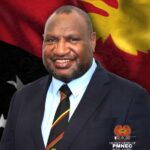
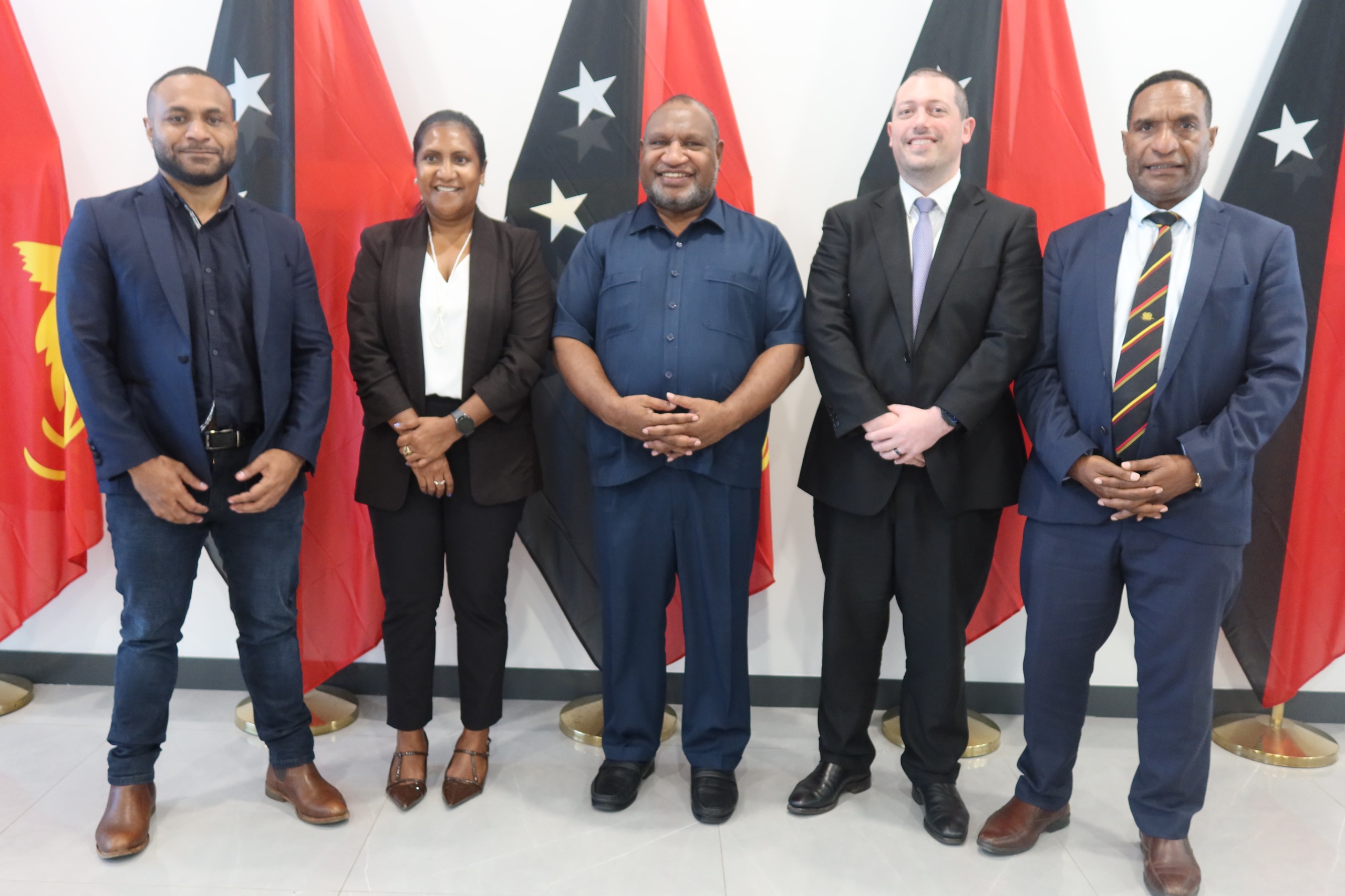

Prime Minister Hon. James Marape has commended the National Monitoring and Coordination Authority (NMCA) and accounting firm Deloitte for undertaking an important review of government expenditure and development spending, describing the exercise as a critical step towards strengthening accountability, transparency and value for money across Papua New Guinea.
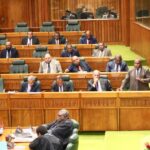
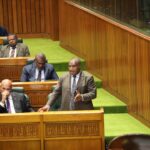
Speaking during an update meeting with NMCA and Deloitte representatives, Prime Minister Marape said the review provided government, Parliament, taxpayers and development partners with an important reference point for assessing how public funds were being spent and whether expenditure was translating into meaningful outcomes for citizens.
“I am presenting this report for people to scrutinise, challenge and verify,” Prime Minister Marape said.
“It is not enough for government to simply allocate money. We must know whether the money is reaching its intended destination and whether it is producing the outcomes that were promised.”
Prime Minister Marape said the review marked the beginning of a broader process of monitoring and evaluation rather than the conclusion of the exercise.
“This is not the end of the job. It is the next phase. The next step is to follow the money trail and determine whether projects funded by government are actually delivering value for money on the ground.”
He said independent verification would become increasingly important as government strengthened oversight of public expenditure.
“If government allocates K1 million to a project, we should be able to engage independent engineers, auditors or technical experts to verify whether K1 million worth of work has actually been completed.”
The Prime Minister stressed that the Government’s intention was not to target departments, agencies or public servants, but to ensure public resources were being used effectively.
“When we ask questions of departments, agencies, districts or provinces, we are not assuming anyone has done something wrong. We simply want to know where public money is going and whether it is contributing to our national development goals and Vision 2050 targets.”
Prime Minister Marape said the review was particularly important because government expenditure had grown significantly over the past two decades alongside substantial increases in national revenue.
He noted that total government revenue collections had increased from approximately K5 billion in 2007 to K16.78 billion in 2025.
“In 2007, our economy was worth less than K30 billion and government revenue collections were around K5 billion. Last year, total revenue reached K16.78 billion.
“The economy has grown substantially, revenue collections have improved substantially, and now we must ensure spending quality improves at the same pace.”
Prime Minister Marape highlighted significant improvements in tax collections, particularly through reforms undertaken by the Internal Revenue Commission and Customs.
He noted that Goods and Services Tax collections had risen to approximately K4.7 billion annually, reflecting the growth of economic activity across the country.
“GST collections alone indicate that Papua New Guinea’s economy continues to expand. More business activity means more economic participation and more opportunities for our people.”
The Prime Minister also pointed to improvements in revenue generated from the resources sector through reforms to major mining and petroleum agreements.
He said the Government had worked to secure higher returns for Papua New Guinea through taxes, royalties, dividends and other State benefits.
“In many of our resource projects today, when all State benefits are aggregated, Papua New Guinea receives close to 60 per cent of the total value generated through taxes, royalties, dividends and related benefits.”
Prime Minister Marape said stronger revenue performance must now be matched by stronger expenditure outcomes.
“The challenge before us is not simply collecting more money. The challenge is making sure every kina delivers maximum benefit for our people.”
He acknowledged that despite revenue growth, government continued to face significant pressures from increasing demands in health, education, infrastructure and other essential services.
“We still live in a world of scarcity. The needs of our people continue to outweigh available resources.
“That is why we remain focused on growing Papua New Guinea into a K200 billion economy. A larger economy will give us the revenue base needed to adequately fund all sectors.”
Prime Minister Marape indicated that the findings presented by NMCA and Deloitte would inform future reviews of major spending agencies, including departments responsible for infrastructure, education, health, finance and planning.
He encouraged the reviewers to continue their work at a more detailed level to determine whether appropriated funds were translating into tangible outcomes on the ground.
“The macro-level analysis has been completed. The next stage is to examine actual spending and actual project outcomes.”
“We want to know whether money allocated for small and medium enterprise development is actually reaching SMEs. We want to know whether infrastructure spending is resulting in completed infrastructure. We want to know whether expenditure is improving the lives of our people.”
Prime Minister Marape said stronger monitoring and evaluation systems were essential to ensuring government spending delivered measurable results.
“The Section 32 officers who authorise public expenditure must know that accountability expectations are becoming stronger.
“This exercise is about building a culture where public money is treated with the seriousness it deserves because it belongs to the people of Papua New Guinea.”
Prime Minister Marape thanked NMCA and Deloitte for their work and reaffirmed the Government’s commitment to strengthening oversight and accountability across the public sector.
“This work is important for the future of our country. It helps ensure that as our economy grows, the benefits of that growth are translated into better services, better infrastructure and better opportunities for our people.”