

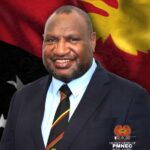

Prime Minister Marape has issued further clarification on the Government’s response to global fuel supply pressures, assuring Papua New Guineans that decisive measures are already being taken to protect consumers, businesses, and the broader economy from imported inflation.
Prime Minister Marape said his Government had a proven record of steering the country through both domestic and international crises, and would once again act responsibly and lawfully to shield Papua New Guinea from the worst effects of the current global oil supply situation. He said the Government had successfully led the nation through the economic challenges inherited in 2019, the COVID-19 pandemic in 2020 and 2021, and subsequent global shocks arising from the Russia-Ukraine war and the conflict in the Middle East.
“Our Government has demonstrated time and again that we know how to respond in times of crisis,” Prime Minister Marape said.
“We took office in 2019 against the backdrop of a recessed economy, then faced the once-in-a-century COVID-19 pandemic, which affected both the global economy and our own. We protected our consumers and our people then, and we will do so again now.”
Prime Minister Marape said the Government’s proposed K1 billion support envelope was a contingency framework and did not mean that the full amount was being immediately drawn from the Budget. He explained that sufficient provisions already existed within the 2026 Budget to allow an initial drawdown of K100 million, which would be used to support the country’s three fuel importers — Puma, ExxonMobil, and Ok Tedi Ltd — through targeted incentives.
He said the purpose of the intervention was to ensure that higher international fuel costs were not passed directly on to Papua New Guinean consumers, including households, companies, and industries.
“We are asking the three importers to continue selling fuel to local consumers, at both wholesale and retail level, at March prices,” he said. “The relief we provide will help bridge the gap between the higher prices they are paying on the international market and the March price levels we want maintained here at home.”
Prime Minister Marape said the intervention would be coordinated by the Ministry of Treasury, the Bank of Papua New Guinea, and the relevant economic agencies, including the Rural and Economic Ministry under Minister Joseph Lelang, to ensure the support was deployed quickly and effectively. He noted that Papua New Guinea currently had only three fuel importers, making the support mechanism practical and manageable.
He said the full K1 billion envelope would only be used if global oil prices remained high for an extended period. Should international prices stabilise and return to the range seen in March and April, only part of the facility may be required.
Prime Minister Marape further stated that the Government would complement the fuel support measures with a coordinated mix of fiscal and monetary policy to further insulate the economy from imported inflation.
“We will use all available policy tools to ensure our country is protected,” he said.
“On the fiscal side, Treasury will deploy targeted budget support and other macroeconomic measures to cushion the impact on households and businesses. The Treasurer and the Minister for Economy will work closely together to ensure these interventions are timely and effective.”
“At the same time, we have asked the Bank of Papua New Guinea to utilise monetary policy to complement these efforts. This includes managing the stability of the kina, preventing excessive depreciation, and reviewing interest rate settings where necessary to support economic activity.”
Prime Minister Marape said the combination of fiscal and monetary policy would play a critical role in maintaining stability in the face of global pressures.
“Through this coordinated approach, we aim to control inflation by managing the cost drivers, particularly fuel, while maintaining overall economic stability,” he said.
“We may not be able to eliminate all external pressures, but we will minimise their impact to the greatest extent possible in the national interest.”
Prime Minister Marape also rejected criticism suggesting the Government was acting outside the law or should immediately return to Parliament before taking action. He said the Government was operating within the powers already available under Sections 3 and 4 of the Public Finance Management Act, and within facilities already appropriated in the Budget.
“We will not do anything that breaks the law,” he said.
“This Government knows exactly what it is doing. We know when Parliament needs to be involved, and if later in the year further adjustments are required — especially if additional revenues flow from higher oil prices through PNG LNG — then we can make those changes through a supplementary budget.”
Prime Minister Marape said the immediate priority was to use the Budget provisions already available to keep fuel prices stable and prevent imported inflation from placing excessive pressure on the economy.
“Our people should be assured that relief is being put in place,” he said.
“We intend to maintain fuel prices at March levels going forward, and we will continue to act in the best interests of our country and our people.”