
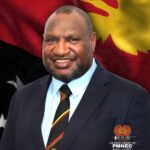
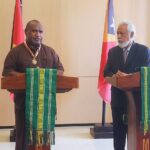
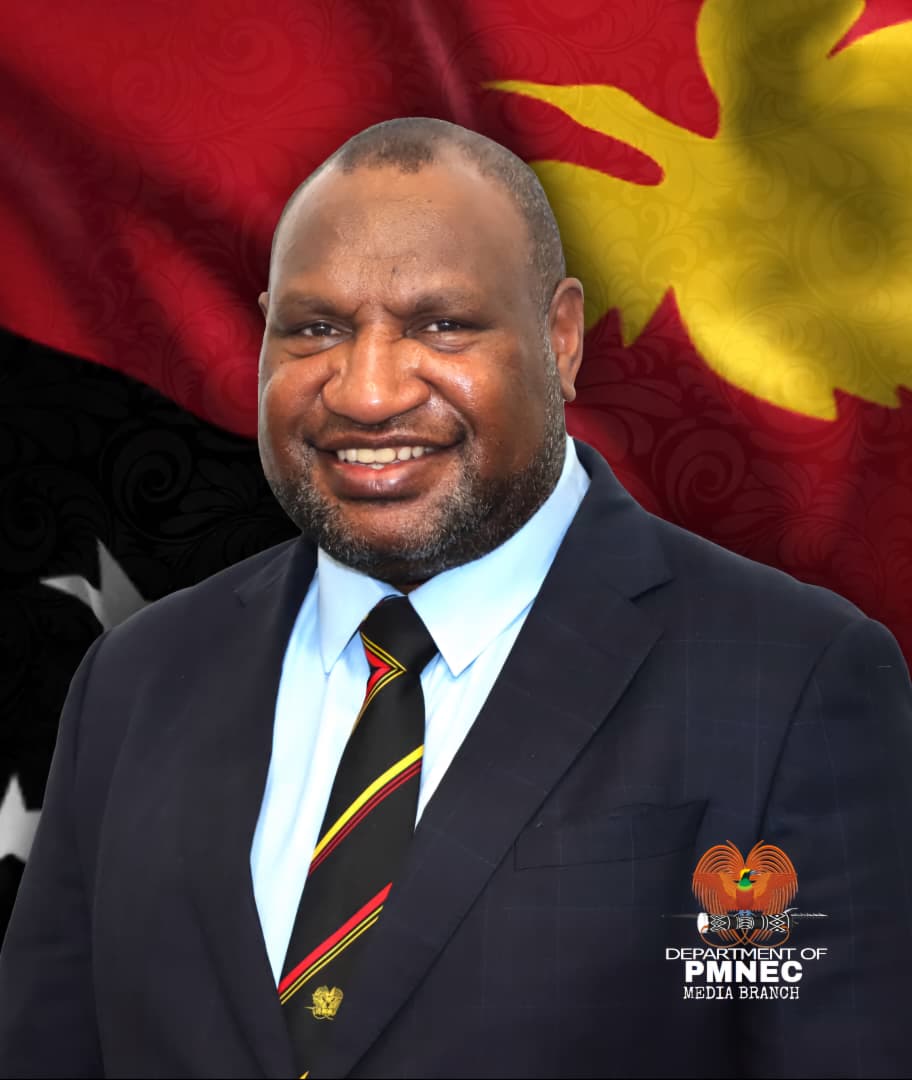

Prime Minister Hon. James Marape has officially launched the Investment Fund of Papua New Guinea, formerly the Pacific Balanced Fund, calling on ordinary Papua New Guineans to become investors, owners and beneficiaries of the country’s growing economy.
Speaking at the official rebranding and launch at APEC Haus on Thursday evening, Prime Minister Marape challenged the Fund to become a multibillion-kina national investment institution that would mobilise domestic savings, finance national development and build wealth for future generations.
He commended Weathermen Capital Advisors Limited for its stewardship of the Pacific Balanced Fund since 2023, noting improvements in governance, financial performance and accountability, including the recent announcement of a K25 million dividend for unit holders.
“Let’s open up for the mums and dads and every other Papua New Guinean out there, instead of just us in the white-collar space,” Prime Minister Marape said.
Building a Nation of Investors
Prime Minister Marape called on the Fund to extend investment opportunities to coffee, cocoa, vanilla, oil palm and copra growers, market vendors, small business operators and resource landowners.
He said if one million Papua New Guinean families saved K50 each month, they would collectively generate K600 million annually, or K6 billion over 10 years, excluding investment returns.
“If one million families find K50 a month, and you compound and aggregate this over 10 years, 15 years or 20 years, these simple contributions can create the wealth we want for our country,” he said.
Prime Minister Marape encouraged families to reduce expenditure on alcohol, cigarettes, betel nut and sugary drinks and redirect those savings into productive investments.
He also called on International Trade and Investment Minister Hon. Richard Maru to develop a policy under which the Government could match citizens’ investment contributions on a kina-for-kina basis.
“You contribute one kina, your Government will contribute another kina,” he said, outlining the proposed policy.
A family investing just K50 a month consistently over 20 years could accumulate approximately K38,000 at an illustrative annual return of 10 per cent, compounded monthly, from personal contributions totalling just K12,000. If the Government matched those contributions kina-for-kina, the family’s investment could grow to approximately K76,000, creating a valuable financial inheritance for the next generation.
This demonstrates the power of compound investment – money making money – and how consistent savings, reinvested earnings and Government support could transform modest household contributions into generational wealth.
Prime Minister Marape recalled how his mother earned income through roadside markets to finance her children’s education, demonstrating the economic potential of ordinary Papua New Guineans.
Protecting National Wealth from Political Interference
Prime Minister Marape stressed that the Fund must remain professionally managed, independently governed and free from political interference.
He recalled how his father had invested in the former Investment Corporation of Papua New Guinea and expressed disappointment over the historical mismanagement of investments belonging to ordinary citizens.
“What we are doing will be totally in vain if we don’t get sticky political hands out of the picture,” he said.
“We set up regulations and policies and let our people contribute.”
Prime Minister Marape acknowledged the contributions of former prime ministers Sir Mekere Morauta and Grand Chief Sir Michael Somare, particularly their economic reforms and efforts to strengthen political stability and institutional independence.
He said the success of Nasfund, Nambawan Super and the Mineral Resources Development Company demonstrated the importance of sound governance and professional management.
K200 Billion Economy Within Reach
Prime Minister Marape expressed confidence that Papua New Guinea would achieve a K200 billion economy by 2029 or 2030, backed by close to US$60 billion in prospective major resource projects over the next 10 to 15 years.
He said PNG’s economy had grown from approximately US 3 billion in 2000, US 24 billion in 2019 and an estimated US$36 billion, or K160 billion, in 2026.
Further economic expansion would be driven by Papua LNG, Wafi-Golpu, Pasca A, P’nyang LNG, Frieda River, Yandera and other major resource projects.
Prime Minister Marape anticipated a significant announcement concerning the US10 billion P’nyang LNG Project expected to follow.
He said his Government had pursued resource development agreements targeting an overall State take of approximately 55 per cent, complemented by stronger local content provisions.
“By the time we arrive in 2029 or 2030, we will hit the K200 billion economy we have been chasing,” he said.
2027 Budget to Provide Further Relief
Prime Minister Marape foreshadowed further cost-of-living relief measures in the 2027 National Budget, scheduled to be presented on Tuesday, December 1, 2026.
These include the proposed removal of the 10 per cent GST on qualifying purchases by first-time homebuyers, personal income tax relief, lower motor vehicle import duties and adjustments to banking sector taxation.
“We know we are all struggling in the economy. We know you are employed and you carry the entire tribe with you in your pay packet,” he said.
He said the Government was working to ease the financial burden on families and urged businesses to pass on the benefits of proposed tax reductions to consumers.
From Political Independence to Economic Independence
Reflecting on the recent parliamentary debate on Bougainville, Prime Minister Marape emphasised the importance of economic independence as a foundation for political independence.
“What is the relevance of political independence if you do not have an economic base?” he said.
He said Papua New Guinea had defied predictions of failure following Independence in 1975, despite its extraordinary cultural and linguistic diversity.
“We are the most diverse nation on the face of planet Earth. That diversity has kept us together as one people, one nation, one country,” he said.
Prime Minister Marape pledged to personally champion the Investment Fund of Papua New Guinea.
“I will be its number one salesman,” he said.
He encouraged Papua New Guineans to embrace savings and investment, saying the country’s second 50 years of Independence must focus on economic self-reliance, national ownership and building generational wealth.