
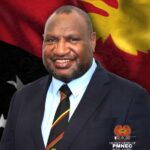
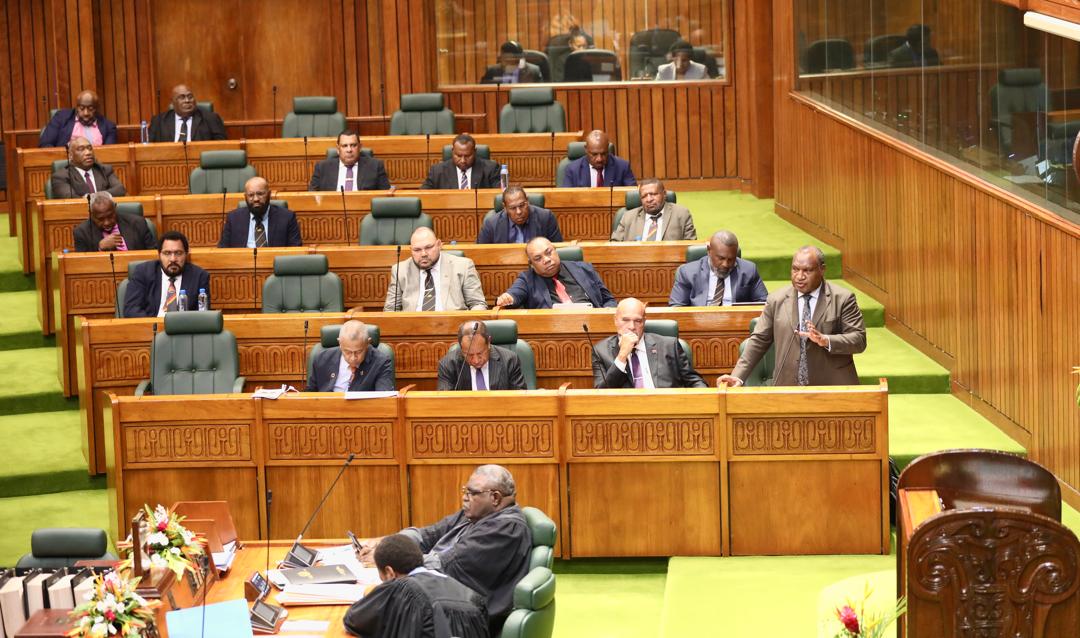

Prime Minister Hon. James Marape has welcomed a parliamentary report into alleged multibillion-kina gold smuggling and regulatory failures in Papua New Guinea’s alluvial mining sector, pledging legislative reforms before the 2027 National General Election, renewed efforts to establish a world-class gold refinery and stronger enforcement against illegal gold trading.
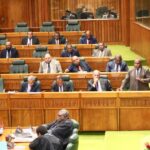
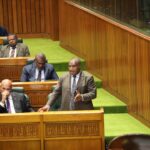
Prime Minister Marape made the commitment in Parliament today in response to Northern Governor Gary Juffa, who presented the first of three reports by the Special Parliamentary Committee on Public Sector Reforms into the governance, regulation and economic sovereignty of the alluvial gold mining industry.
Governor Juffa told Parliament that the committee’s investigations indicated that between K1.5 billion and K6 billion worth of gold could be leaving Papua New Guinea annually without being properly recorded, taxed or processed through the formal banking system.
The committee also raised allegations involving foreign-controlled gold operations, manipulation of gold purity declarations, airport security weaknesses, suspicious financial transactions and failures by government agencies to investigate suspected offenders.
Prime Minister Marape commended Governor Juffa and his committee for highlighting these serious concerns, describing the Northern Governor as a no-nonsense leader committed to protecting Papua New Guinea’s national interests.
He said his Government had recognised the importance of protecting Papua New Guinean participation in alluvial mining since taking office in 2019, leading to a policy decision in 2021 to reserve the sector for citizens.
“When I briefly held the Mining portfolio, applications for alluvial mining permits came before my office, including applications involving foreign interests,” Prime Minister Marape said.
“We made a policy decision in 2021 that alluvial mining must be for Papua New Guineans.
“What this committee has highlighted is the need to translate that policy into law, either through standalone legislation governing alluvial mining or amendments to the existing Mining Act.
“I give my fullest commitment to this Parliament that this is something we must do before we go to the elections.”
Prime Minister Marape said the Government would examine the committee’s recommendations and work towards providing legislative clarity on citizen ownership and participation in alluvial mining.
He also reaffirmed his Government’s ambition to establish a national gold refinery, saying Papua New Guinea must move beyond exporting unrefined gold and retain greater value from its mineral resources.
The Prime Minister said discussions on domestic gold refining had been ongoing since 2019 but had encountered competing commercial interests and resistance from sections of the gold export industry.
He proposed a broad-based ownership structure involving alluvial miners, Kumul Minerals Holdings, provincial governments, superannuation funds, Papua New Guinean investors and reputable international partners connected to global bullion markets.
“This refinery must represent the collective aspirations of our alluvial miners and our country,” he said. “It must be a world-standard refinery, and it must offer world prices for gold.
“If those two conditions can be met in Papua New Guinea, why should our people continue selling their gold offshore?”
Prime Minister Marape said an internationally competitive domestic refinery could pave the way for restrictions on unrefined gold exports while ensuring legitimate miners received competitive international prices.
Addressing allegations involving an unnamed foreign-controlled gold exporter identified by the committee as Company X, the Prime Minister questioned why responsible agencies had not taken stronger action where evidence of possible wrongdoing existed.
He rejected suggestions that he had prevented the Mineral Resources Authority, police, airport authorities or financial regulators from carrying out their lawful responsibilities.
“Since 2019, when did James Marape tell the Mineral Resources Authority not to do its work? When did James Marape tell the Police Commissioner not to make arrests?” he asked.
“The Police Commissioner and all responsible agencies must do their jobs. Follow the money trail. It is as simple as that.”
Prime Minister Marape called on police, the Bank of Papua New Guinea and relevant financial intelligence authorities to investigate suspicious transactions, suspected money laundering and illegal gold exports, including pursuing the freezing of bank accounts where authorised by law.
He said the findings reinforced the need for stronger financial regulation and enforcement, particularly following Papua New Guinea’s placement on the Financial Action Task Force grey list in February 2026.
“Our country does not lack laws. What we lack is people who will follow the laws and enforce them,” Prime Minister Marape said.
He urged responsible ministers, departments and agencies to work with the parliamentary committee to progress legislative reforms, strengthen oversight of gold exports and develop a practical framework for domestic refining.
The Prime Minister said the reforms were consistent with the Government’s wider economic policy of downstream processing, greater national participation and retaining more wealth from Papua New Guinea’s natural resources.
“Whether it is gold, coffee, fisheries or other resources, we must add value in our own country,” he said.
Prime Minister Marape reaffirmed his Government’s commitment to protecting the interests of Papua New Guinean alluvial miners, strengthening enforcement against illegal gold trading and ensuring the country’s mineral wealth delivered lasting benefits to its people.