


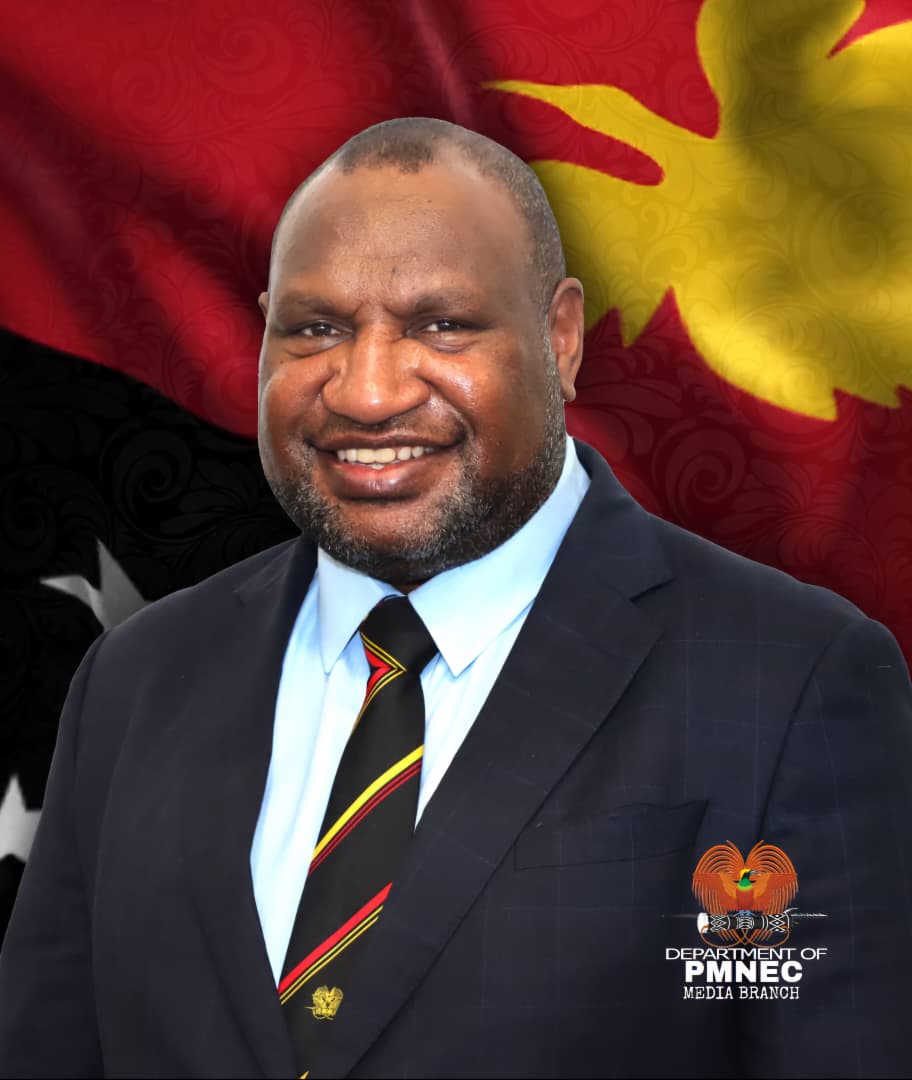

Prime Minister Hon. James Marape has announced that the National Executive Council (Cabinet), at its meeting on 22 July 2026, approved the immediate suspension of more than 70 heads of public sector institutions who have failed to comply with mandatory annual reporting requirements prescribed by law.
Those affected include departmental and agency heads, provincial administrators, Provincial Health Authority (PHA) Chief Executive Officers, university heads, State-Owned Enterprise (SOE) Chief Executive Officers, heads of the disciplined forces, and heads of constitutional offices who have failed to submit their annual performance reports as required by law.
The Prime Minister said the decision was non-discriminatory and applied equally to every affected officer.
“This decision is non-discriminatory. It does not matter who you are or what position you hold. If your name appears on the list of non-compliant agency heads circulated last week, your suspension takes immediate effect.”
Prime Minister Marape said the Government’s compliance review found that many agency heads had failed to meet statutory reporting deadlines of 31 March each year, together with other reporting obligations due by 30 June, where applicable.
He said the Government had reviewed outstanding reports covering 2023, 2024 and 2025, and found that a number of agency heads had repeatedly failed to meet their legal obligations.
“Some of these officers are serial offenders. Some have habitually failed to report on the funds entrusted to them and the administration of their respective organisations.
“As Section 32 officers entrusted with managing public resources, they have a legal responsibility to report on the funds they have received, how those funds have been administered, and the work carried out by their organisations. The Government and the people have a right to know what has been achieved.”
The Prime Minister said the two most important responsibilities of every agency head are the proper management of public finances and human resources, and both require accountability through timely annual reporting.
He said annual reporting is one of the cornerstones of good governance.
“Reports submitted by departments and agencies are consolidated by the Central Government before being considered by Cabinet and tabled in Parliament. Through this process, Parliament and the people are informed of the performance of public institutions. These reports also form the basis for agencies to submit their annual work plans and funding requests through the national Budget process.
“That is how government is supposed to function. Accountability, transparency and proper reporting are not optional—they are fundamental responsibilities of public sector leadership.”
Prime Minister Marape said 2026 is Papua New Guinea’s Year of Reset, and restoring discipline across the Public Service begins with ensuring that public officials comply with the most basic requirements of the law.
“In this important Year of Reset, we simply have to get the basics right.”
The Prime Minister said the Cabinet decision followed his written directive issued on 22 July 2026 to the Deputy Prime Minister and all Ministers, requiring them to assess the annual reporting compliance of departments and agencies under their respective portfolios.
In that directive, the Prime Minister advised Ministers that the Government’s position was that agency heads who had failed to comply with statutory reporting requirements over successive years would be suspended. Ministers were also requested to verify the compliance records of agencies under their responsibility and recommend suitable deputies to serve in acting capacities during the suspension period.
Prime Minister Marape said the Chief Secretary to Government has been directed to work with the Department of Personnel Management to immediately implement the Cabinet decision, appoint acting heads where necessary, and conduct investigations into each affected officer.
The investigations will determine whether officers have breached the conditions of their employment contracts and whether disciplinary action, including dismissal from the Public Service, is warranted.
Prime Minister Marape acknowledged that some officers may have genuine reasons for not submitting their reports.
“Some may have genuine reasons. Some cases may simply be an oversight. That is why the suspension period provides every affected officer with the opportunity to explain their circumstances and clear themselves if they are genuinely not at fault.”
He added that if investigations establish that failures occurred because finance managers, human resource managers or other responsible officers neglected their duties, those officers would also be held accountable.
“If it is not the head of the organisation, but finance managers, human resource managers or other officers who have failed to perform their responsibilities, then those responsible will also be held accountable.”
Prime Minister Marape expressed particular concern that some of the country’s leading public institutions had become repeat offenders.
“It is alarming that many of our university heads—people who are highly educated and who should understand the basics of public administration—have themselves failed to comply with annual reporting requirements.
“Provincial administrations and Provincial Health Authorities have also become serial offenders in many cases.”
The Prime Minister also called on constitutional offices and other publicly funded institutions to demonstrate the highest standards of accountability by reporting annually on their activities and performance to Parliament and the people.
Prime Minister Marape said the Government had repeatedly reminded agency heads over many years of their reporting obligations through the Chief Secretary’s Office and through the contractual conditions attached to their appointments.
“This is not a new requirement. Every head of department and agency accepted these reporting obligations when they signed their contracts. They have been reminded year after year, yet many have continued to ignore these responsibilities.”
The Prime Minister acknowledged that this was the first time during his seven years in office that such comprehensive action had been taken against non-compliant agency heads.
“Some may ask why this action is being taken now. Better late than never. During my seven years as Prime Minister there have been many competing national priorities, and at times political considerations affected the timing of management decisions. Today, I am simply doing what the law requires me to do.”
Prime Minister Marape said the reforms are aimed at addressing one of the chronic weaknesses in Papua New Guinea’s Public Service.
“This exercise is about addressing one of the chronic issues in our Public Service machinery—accountability. Leadership is not only about exercising authority; it is about accounting for the resources entrusted to you and the results you deliver.”
He said the action was intended to establish a new culture of accountability throughout the Public Service as Papua New Guinea prepares to enter its 51st year of Independence.
“I want every head of department, every head of a constitutional office, every university head, every Provincial Administrator, every PHA Chief Executive Officer, every SOE head and every leader of our disciplined forces to understand that leadership comes with responsibility.
“You must account for the work you have done, the public funds you have managed and the results you have delivered. That is good governance. That is transparency. That is accountability.
“We have had enough of people failing to report on the work entrusted to them. That culture must end.
“As we journey into Papua New Guinea’s 51st year of Independence, every public servant must work, account for the public funds entrusted to them, and report on the work they have done during the previous year.
“2026 is our Year of Reset. Let us get the basics right.”