





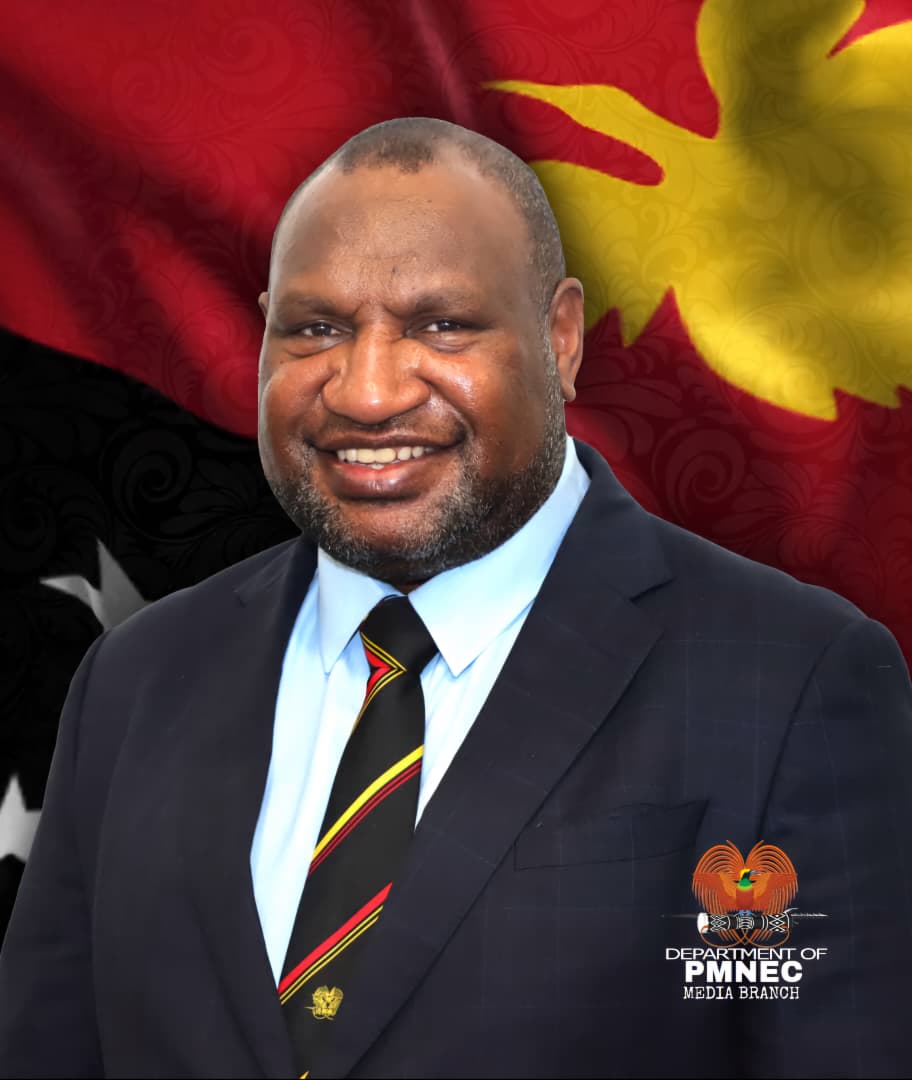

Prime Minister Hon. James Marape has directed stronger enforcement measures across the Public Service following the release of a briefing showing widespread failure by government agencies and provincial governments to submit their mandatory 2025 Annual Performance Reports.
The Prime Minister said the findings were deeply concerning and reflected a culture of complacency that had no place in a modern, accountable public service.
He said annual performance reporting was a legal obligation under Section 22 of the PM&NEC Act 2020 (as amended), and formed one of the most important accountability mechanisms through which Parliament, Government and the people of Papua New Guinea assessed the performance of public institutions.
“Every kina appropriated by Parliament belongs to the people of Papua New Guinea. Every public institution entrusted with those funds has a legal and moral responsibility to account for how those resources are used and what results have been achieved.
“This is not simply about producing another government document. Annual reports demonstrate transparency, accountability, good governance and respect for Parliament and the taxpayers who fund every agency.”
Prime Minister Marape said agencies that consistently ignored their reporting obligations undermined public confidence in government institutions and weakened the country’s governance framework.
“When agencies fail to report, we cannot accurately measure performance, identify weaknesses, improve service delivery or ensure public funds are producing results. Accountability cannot exist without reporting.”
The briefing prepared by Chief Secretary to Government Ivan Pomaleu highlighted several longstanding issues affecting compliance across government, including persistent non-compliance with statutory reporting obligations, political interference that delays reporting, administrative bottlenecks, overlapping institutional mandates, inadequate funding for monitoring and evaluation, and the diversion of resources away from statutory responsibilities.
The report also revealed significant compliance gaps across the Public Service:
• Economic Sector Agencies: 73 per cent compliance (22 of 30 agencies)
• Law and Order Sector: 67 per cent (10 of 15 agencies)
• Administrative Sector: 48 per cent (14 of 29 agencies)
• Social Sector: 31 per cent (15 of 49 agencies)
• Provincial Governments: Just 9 per cent (3 of 22 provincial governments)
Prime Minister Marape said while some sectors had demonstrated encouraging levels of compliance, the overall results remained unacceptable.
“It is particularly concerning that less than one-third of our social sector agencies have complied. These are agencies responsible for education, health, community development and many of the frontline services that directly affect our people every day.
“It is equally concerning that only three provincial governments submitted their reports. Provincial governments are where much of our service delivery takes place. They must also be accountable.”
The Prime Minister said ministers would now be expected to personally ensure agencies within their portfolios complied with all statutory reporting requirements.
“I expect every minister to exercise proper oversight over the departments, statutory authorities, commissions, state agencies and provincial entities under their responsibility.
“Leadership means more than setting policy. It also means ensuring institutions meet their legal obligations.”
Prime Minister Marape said the Government would implement the Chief Secretary’s recommendation requiring ministers to enforce compliance within their portfolios and strengthen accountability mechanisms throughout the Public Service.
He also welcomed the establishment of a comprehensive registry recording which agencies had complied within the statutory deadline, those that submitted late, and those that had failed to submit altogether.
“Transparency begins with knowing who is complying and who is not. We will not hide poor performance. Agencies must understand that their level of compliance is now being closely monitored.”
Prime Minister Marape said annual performance reports were not merely administrative exercises but important planning tools that informed national policy, budgeting and development priorities.
“Our Vision 2050, Medium Term Development Plan IV and annual budgets all depend on accurate reporting from agencies. If agencies fail to report honestly and on time, government planning suffers and ultimately our people suffer.”
He said his Government was committed to building a culture where performance was measured objectively and leaders were held accountable for results.
“As we celebrate 50 years of nationhood and prepare Papua New Guinea for the next 50 years, we must also strengthen the institutions that support our democracy.
“We cannot build a stronger nation on weak accountability.
“We must build a Public Service where performance is measured, leadership is responsible, and accountability becomes part of our everyday culture.”
Prime Minister Marape warned that agency heads and leaders who continued to ignore their statutory obligations without reasonable justification would face immediate administrative action.
“Those who have failed to report and cannot provide a satisfactory explanation should resign forthwith.
“If they are unwilling to do so, my Government will commence the proper administrative processes to remove them from office. We appoint department heads, agency heads and public sector leaders to perform their duties, and that includes complying with the law by submitting their annual reports.
“If they cannot carry out that basic responsibility, they will be asked to go—without fear or favour.
“The days of treating annual reporting as optional are over.
“Every public institution must understand that accountability is no longer negotiable. The Government will insist on higher standards because the people of Papua New Guinea deserve nothing less.”
He said improving reporting compliance would strengthen governance, improve service delivery, support better policy decisions, reinforce parliamentary oversight and restore public confidence in government institutions as Papua New Guinea enters its next phase of national development.