
The Marape-Rosso Government is intent on overhauling the current education system by carefully upgrading the structure year-by-year so that by 2035, young Papua New Guineans coming out of the school system will have been educated by degree-level educators, matriculated at Grade 12 level, and received basic holistic skills in ICT, business, vocational and technical training.
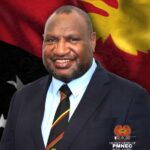
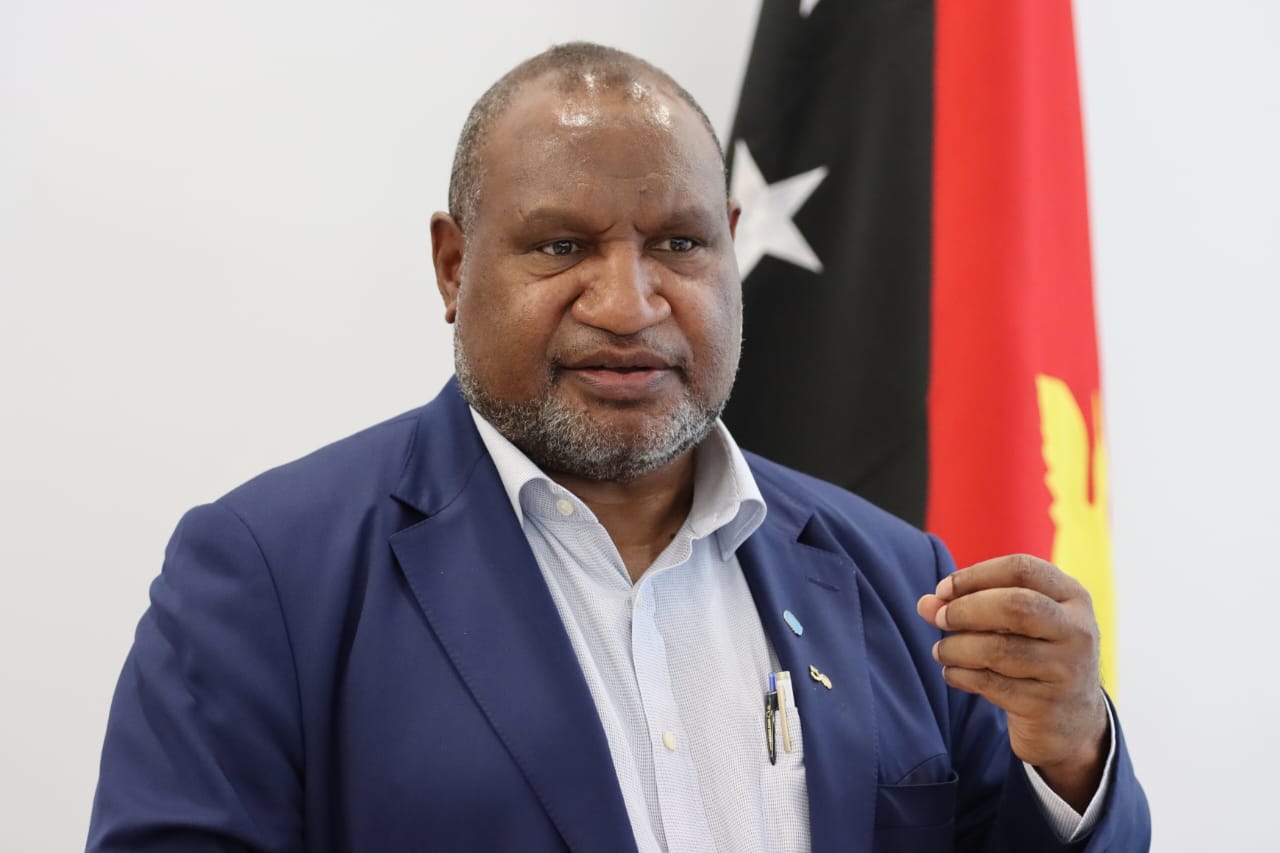
Prime Minister Hon. James Marape today reiterated the K11 billion education intervention by his government, calling it the biggest deliberate effort any government has planned for the education and human resource sectors, an intervention he says stands to surpass even the one made in infrastructure development for PNG.
He said the overhaul was to restructure the current education system and to elevate it to a level that is equal to world standard, where young Papua New Guineans coming out at Grade 12 would be truly well-educated and trained with appropriate basic skills to fit in at any university or college of choice, pursue technical training, or become self-employed after leaving school.
“This is a major holistic revamp of our education architecture, considering the downside of the system inherited in the last 50 years that has created many unemployable youths. This revamp will focus our attention on the number one resource of our country – human resource. We must invest in quality education, similar to those given in Australia, USA, China, Japan and First World nations,” said the Prime Minister.
“The PNG education system must be on par with the world’s best. This is a statement I made earlier when I was Education Minister while alluding to the Australian standard as the model, and I stand by it today. From our system, we will have our own characteristics; our character/personal development; TVET skills development; our sports and Melanesian-Christian worldview focus.”
Prime Minister Marape highlighted the expenditure details contained within the K11 billion, 10-year envelope, which would target the following areas:
1. Upgrading teachers’ qualification to degree level;
2. Upgrade of teachers’ salaries in tandem with degree-level qualification;
3. Upgrade of all school facilities in classrooms, teachers’ houses, science laboratories, practical skills workshops, sports amenities and WASH facilities for primary and high schools right across the country;
4. Upgrade of the school curriculum in the mainstream subjects of Math, English, Science, Social Science;
5. Upgrade of the school curriculum to include courses on character development;
6. Upgrade of the school curriculum to include skills training in ICT, business, technical and vocational areas;
7. Upgrade of the school curriculum to focus on sports development in a greater way;
8. Better integration of children living with disabilities into the school system;
9. Making available space in the system to include all children, correct the teacher-student ratio for schools with overpopulation of students, eliminating push-outs at Grade 8 and 10, and progressing all young Papua New Guineans to Grade 12 for matriculation.
The Prime Minister acknowledged the costs involved in this major overhaul but reassured PNG of the returns in human resource development for the country during this period and going into the future.
Prime Minister Marape said the focus would be given on all levels of education from early childhood learning, to primary school, to secondary school until the student passes out at Grade 12 and not before.
“This is serious work we are embarking on, ranking on par with Connect PNG allocations, if not greater than Connect PNG. For the next 10 years, we are working this space and by the time PNG celebrates 60 years of Independence, we will have the human capital to productively contribute to the wellbeing of the country, and students fully benefiting from their right to education,” he said.
“We now have this 1-6-6 structure (1 year childhood learning; 6 years primary education; 6 years secondary education) that we want to implement faithfully. Every child that enters our school from early childhood learning must have the space to enrol in Grade 1 to Grade 6, then Grade 7 to Grade 12.
“This is the education destination that we want to take our country to – that no child is dropped off at Grade 6 or Grade 8 or Grade 10 but every child that enters early childhood learning has space available at Grade 1, has teachers available, and has the relevant curriculum available at all levels from primary to secondary school,” said PM Marape.
Prime Minister Marape said Government would roll out this major intervention in the next five to six years so that by the time PNG celebrates 60 years of nationhood in 2035, this restructure becomes fully operational.
“To make sure that this structure is working, our government – for the first time – is allocating a K11 billion envelope to make sure that this structure is fully fixed and prepared in the next 10 years right till 2035.
“After 50 years as part of our reset, we want to invest big in our education sector just like we investing in other sectors like roads and infrastructure,” he said.
PM Marape said he would be personally involved in making sure that the education upgrade blueprint is written clearly to deliver the 1-6-6 structure for a better national outcome for PNG.
“I am a great believer in the power of education transforming our country. No child is born useless, and no child should be left behind. Every child is a gift of God to our country.
“I make this point in my own story. When I left Kabiufa Adventist Secondary School in 1989 as an 18-year-old, I already knew basic bookkeeping; I knew about looking after stores; I knew basic carpentry, farming, poultry, bee-keeping. These were skills I acquired in my 6-years of high school. If I wasn’t accepted by UPNG for studies, I am certain I would have become a successful entrepreneur by now, utilizing the skills received in high school, as some of my schoolmates with no college offers have done after leaving Kabiufa.
“This intervention is now our government’s number one responsibility to making sure that quality education and enough space is made available for all our children in the country,” said PM Marape.
The Prime Minister said out of this overhaul, PNG would be in the best position to have qualified, skilled workforce both for the country and to export abroad.
“We want educated, skilled Papua New Guineans 10 years from today who are fully resourced to work in the country and abroad.
“I see a growing need for labour in Australia, New Zealand and the Western world – in general labour, in trade skills, and in niche areas such as police, nursing, aviation, medicine and so on,” he said. Highlighting the example of United Arab Emirates where he just returned from an official visit, PM Marape said the country employs skilled members for its workforce from across the world, indicating that opportunities are available everywhere for qualified skilled people, including those from PNG.