

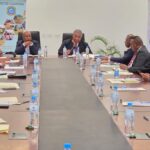
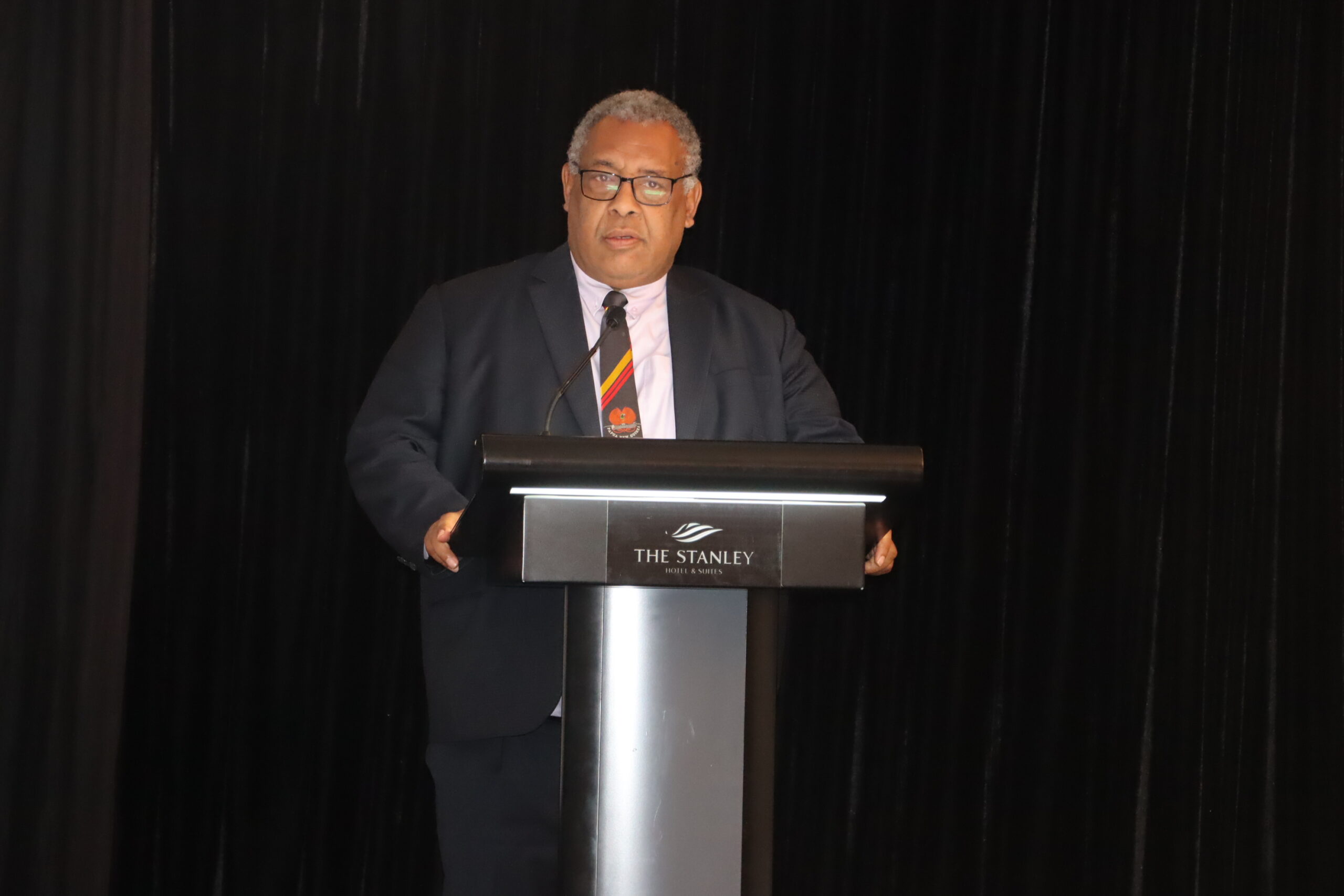

The Privet Gavamani Konekt Dialogue has reaffirmed the indispensable partnership between the Government and the Private sector as central to Papua New Guinea’s development. This event was held on 3rd February in Port Moresby.
In this dialogue, Government Officials, Development Partners, Investors and Private Sectors come together to discuss a way forward, which is aimed at strengthening Government-Business Partnership for a Harmonized Economy.
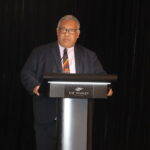
Chief Secretary Ivan Pomaleu, OBE who delivered the opening address welcomed the frank and constructive exchanges at the forum and reaffirmed the Government’s commitment to working with businesses to deliver inclusive, sustainable and jobs-rich growth.
He said 2026 is a turning point.
“This year presents a narrow but decisive window to convert opportunity into outcomes, new partnerships, investments, jobs, sectors and ideas before the next electoral cycle. Plans alone will not deliver; partnerships will,” the Chief Secretary highlighted.
Therefore, the Government has called on all stakeholders to move from dialogue to delivery and to work together in practical, result-oriented ways.
Mr. Pomaleu stressed that strategic national frameworks provide our shared direction.
“Our 50 year review has acknowledged progress while confronting missed opportunities and structural weaknesses, he said.
The Chief Secretary highlighted that the 20-Year National Road map remains our non-partisan anchor, designed to secure long-term stability, growth and prosperity. Its core principle private sector-led, government-facilitated growth will guide policy and investment.
“Government will be the largest investor in 2026, committing over K10.8 billion through initiatives including Connect PNG and Medium Term Development Plan 4 for capital investments in roads, bridges, ports, airports and utilities,” he said.
In addition, he mentioned that major projects advancing this agenda include the reopening of Pogera, Papua LNG, Pasca A and the expansion of Special Economic Zones.
“These investments aim to capitalize on commodity cycles and attract global capital while laying foundations for diversified growth,” he said.
Mr. Pomaleu stressed that we recognize the challenges facing business: foreign exchange shortages, infrastructure reliability, regulatory uncertainty, skills gaps, governance weaknesses and corruption.
“The Government’s role is to rebalance the economy by expanding public-private partnerships, divesting non-core state functions, and strengthening regulation to ensure transparency, predictability and efficiency. Investors do not fear regulation; they fear uncertainty. Consistency and clarity will build the trust necessary for sustained investment,” he explained.
Further Mr. Pomaleu highlighted that our priorities are clear:
- Youth employment: PNG’s large youth population is our greatest opportunity and a critical risk if left unaddressed.
- Job creation: across agriculture, SMEs, business services and technology – will be the principal test of every reform.
- Diaspora engagement: PNG’s diaspora is an untapped asset. We will pursue policies that convert brain drain into brain gain and encourage diaspora investment and participation.
- Digitization and technology: Accelerating digital government services and the adoption of modern technology will cut red tape, strengthen financial systems, and improve data-driven decision making and service delivery.
Climate resilience and green business: Sustainable, climate-resilient growth is essential for PNG’s competitiveness and international standing. We will align economic development with environmental responsibility.
He said the 20-year road map provides direction and our medium-term plan provides tools. The Government to Business Consultative Forum must now prioritize execution hence, shifting from conversation alone to meaningful delivery that transcends political cycles.
Therefore, the Chief Secretary has called on the private sector, development partners, civil society and all levels of government to unite behind this common purpose.
“PNG’s future depends on aligned action, measured by jobs created, livelihoods improved and opportunities shared.
Let us seize 2026 as the year we translated plans into outcomes and expectations into shared prosperity,” Mr Pomaleu concluded.