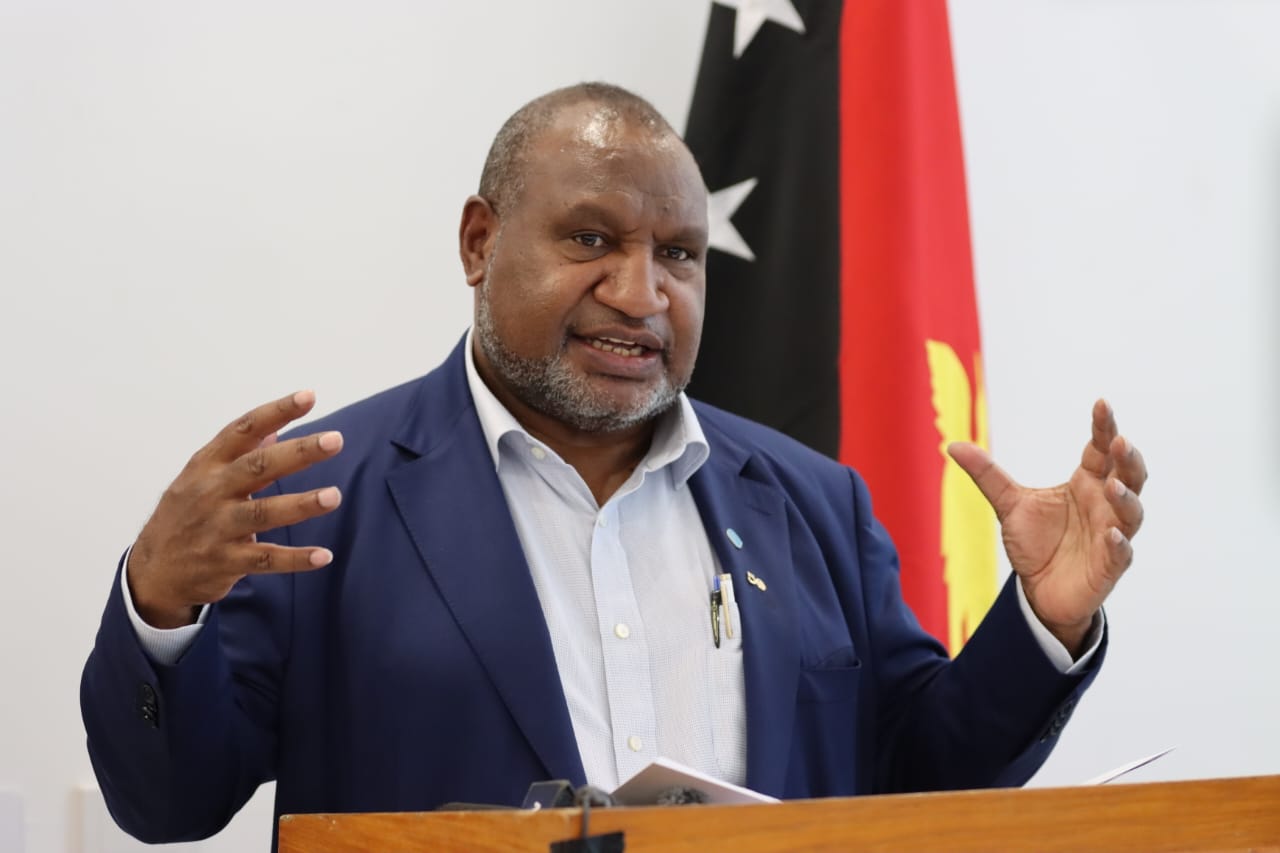

Prime Minister Hon. James Marape says his recent Official Visit to Dubai, United Arab Emirates (UAE), was a strategic engagement aimed at positioning Papua New Guinea more strongly within global trade, investment and economic networks.
Prime Minister Marape said the visit was undertaken following an invitation from the Vice President and Prime Minister of the UAE and Ruler of Dubai, His Highness Sheikh Mohammed bin Rashid Al Maktoum, and came at a time when Papua New Guinea could not afford to be absent from major global economic conversations.
“The United Arab Emirates, and Dubai in particular, has emerged as one of the world’s most important hubs for trade, finance, aviation, logistics and innovation,” Prime Minister Marape said.
“For Papua New Guinea, engaging directly with such a globally connected economy is essential if we are serious about expanding markets, attracting investment, and integrating our products and projects into international value chains.”
The Prime Minister said the UAE now sits at the centre of global capital flows and commodities exchange, serving as a gateway linking the Middle East, Europe, Africa and Asia.
“Papua New Guinea needs strong partnerships with countries that are globally connected. Dubai provides access to markets well beyond its borders, and that is why this engagement was both timely and strategic,” he said.
As part of strengthening diplomatic and economic relations, Prime Minister Marape formally introduced Papua New Guinea’s appointed Ambassador H.E Frank Aisi to key UAE counterparts and confirmed the Government’s decision to establish a resident embassy in Abu Dhabi, the seat of government.
In addition, the Government will appoint an Honorary Consul in Dubai to focus on trade, business and investment promotion.
“This dual presence is deliberate,” the Prime Minister said. “Abu Dhabi serves our diplomatic and government- to-government relations, while Dubai is the commercial engine room where trade, business and investment engagement takes place.” While in Dubai, Prime Minister Marape also participated in high-level global forums and discussions covering technology, global and regional economic trends, e-commerce, geopolitics, and environmental sustainability.
“As Prime Minister, it is important that I remain connected to global thinking and leadership networks, so Papua New Guinea is not left behind in a rapidly changing world,” he said.
The visit also allowed for direct engagement with other heads of government, heads of state, and senior UAE leaders, further strengthening Papua New Guinea’s international partnerships.
On trade and market access, Prime Minister Marape said discussions focused on opening and expanding markets for Papua New Guinea products, including agriculture and key commodities such as coffee.
“We met with importers and potential buyers of Papua New Guinea coffee and other products, creating new pathways for our exporters to access Middle Eastern and global markets through Dubai,” he said.
A major outcome of the visit was the signing of a landmark Visa Waiver Agreement between Papua New Guinea and the United Arab Emirates, allowing visa-free or visa-on-arrival entry for citizens of both countries for stays of up to 30 days.
“This agreement strengthens people-to-people links, supports tourism growth, facilitates business travel, and encourages investment exploration, while maintaining strong border and security standards,” Prime Minister Marape said.
The Prime Minister said engagements were also held with potential public-private partners interested in infrastructure development in Papua New Guinea, including discussions on financing models that leverage private capital and expertise.
In addition, discussions covered cybersecurity, artificial intelligence and technology applications relevant to governance, economic growth and national security.
“These areas are becoming increasingly important as Papua New Guinea modernises its economy and public sector,” he said.
Prime Minister Marape said the Government viewed the Dubai engagement as part of a long-term strategy rather than a one-off diplomatic visit.
“This visit was about positioning Papua New Guinea strategically in a changing global environment — building relationships, opening markets, attracting investment interest, and ensuring we remain connected to global economic, technological and policy conversations,” he said.
“This is a long-term investment in Papua New Guinea’s economic future.”