

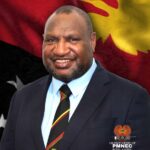
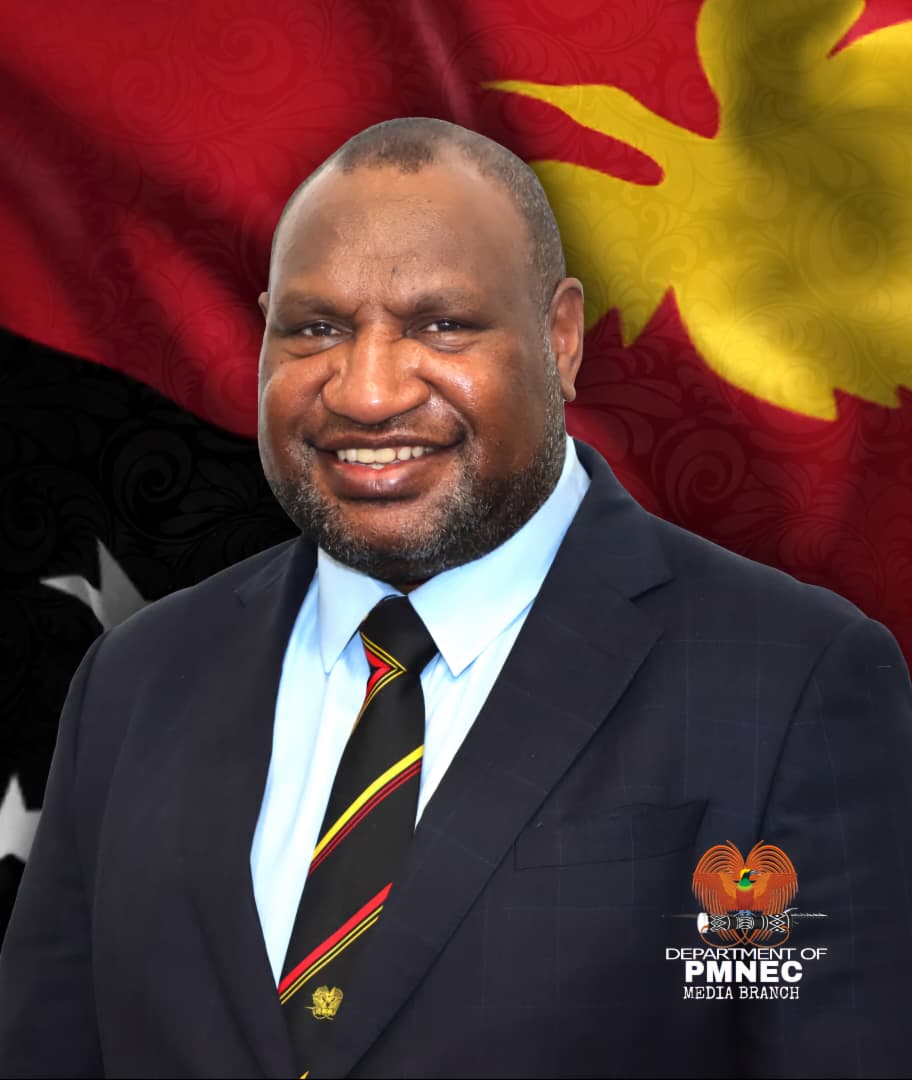

Prime Minister Hon. James Marape has welcomed the announcement by Minister for Coffee Hon. William Bando that Papua New Guinea exported more than 1.5 million Bags of Coffee in 2025, describing the achievement as a clear signal that the nation’s Agriculture Sector is rebounding strongly and that PNG can grow wealth directly from the land owned by its people.
Prime Minister Marape said the milestone was historic, noting that PNG had not exceeded one million Bags of Coffee Exports since the 1980s, and credited the outcome to deliberate Government Policy aimed at refocusing the economy toward Agriculture and the Non-Resource Sector.
“Many doubted that we could do it, but we were deliberate and consistent in getting our people back into Agriculture,” Prime Minister Marape said. “Last year, for the first time in decades, we delivered over 1.5 million Bags of Coffee, and that tells us the potential is there if we stay focused.”
The Prime Minister emphasised that Papua New Guinea’s greatest advantage lies in the fact that land has never been alienated from its people, a principle safeguarded by the nation’s founders and enshrined in the National Constitution.
“Our forefathers never took land away from our people. Land is where resources are found, land is where businesses are built, and our people still own land for Agriculture,” he said. “We have been Agriculturalists for more than 10,000 years, as recognised by UNESCO with Kuk in Western Highlands Province, and Agriculture remains who we are as a nation.”
Prime Minister Marape said the record Coffee performance supports international assessments that PNG’s Non-Mining and Petroleum economy has now consistently grown above 4 per cent, a trend confirmed by Treasury, the Bank of Papua New Guinea and international partners.
He said Government investment in roads, bridges, wharves and jetties under the Connect PNG Program is deliberately designed to unlock Agricultural production, connect rural communities to markets, and allow landowners to earn sustainable incomes.
“We are opening up highways for the first time in our history — the Highlands Highway, Buluminski Highway, Highway connecting the Autonomous Region of Bougainville, and along Magi and Hiritano Highways, as well as many other Roads around the country — and those who live along these roads must now work the Land,” Prime Minister Marape said. “Government invests in infrastructure, and people must respond by producing, selling and earning.”
The Prime Minister said global trends show that Food and Energy are the two greatest needs of humanity, and Papua New Guinea is uniquely positioned to supply both. “As I observe the world today, the two greatest needs of humanity are Food and Energy,” he said. “Papua New Guinea has strength in food production and strength in green energy. If I were to rank them, Food comes first and Energy second — and we have both.”
Prime Minister Marape said Coffee and other Agricultural products form part of the global food economy, where daily spending on food and beverages continues to rise. “Coffee, food and beverages are consumed every day by billions of people. Papua New Guinea can become a specialist food-producing country,” he said. “When the world needs food, we can supply — especially into the big Asian marketplaces that we are closest to.”
The Prime Minister noted that global demand for Coffee continues to rise, with studies indicating Coffee could soon become the second most traded commodity in the world after oil. He said PNG is well positioned to benefit,
particularly given its proximity to fast-growing Asian markets. “There is a growing appetite for Coffee globally, and PNG has both Arabica and Robusta varieties that can meet that demand,” he said. “We are closer to Asian markets, and investors are already telling us that PNG can do it if we produce consistently and reliably.”
Prime Minister Marape also highlighted how producers are already benefiting from favourable global prices and a competitive Kina. “I know of farmers in Western Highlands and Eastern Highlands earning up to K100,000 a week from Coffee Exports,” he said. “Those who respond to Government Policy and work the Land are earning. Those who are lazy will complain and miss out.”
The Prime Minister confirmed that the Government is working to localise the Coffee industry, ensuring Papua New Guineans gain greater ownership and higher returns, including support for landowners to revive and manage former estates. “I have asked the Minister for Coffee and the Coffee Development Authority to strengthen support so our people enjoy better prices, better returns and real benefits from the Coffee they grow and export,” he said.
Beyond Coffee, Prime Minister Marape pointed to positive trends in cocoa, oil palm, vanilla, spices and other Agricultural Commodities, as well as renewed international interest in PNG products from China, Japan, South Korea, the Middle East, Australia, the United States, New Zealand and Europe.
“Markets are open. The challenge is our ability to produce at scale, with quality and reliability,” he said. “Agriculture puts money directly into the hands of our people — more so than oil, gas or mining — and that is why my Government remains committed to this path.”
Looking ahead, Prime Minister Marape said the next phase of Agricultural growth will involve downstream processing, enabling PNG to export finished products and capture more value.
“As production increases and becomes reliable, we will move into downstream processing — exporting finished products to the markets we have secured through our Foreign Relations,” he said.
The Prime Minister urged Papua New Guineans to embrace Agriculture as both an economic opportunity and a national responsibility.
“Our ancestors worked this land for thousands of years. We must get up, get going and earn from it,” he said. “Government will continue to open roads and markets, but prosperity ultimately comes from our willingness to work the land we own.”
Prime Minister Marape concluded in pointing to the Holy Bible in Genesis 2:15, where God took Adam and put him in the Garden of Eden to work it and take care of it, therefore urging Papua New Guineans to work hard in the Agricultural Sector as that is where the blessing of the Lord comes from, according to His Word.