

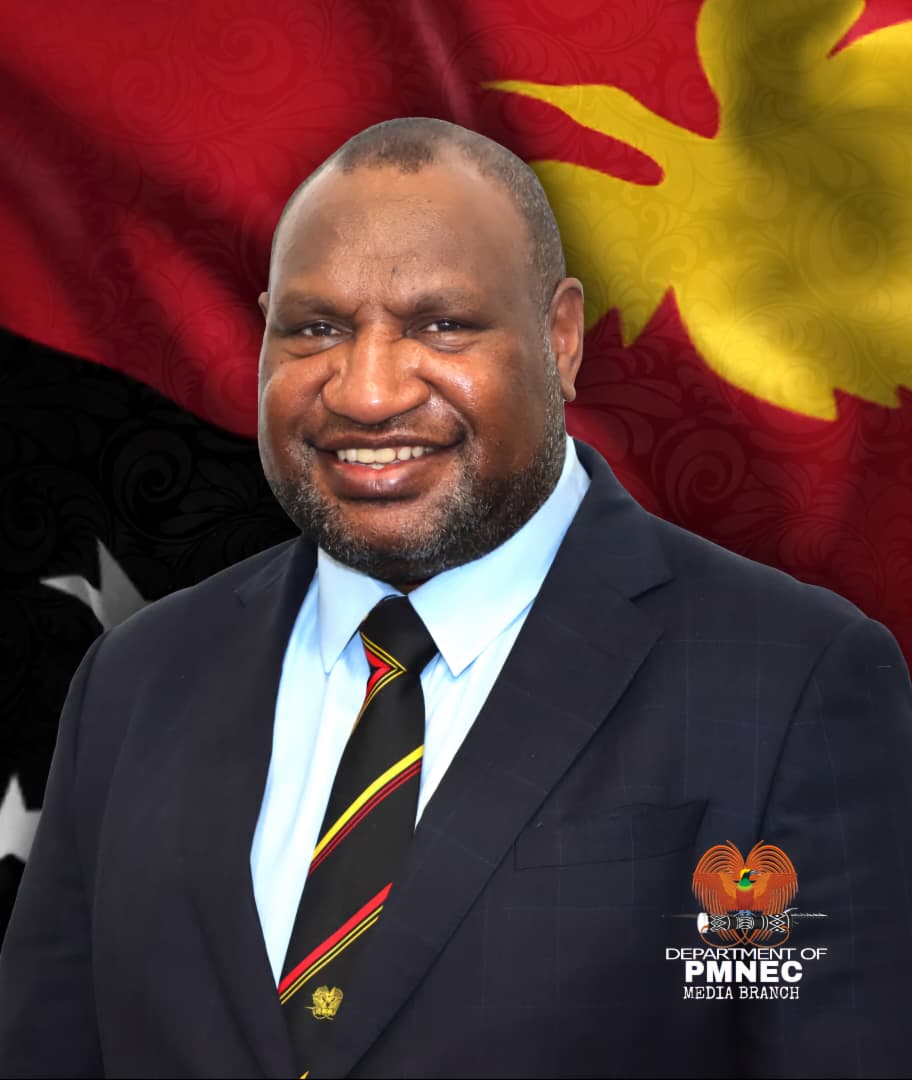

Prime Minister Hon. James Marape has delivered a comprehensive response in Parliament to questions raised by Komo-Hulia MP Hon. Daniel Tindipu, reaffirming the Government’s commitment to resolving long-standing issues surrounding the 4.27 per cent PNG LNG equity, strengthening benefit-sharing arrangements for landowners and provinces, and advancing national energy security.
The Prime Minister acknowledged that the 4.27 per cent equity component—originally envisaged as a strategic benefit for landowners and the five provincial governments impacted by the PNG LNG project— remains an outstanding national issue more than a decade after first gas production commenced in 2014.
“This equity component was intended as a meaningful participation mechanism for our landowners and provincial governments. It is now 12 years since first gas, and it is clear that this matter has not been fully resolved,” Prime Minister Marape said.
Historical Context And Outstanding Obligations
Prime Minister Marape provided important historical context, noting that the 4.27 per cent equity originated from arrangements negotiated during the 2008–2009 Umbrella Benefit Sharing Agreement (UBSA), when the State, landowners, and provincial governments came together to enable the final investment decision of the PNG LNG project.
He said the equity was conceived as a form of “gifted participation” to ensure that the benefits of one of Papua New Guinea’s largest resource projects would extend beyond statutory entitlements under the Oil and Gas Act.
“This was over and above the legally mandated 2 per cent royalty and equity benefits. It was intended to give our people a stake in the project’s success and long-term returns,” he said.
However, the Prime Minister noted that despite the project’s significant contributions to the national economy—including billions of kina in revenue since 2014—the intended beneficiaries have not been afforded the opportunity to exercise ownership or fully realise the value of this equity.
Government Orders Full Review Through Kumul Petroleum
Prime Minister Marape confirmed that the Government has formally tasked Kumul Petroleum Holdings Limited with undertaking a full and transparent review of the 4.27 per cent equity, including its historical treatment, financial utilisation, and current status.
“We have asked Kumul Petroleum to present a complete information package to Cabinet. This includes what happened to the equity at the time of first gas, how it has been used over the years, and what value it holds today,” he said.
He stressed that the review will not be limited to the 4.27 per cent equity alone but will form part of a broader assessment of the State’s entire equity portfolio in the PNG LNG project, including the 16.57 per cent stake held through Kumul Petroleum.
“This is a holistic review. We are examining the full structure of our national equity interests to ensure accountability, transparency, and maximum benefit for our people,” he added.
Commitment To Fair and Structured Distribution
Prime Minister Marape made it clear that once Cabinet receives the full report, the Government will make a policy decision on how the 4.27 per cent equity should be allocated and managed going forward.
He emphasised that the Government is determined to ensure that landowners and provincial governments are properly recognised as beneficiaries, while also safeguarding long-term national interests.
“We will not rush this decision. It must be structured carefully to ensure fairness, sustainability, and direct impact,” he said.
The Prime Minister outlined a three-pronged approach under consideration:
• Direct Benefit Distribution: Ensuring that a portion of the equity delivers tangible financial returns directly to landowners and provincial governments without unnecessary intermediaries.
• Future Generational Savings: Establishing mechanisms to preserve part of the equity value for future generations, potentially through trust structures or sovereign-style funds.
• Transparent Governance Framework: Implementing strong governance and accountability measures to ensure that benefits are managed responsibly and equitably.
“Our intention is not just to distribute wealth, but to build lasting economic foundations for our people,” he said.
Clarification On Legal Versus Non-Legal Entitlements
Prime Minister Marape clarified that while the 4.27 per cent equity is an important benefit, it is not a statutory entitlement under the Oil and Gas Act, unlike the 2 per cent royalty and equity provisions already being distributed.
“This component was a negotiated benefit—an additional allocation made in good faith to support landowners and provinces. That is why we must handle it carefully and responsibly,” he said.
He noted that existing benefit distribution mechanisms for statutory entitlements are already in place and could be leveraged to ensure efficient and transparent delivery of any future equity benefits.
Review Of Benefit Sharing Agreements
Responding to calls for a review of existing agreements, including the Umbrella Benefit Sharing Agreement and related licence-based arrangements, Prime Minister Marape said the Government is open to reviewing these frameworks where provisions allow.
“We will seek technical advice on the review clauses within these agreements. If provisions exist for periodic review, we will activate them to ensure that agreements remain fair and relevant to present-day realities,” he said.
He acknowledged that some agreements may be overdue for review and assured stakeholders that the Government will engage constructively with landowners, provinces, and project partners.
Advancing Domestic Energy Utilisation
On the broader issue of fuel supply and rising global energy uncertainties, Prime Minister Marape said the Government is actively pursuing strategies to utilise Papua New Guinea’s own oil and gas resources to support domestic energy needs.
He confirmed that discussions are ongoing with major operators, including Santos Limited and ExxonMobil, to explore options for in-country processing and utilisation of gas.
“We are looking at how we can bring more value back into the country by processing and utilising our own resources domestically,” he said.
This includes exploring opportunities within key production areas such as Petroleum Development Licences (PDLs), with the aim of reducing reliance on imported fuel and cushioning the country from global price volatility.
“Our goal is clear: greater energy security, more affordable fuel, and increased downstream economic activity within Papua New Guinea,” he added.
A National Responsibility
Prime Minister Marape concluded by emphasising that the issues raised go beyond a single project and reflect the broader responsibility of Government to ensure that resource wealth is translated into meaningful development outcomes.
“This is about fairness, accountability, and nation-building. Our landowners have waited patiently, our provinces have carried the burden of development, and it is our duty to ensure they are properly recognised and rewarded,” he said.
“We will take the necessary decisions—guided by facts, guided by law, and guided by the best interests of our people and our country.”