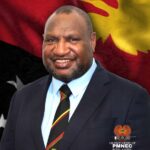
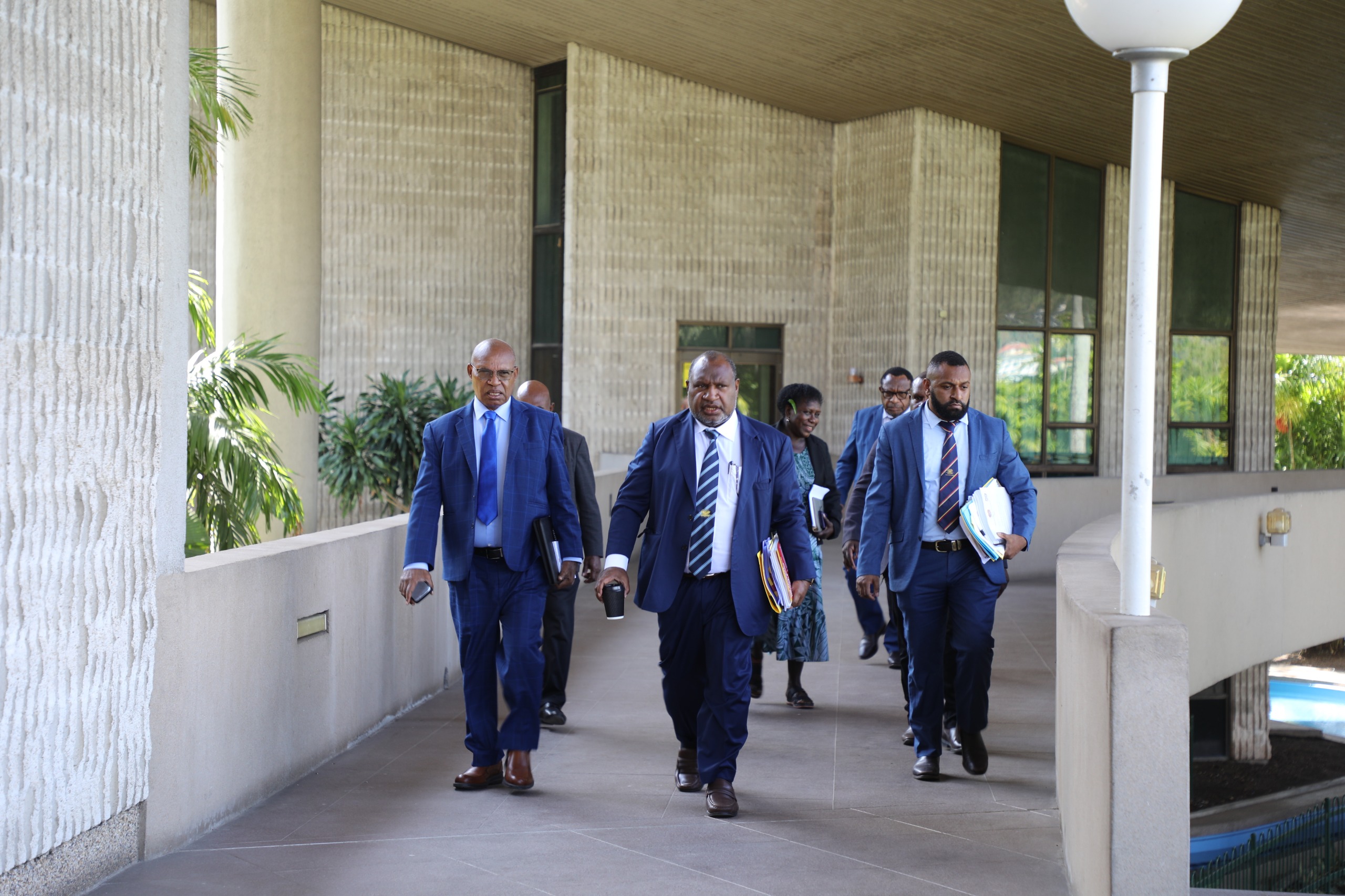

Prime Minister James Marape has reiterated the government’s commitment to strengthening Papua New Guinea’s live- stock sector, with a strong focus on reducing imports and increasing local pro duction for both domestic consumption and export.
Speaking in Parliament, the Prime Minister expressed concern over the country’s continued reliance on imported meat and agricultural products.
He was responding to questions from the Deputy Speaker of Parliament and Member for Markham Koni Iguan, who was going to ask the Minister for Live Stock but was not available and instead asked the Prime Minister Marape.
Mr Iguan queried in parliament his district Markham is a fertile land for grazing livestock and wanted to know what the Livestock development corporation was doing on breeding livestock and supplying to provinces and districts that try to raise livestock.
He said importing processed meat like poultry, pork, and beef is expensive when PNG can produce its own.
In response the Prime Minister James Marape said that the main idea was to promote such development programs and stop imports.
“In a nation where we should not be importing poultry anymore, we should not be importing pork products anymore, or beef products, sheep products, we unfortunately continue to import since 1975,” Prime Minister Marape said.
He said in his response that the economic impact of this trend, noting that significant amounts of foreign currency continue to leave the country to pay for imports that could be produced locally.
“Substantial amount of, our currency flows out for the importation of these products, as well as produce, potentially we produce to supply to the world out there,” he said.
The Prime Minister said there are markets as a major opportunity for Papua New Guinea, particularly Indonesia, which has a large and growing demand for beef and other food products.
“Next door to us… 280 million Indonesians who largely consume beef and food produced in the halal manner,” he said.
Prime Minister Marape informed parliament that the establishment of the live- stock sector was intended to replace imports while building capacity for ex- ports.
“The setup of the ministry was expected to rise up, replace imports, produce locally, as well as prepare for the production to export outside,” he stated.
He also acknowledged support from international partners, particularly China, in opening up export opportunities for Papua New Guinea’s agricultural products.
“I want to appreciate the Chinese government. They’ve now allowed us to…export to China… especially food products,” he said.
Prime Minister Marape said the government will push to increase productivity in the livestock sector and ensure it fulfills its intended role in the economy.
“This was meant to step up the production of our livestock sector for replacing imports that we import, as well as produce for export,” he added.
Prime Minister Marape also concurred with Opposition MP Kerenga Kua, who also raised concerns and brought to the government’s and raised in Parliament regarding restrictions on importing livestock for breeding from Australia.
Mr Kua, who raised this as a supplementary question, said that at the moment, Australia won’t allow PNG to import livestock to breed and only to be slaughtered and asked if the government can renegotiate this.
In response, the Prime Minister acknowledged existing quarantine and biosecurity protocols, particularly with Australia.
“There’s a stiff protocol in importation of live animals and livestock. Each nation has their quarantine standards. Each nation has their requirement,” he said.
He assured Parliament that Papua New Guinea is strengthening its quarantine systems and working closely with partner countries to address these challenges.
“On our side, we’ve now stepped up the quarantine sector. We work with nations who want to send their stock to us,” he said.
Prime Minister Marape emphasized that Australia maintains strict standards due to its strong livestock industry, but PNG is actively engaging to align systems and ease constraints.
“We will work with the Australian government… to see the compatibility of our standards… making sure that import and export of livestock, as well as livestock produce, is synchronized between our two nations,” he said.
Looking ahead, the Prime Minister underscored the importance of developing the livestock industry to tap into major regional markets.
“The intention in the long run is for us to grow our stock… Indonesia remains a very big market for beef… this is an industry that must be moved, and I take this question to heart,” he said.