


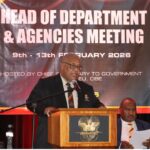


Speaking on behalf of the Government of Papua New Guinea, the Chief Secretary, Mr Ivan Pomaleu reaffirms the Government’s policy position to enable the lawful and orderly rollout of Low Earth Orbit (LEO) satellite internet services, including Starlink, as a critical pillar of the nation’s connectivity and digital inclusion strategy.
Papua New Guinea’s geography-characterised by rugged terrain, dispersed rural populations, and limited terrestrial infrastructure-makes LEO satellite technology one of the most practical and cost-effective solutions for expanding internet access nationwide. This technology is essential for connecting remote and underserved communities to education, health services, security operations, disaster response, digital government delivery, and economic participation.
The Government fully respects the constitutional independence of oversight and regulatory institutions, including the Ombudsman Commission, and recognises their vital role in safeguarding integrity, accountability, and good governance. These institutions are fundamental to a functioning democracy and the rule of law.
At the same time, the Government reiterates a core principle of governance. The Ombudsman Commission exists as a leadership oversight and integrity watchdog. Where any leader or public official is found to have breached the Leadership Code, the appropriate and lawful course of action is to pursue the alleged violator directly. It is neither fair nor proportionate to impose outcomes that effectively punish more than ten million Papua New Guineans for the alleged actions or omissions of a few individuals.
Oversight mechanisms are intended to enforce accountability on leaders-not to withhold essential services or delay national development. Papua New Guineans should not be denied access to affordable connectivity, modern services, and economic opportunity as a collateral consequence of unresolved leadership matters. Following recent inter-agency consultations led by the Office of the Chief Secretary, the Government has taken deliberate steps to ensure that all legitimate compliance concerns relating to LEO satellite providers-including consumer protection, payment flexibility in Papua New Guinea Kina, data protection and privacy, taxation compliance, and fair competition-are addressed squarely within the statutory mandate of the NICTA.
The Government’s position is clear:
• Connectivity is a national necessity, not a discretionary privilege.
• Affordable and reliable internet access underpins service delivery, inclusion, and economic growth.
• Regulatory and oversight processes must facilitate solutions, not unintentionally obstruct them.
At this juncture, the Government calls on all institutions and agencies involved to put institutional ego aside, exercise restraint, and work collaboratively in the overriding interest of the people. Governance is not a contest of authority; it is a shared responsibility to deliver outcomes.
Prolonged uncertainty or institutional stand-offs-where lawful compliance pathways already exist-risk entrenching high internet costs, widening the digital divide, and delaying benefits that are already transforming lives in comparable jurisdictions.
The national interest must prevail over institutional silos.
The Government remains committed to respectful engagement, lawful process, and cooperative resolution. All parties are expected to act with urgency, good faith, and a clear focus on outcomes-so that Papua New Guinea can move forward and deliver tangible benefits to its people.
The people of Papua New Guinea deserve nothing less, said Mr Pomaleu.