


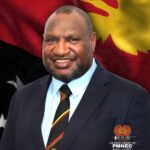
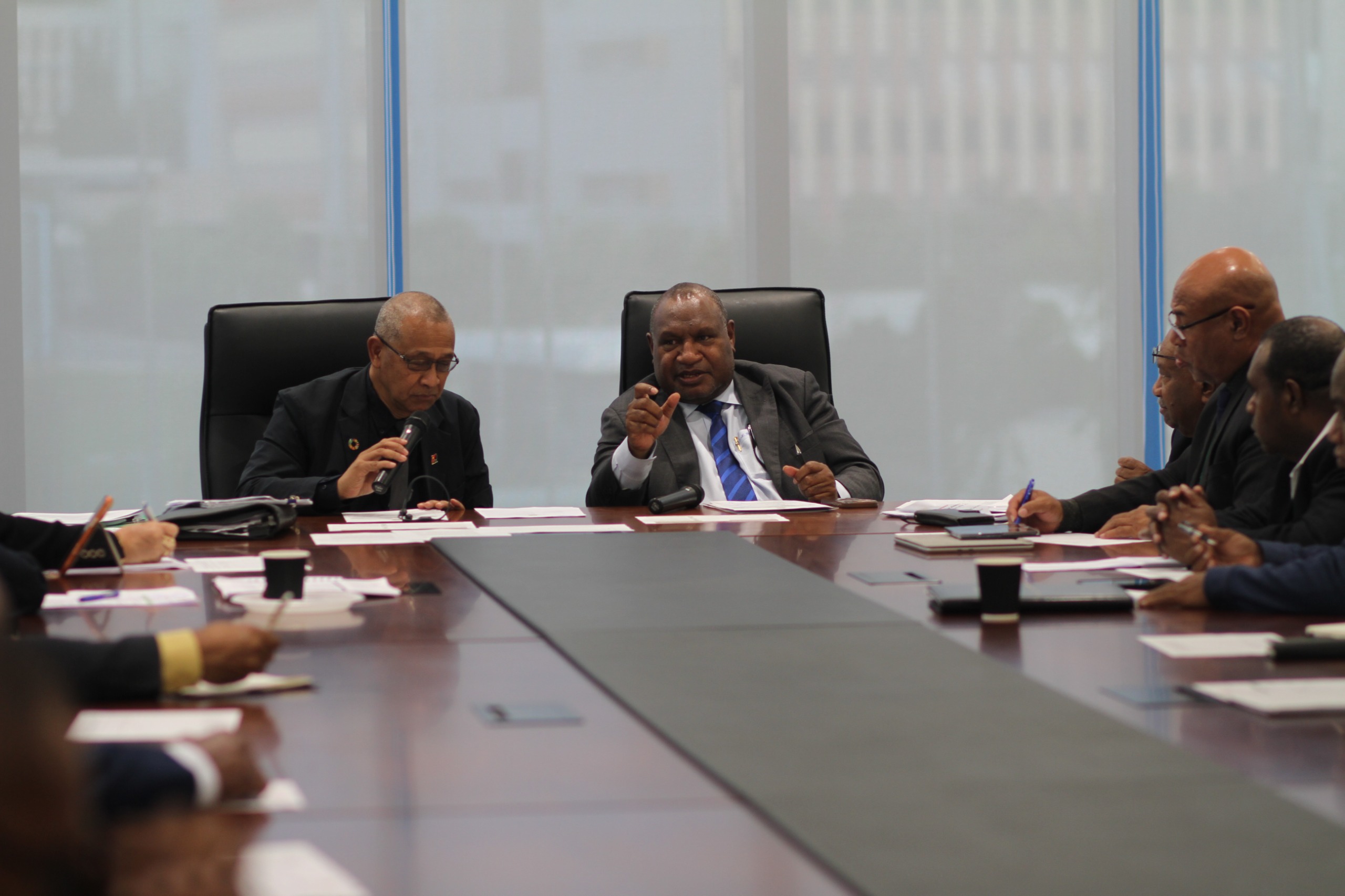

Prime Minister Hon. James Marape has delivered a blunt directive to the country’s economic leadership to stop focusing purely on spending public money and start figuring out how to bring more revenue into the country by building a stronger non-resource sector.
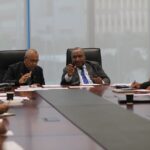
The Prime Minister addressed relevant departmental heads and senior public servants at Melanesian House in a meeting this afternoon to mark the official rollout of the newly proposed Growth and Economic Reform National Coordinating Committee (GER-NCC), a cross-agency body designed to cut through bureaucratic red tape and speed up structural economic reforms.
Chaired by Treasurer Hon. Ian Ling-Stuckey, the committee is modelled directly after the high-pressure, deadline-driven framework of the State’s Financial Action Task Force committee.
In his address, Prime Minister Marape laid out clear numerical benchmarks for the country’s economic expansion, stating that the current K140 billion economy must climb to K200 billion by 2030, supported by a K50 billion national budget.
“Everything else you hear today, if you forget, go away with these two numbers K200 billion economy, K50 billion budget…minimum starting point,” Prime Minister Marape said.
He carried the economic projection further down the road, setting long-term targets of a K300 billion economy by 2040 and a K500 billion economy by 2050.
While major resource extraction projects often dominate national economic headlines, background data from the Treasury Department indicates that the real engine for Papua New Guinea’s long-term wealth rests in the everyday non-resource economy, including agriculture, retail, manufacturing, and transport.
According to Treasury models, lifting the nation’s real non-resource growth rate by just 0.1 percent each year would inject K709 billion into the GDP by 2050. In contrast, the combined economic contribution of all seven planned major resource projects—including Papua LNG, Wafi-Golpu, and Pasca—is projected to reach K189 billion by the same year.
Prime Minister Marape warned the gathered officials that these growth targets are not abstract goals, but an urgent necessity driven by a massive demographic shift. Data from the 2024 national census reveals that 59 percent of Papua New Guinea’s population is currently under the age of 25.
“If these statistics don’t ring an alarm bell in your head, you’re running around as a leper in our country – numb and not feeling anything,” Prime Minister Marape stated, urging departments to fast-track land mobilization, upgrade infrastructure, and coordinate policy to ensure the incoming generation can find actual employment.
“A child at 25 today will be a father of three or four 10 years from today. He must be employed to look after his children. Time flies, and we cannot waste time,” he urged.
To execute this mandate without establishing a new, separate government agency, the GER-NCC will operate as a centralized coordination mechanism.
It will be backed by a K10 million annual budget to fund a dedicated Secretariat housed inside the Department of Treasury.
The committee will pull together the chief executives of 22 different State bodies, including the Central Bank, the Internal Revenue Commission, and the departments of Finance, Agriculture, and National Planning. The Business Council of PNG and the PNG Chamber of Commerce and Industry will also participate as formal observers.
Moving forward, the committee is required to run full meetings on a monthly basis, coordinate technical working groups weekly, and provide a single, transparent “Reform Matrix” to track which agencies are hitting their marks.
Prime Minister Marape noted that non-performance will be escalated directly up the chain, with mandatory progress updates delivered to the National Executive Council every quarter.