
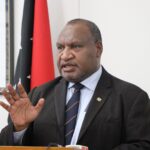
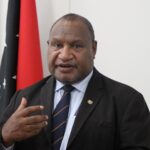
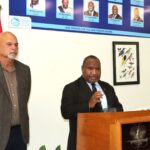

Prime Minister Hon. James Marape has secured advancements in regional energy security, market diversification, and infrastructure funding during high-level diplomatic engagements at the United Nations General Assembly (UNGA) week as the 81st session drew to a close in New York.
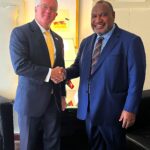
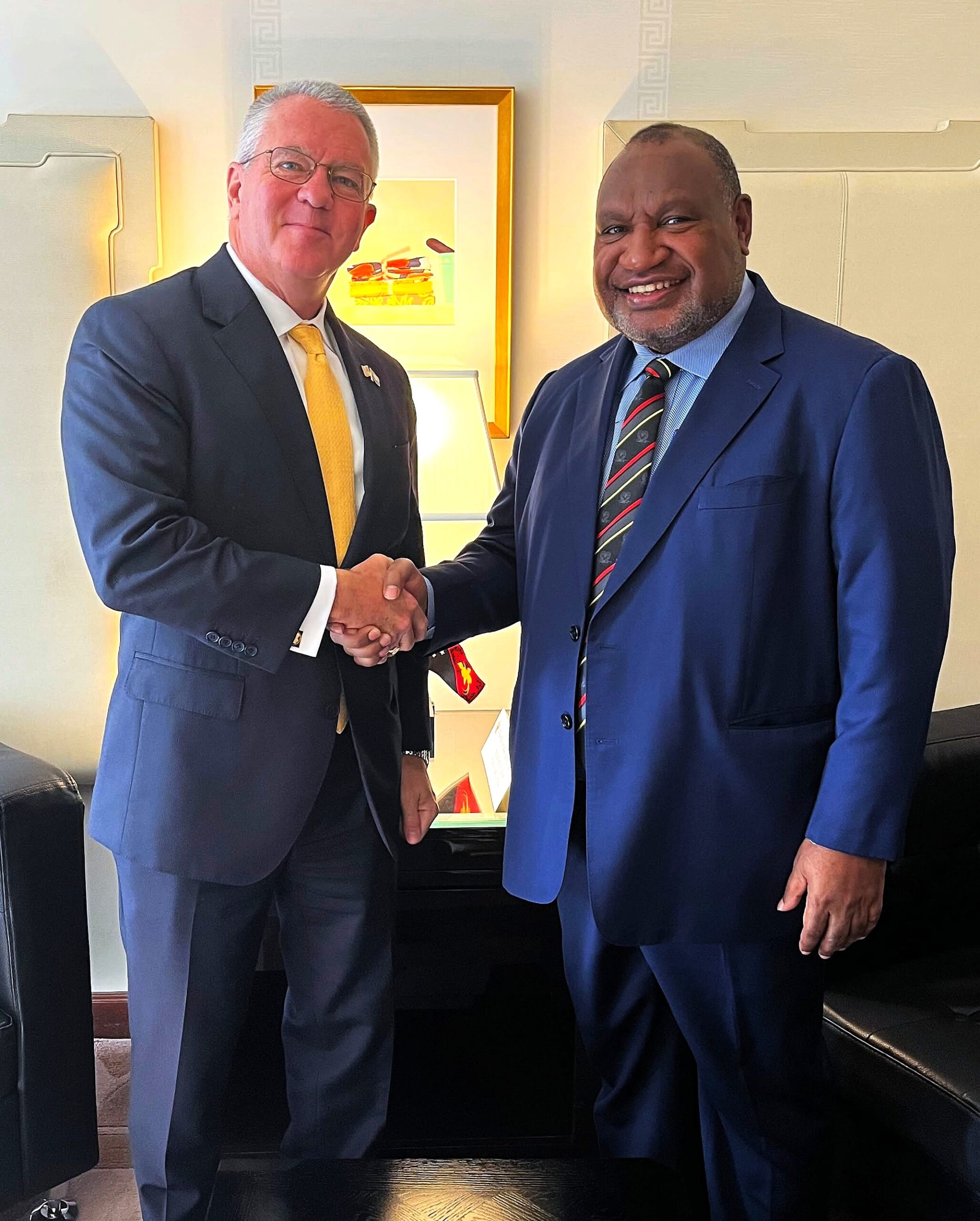
The engagements, which built upon an earlier interaction with U.S. President Donald Trump at a welcome dinner for world leaders, concluded on Friday (25.09.26) with a strategic session between PM Marape and U.S. Assistant Secretary of State for East Asian and Pacific Affairs Michael George DeSombre.
DeSombre met with the Prime Minister to finalize bilateral implementations aimed at elevating Papua New Guinea’s economic sovereignty and formalizing operational facets of the U.S.-PNG Defence Cooperation Agreement (DCA).
As part of this economic push, Prime Minister Marape also participated in an exclusive business roundtable hosted by the Business Council for International Understanding (BCIU). The high-level dialogue, attended by DeSombre alongside prominent American business executives and institutional investors, focused on moving beyond traditional foreign aid toward robust commercial partnerships built on mutual economic production.
During the BCIU session, Marape highlighted Papua New Guinea’s strategic position as a free-market gateway to the Asian marketplace and detailed a robust legal architecture that ensures State investment agreements are strictly and perpetually honoured.
Strategic Energy and Defence Infrastructure
Discussions between the delegations finalised the progression of strategic fuel storage and bunkering infrastructure in Papua New Guinea under a newly appointed contractor. The facility is designed for mutual operations with traditional Western security partners and will act as a regional supply hub to pro- vide alternative energy transition pathways, including Liquefied Natural Gas (LNG) re-gasification and solar infrastructure, to neighbouring Pacific Island states.
Trade Diversification and Tariff Reductions
In a move to reduce market concentration risks, where China currently ac- counts for more than 50 percent of PNG’s export volume, the PNG delegation outlined a formal trade diversification strategy during the BCIU roundtable. Addressing the room of executives, Prime Minister Marape pushed for a fundamental shift away from typical foreign assistance, stating:
“We are telling American businesses quite clearly this week that Papua New Guinea wants to buy and sell, not just receive aid. We want your companies to come over, make a good return on their investments using our economic incentives, and help us build local jobs at the same time.”
Assistant Secretary DeSombre backed the Prime Minister’s approach by emphasising that sustainable growth relies on real commercial deals:
“The bond between our two nations has never been tighter. At the end of the day, it is open trade—not hand-outs—that truly drives a country’s economy forward.”
Key developments from the ministerial and BCIU talks include:
• Zero-Tariff Regime: Confirmation that Papua New Guinea’s agricultural exports to the United States have reverted to a zero-tariff status, providing competitive access for domestic coffee, cocoa, and fisheries products.
• Market Expansion: Initial protocols established for a State visit to India in February 2027 to secure alternative agricultural and retail markets.
• Institutional Investment: Joint representations made to the U.S. International Development Finance Corporation (DFC) to secure funding packages for State-owned resource projects alongside existing major operations by ExxonMobil and Newmont.
• Digital Infrastructure: Strategic commercial mapping following the successful nationwide rollout of SpaceX’s Starlink to catalyze broader IT and connectivity opportunities for businesses.
Regional Diplomacy and Institutional Frameworks
The leaders addressed regional geopolitical friction points, framing recent administrative decisions within established foreign policy parameters:
• International Courts: The U.S. delegation presented its policy objectives regarding the jurisdiction of the International Criminal Court (ICC). The Prime Minister noted it would seek formal State advice regarding its public stance on the matter.
Domestic Stability and Sub-Regional Role
Addressing institutional continuity ahead of the upcoming national elections, Prime Minister Marape reassured international partners that the country’s core alliances remain steady.
“We are a young, diverse democracy, and we are proudly pro-West and deeply rooted in our Christian values. My main job is to make sure all our tribes have a place at the table, so our friends abroad shouldn’t worry about our upcoming elections. Our foreign policy is set, it is stable, and it isn’t going to change no matter who wins the vote.”
Prime Minister Marape also highlighted his government’s role as a stabilizing commercial partner in the Pacific, noting that PNG currently maintains investments in several neighbouring Pacific countries, and encouraged partnering US investments in the region especially in fisheries.
The Prime Minister and his delegation departed New York today, Sunday, 27 September 2026.