

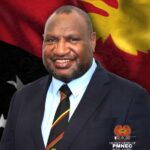

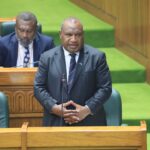
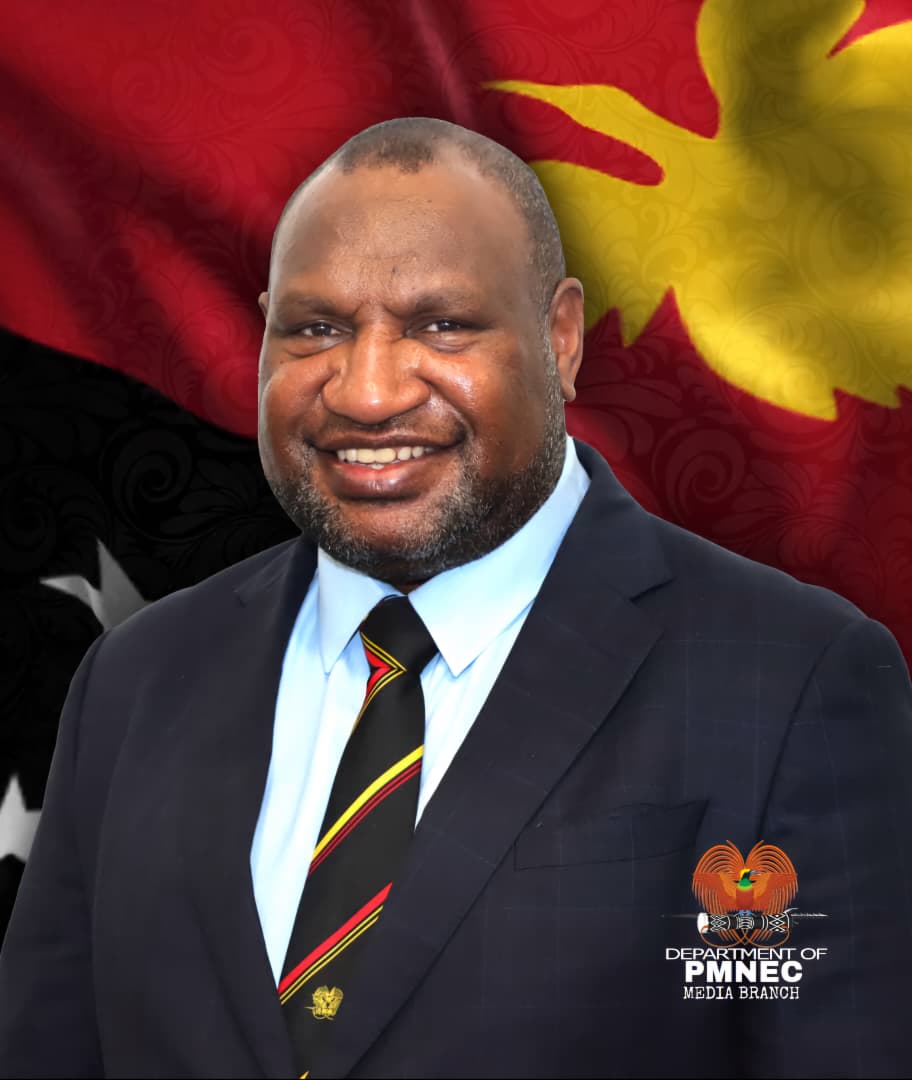

Prime Minister Hon. James Marape has announced the appointment of Ms Tabitha Suwae as Acting Chief Ombudsman following a decision by the Ombudsman Appointments Committee (OAC).
Ms Suwae, who has been serving as an Ombudsman since October 2024, assumes leadership of the Ombudsman Commission in an acting capacity while the substantive position of Chief Ombudsman is advertised and filled through an open and competitive recruitment process.
Prime Minister Marape congratulated Ms Suwae on her appointment and commended outgoing Chief Ombudsman Mr Richard Pagen for his distinguished service to Papua New Guinea.
“Mr Pagen has served our country with integrity, professionalism and courage. He has carried out his constitutional responsibilities without fear or favour and has demonstrated unwavering commitment to upholding the rule of law.
“I sincerely thank him for his dedicated service and wish him well in his future endeavours. He remains eligible to apply for the substantive position should he choose to do so.”
Prime Minister Marape said Ms Suwae’s appointment reflected the strength of leadership development within the Ombudsman Commission.
A career public servant, Ms Suwae brings 29 years of public service experience, including 24 years with the Ombudsman Commission and five years with the Office of the Public Prosecutor under the Department of Justice and Attorney-General. Before being appointed Ombudsman in October 2024, she served as the Commission’s Director of Legal Services. She is from Manus and West Sepik provinces.
“I congratulate Ms Suwae on her appointment and have every confidence that her extensive experience, professionalism and commitment to the Constitution will ensure the Ombudsman Commission continues to discharge its important responsibilities with independence and integrity.”
Prime Minister Marape said the Ombudsman Appointments Committee had deliberately chosen to advertise the position of Chief Ombudsman to ensure the office continued to be filled through a transparent, competitive and merit-based process.
“The Committee decided to advertise the position, and I fully support that decision. Constitutional offices such as the Ombudsman Commission must be filled through open competition so that the most qualified Papua New Guineans have the opportunity to serve.
“Vacancies are openly advertised, independent selection panels assess applicants, and appointment committees consider those who emerge through a competitive process. Merit must always be the guiding principle in appointments to our key constitutional offices.”
Prime Minister Marape described the Ombudsman Commission and the Independent Commission Against Corruption (ICAC) as the nation’s twin pillars of integrity and good governance.
“These institutions exist to protect the integrity of our public service and ensure all public office holders operate within the law. They are fundamental to safeguarding our democracy and strengthening public confidence in government.”
He noted that ICAC, established under his Government, was also progressing through a transparent recruitment process for its substantive leadership positions.
Pending the completion of that process, the ICAC Appointments Committee has appointed Retired Judge Don Sawong as Acting Commissioner, while Mr Thomas Eluh and Justice Ellenas Batari have been appointed Acting Deputy Commissioners.
Like the Ombudsman Commission, the substantive ICAC positions will be filled through an open, transparent and merit-based recruitment process.
“While no government is perfect, we are building institutions that will serve Papua New Guinea well into the future. These are important safeguards for our economy, our public service and our democracy.”
Prime Minister Marape said his Government had strengthened appointment processes by including independent observers, including Transparency International Papua New Guinea, in the recruitment of leaders for major constitutional offices.
Although not legally required, he said the Government had adopted this approach on the advice of the Chief Secretary to reinforce transparency and public confidence.
“Transparency International Papua New Guinea has participated as an independent observer in processes involving appointments to the Electoral Commission, ICAC and other key constitutional offices. This demonstrates our commitment to ensuring appointments are free from political influence and based solely on merit.”
He noted that respected Papua New Guineans also serve on independent selection panels that assess candidates before recommendations are presented to the relevant appointment committees.
“As Prime Minister, I do not choose who applies. Vacancies are advertised, qualified Papua New Guineans compete openly, independent panels assess and rank applicants, and appointment committees make decisions based on those recommendations.”
Prime Minister Marape said these reforms were fully aligned with the Government’s PNG Reset @ 50 agenda, which calls for stronger institutions, accountable leadership, merit-based appointments and governance systems capable of serving Papua New Guinea well beyond its first 50 years of Independence.
“As we commemorate 50 years of nationhood, our task is not only to celebrate our achievements but also to reset Papua New Guinea for the next 50 years. The PNG Reset @ 50 agenda recognises that strong, independent institutions are the foundation of national development, economic growth and public trust.
“Appointments based on merit, transparency and integrity are central to that reset. We are building governance systems that outlive governments and individuals, ensuring our institutions remain strong, independent and resilient for generations to come.”
Prime Minister Marape said Papua New Guinea, as it entered its next 50 years of nationhood, must continue strengthening public institutions and ensuring integrity remained at the centre of government.
“I have consistently reminded my Cabinet and Government members that if they follow the law, they have nothing to fear from institutions such as the Ombudsman Commission and ICAC. These institutions exist to protect the public interest, not to target honest leaders.
“Countries such as Singapore have demonstrated that strong institutions, merit-based appointments and an uncompromising commitment to fighting corruption are essential ingredients for national development.
“Our Government remains firmly committed to building independent institutions that protect our country from corruption, nepotism, abuse of office and misconduct, and ensure public office is always exercised in the interests of the people of Papua New Guinea.”