
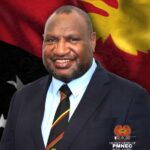
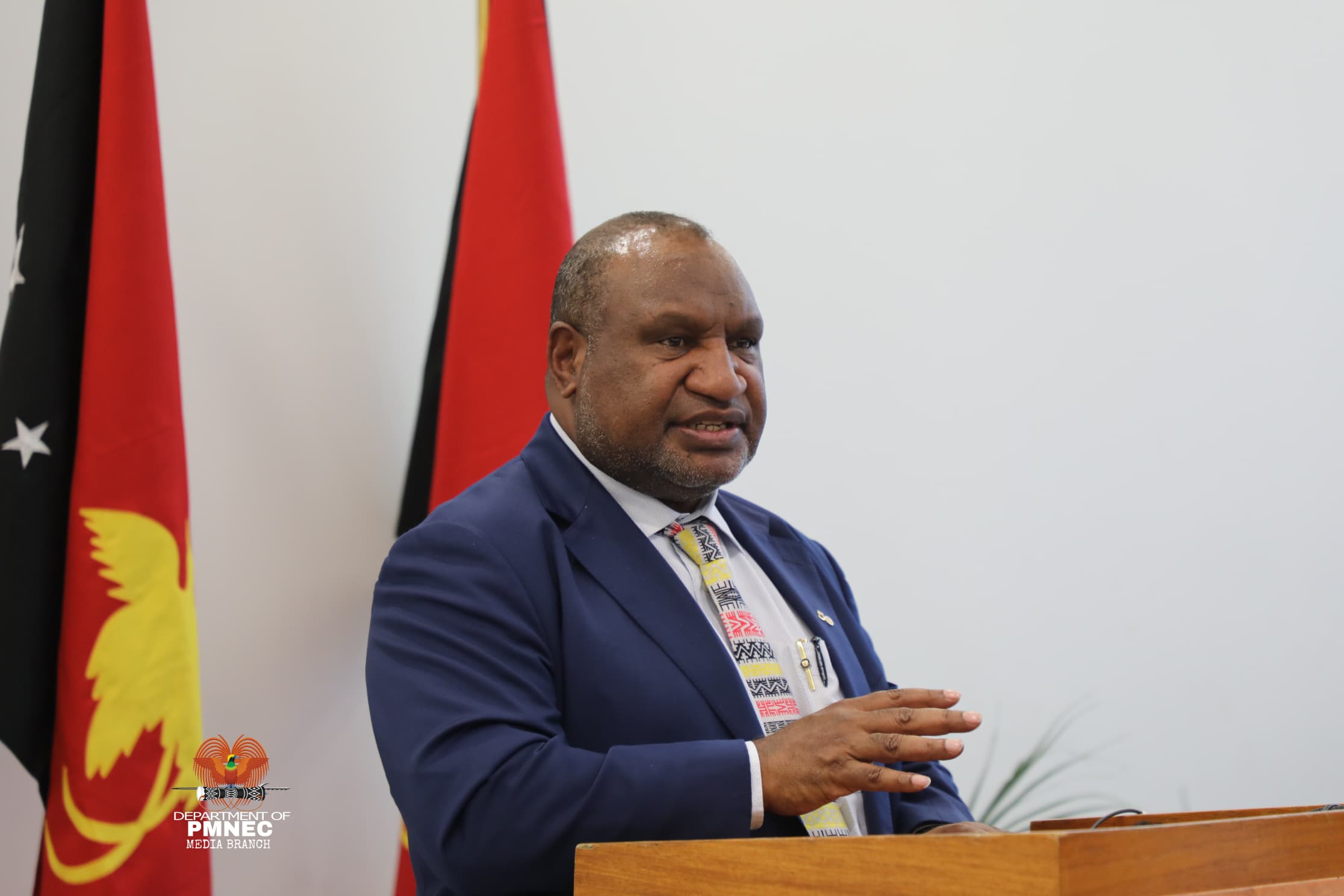

Prime Minister Hon. James Marape has returned to Port Moresby following an extensive visit to cyclone-affected island communities in Milne Bay Province, where he witnessed firsthand the impact of a Category 5 system and emphasised the Government’s commitment to immediate relief and long-term resilience.
Prime Minister Marape spent several days travelling across affected islands, including Misima Island, Rossel Island, Woodlark Island, and Kiriwina Island, as well as the remote atoll of Budibudi Island, identified as one of the hardest-hit areas.
“I want to sincerely thank the people of Milne Bay for your tolerance, your understanding, and your patience during this difficult time,” Prime Minister Marape said.
“The Category 5 cyclone has left many communities facing uncertainty in food, water, and medical supplies, especially given the vast distances between islands. However, it was encouraging to see government systems at work, with district teams, provincial authorities, and national support coming together to assist our people.”
The Prime Minister emphasised that the Government’s immediate priority is the rapid delivery of essential supplies.
“First and foremost, we are ensuring that clean water, medicines, and food are dispatched to all affected communities. National government support is already filtering down to the province, and coordination is improving across all levels.”
He commended frontline workers who remained with their communities throughout the disaster.
“It was inspiring to see teachers, community health workers, councillors, church leaders, and magistrates standing with our people during this crisis. This shows that the structure of government is alive in our villages and communities.”
Prime Minister Marape said a full provincial report will be presented to Cabinet this week, where both immediate and long-term interventions will be addressed.
“At Wednesday’s Cabinet meeting, we will consider this disaster in its entirety and ensure that the next phase of response includes sustainable, long-term solutions for our coastal and island communities.”
He highlighted the need for climate-resilient infrastructure and lifestyle adjustments in vulnerable regions.
“We must now focus on climate change-related adaptations—building disaster-resilient homes and centres, improving water and sanitation systems, strengthening communication networks, and, where necessary, relocating communities to higher ground.”
The Prime Minister said the Government would adopt a nationwide approach to strengthening disaster preparedness, particularly in remote island regions.
“This is not just about Milne Bay. Across our island provinces—from the outer atolls to the most remote communities—we must ensure reliable communication systems, functional airstrips, and regular sea transport services.”
“Places like Budibudi, the outer islands of Milne Bay, and similar communities across the New Guinea Islands region must never again be left isolated during times of crisis.”
Prime Minister Marape reaffirmed that strengthening connectivity and service delivery at the local level remains central to the Government’s development agenda.
“National, provincial, and district governments must work together to empower frontline service delivery. Our people, no matter how remote their location, must feel the presence and support of Government at all times.”
He concluded by emphasising the Government’s commitment to supporting affected communities through recovery and beyond.
“We will ensure that medium- to long-term support is delivered. Our goal is not just recovery, but building stronger, safer, and more resilient communities for the future.”