

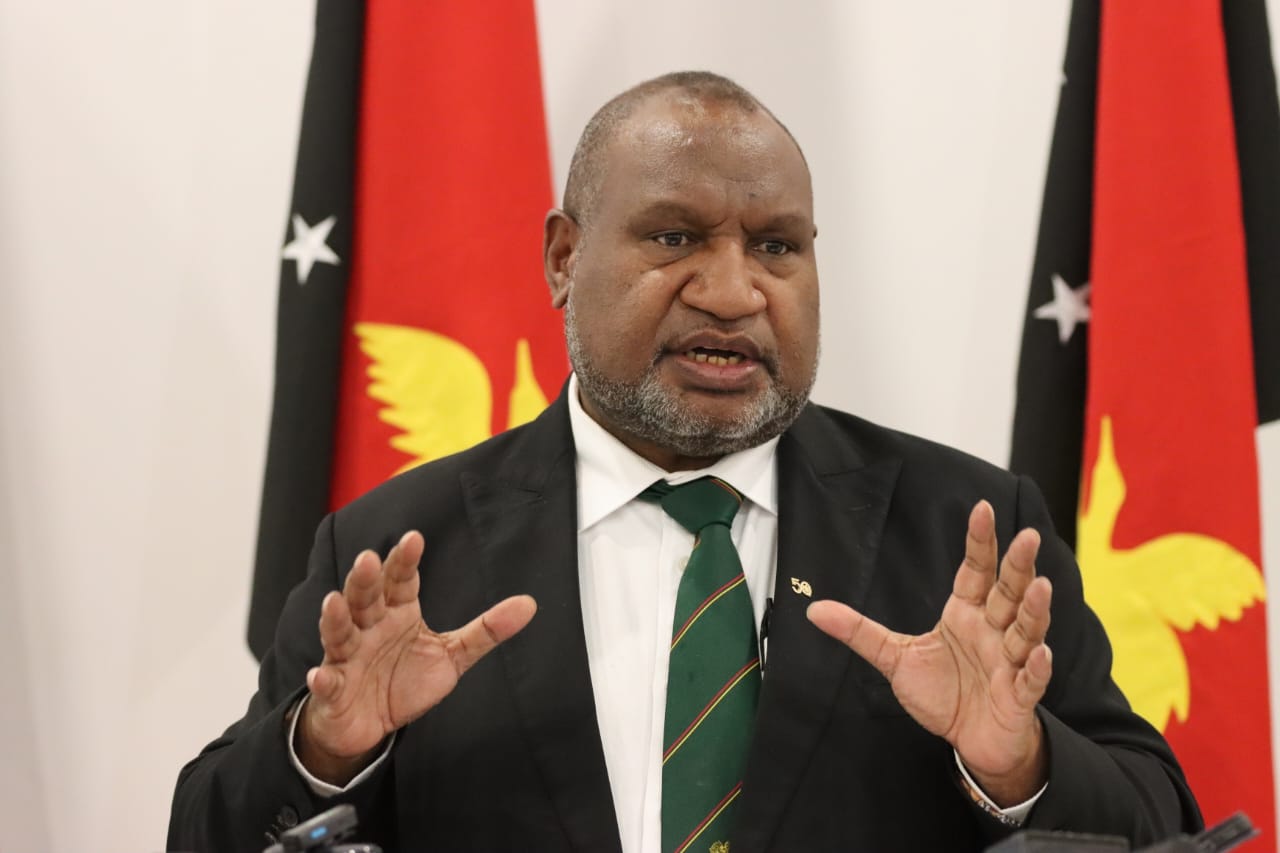

Prime Minister Hon. James Marape has commended students of the University of Papua New Guinea and other tertiary institutions across the country for demonstrating maturity, discipline, and responsible conduct in expressing their views on national issues.
The Prime Minister’s remarks follow recent student activities and public discourse, which he described as “measured and thoughtful” despite a challenging environment marked by misinformation and political undercurrents.
“I commend our students for their mature approach and behaviour,” Prime Minister Marape said. “In a world where misinformation and fake news can easily influence perceptions, our students have shown intellectual strength and responsibility in how they engage on issues affecting our country.”
He extended his appreciation to students nationwide, acknowledging their important role in shaping national dialogue.
“Students are the voice of today and the leaders of tomorrow. Their advocacy on contemporary issues is both necessary and valued, and I commend the manner in which they continue to raise concerns with respect and maturity.”
Prime Minister Marape reaffirmed that his Government has consistently upheld the right of students to express their views, noting that since taking office in 2019, it has maintained an open-door approach to engaging with student concerns.
“My Government has never stood in the way of student advocacy. We have always engaged directly, listened carefully, and responded in the spirit of dialogue and nation-building,” he said.
Drawing from his own experience as a former student leader, the Prime Minister said he understood the importance of student voices in shaping national discourse.
“I was once a student leader myself, so I understand the student mindset. I respect their voice and the role they play in holding society to account.”
He also highlighted significant Government investments in the higher education sector in recent years, including expanded infrastructure funding, increased tuition fee support and student welfare programmes, and the rollout of higher education loan schemes.
The Prime Minister further pointed to the Government’s commitment to human capital development, particularly through the expansion of Science, Technology, Engineering and Mathematics (STEM) opportunities, including overseas scholarships for top-performing students.
“We are investing in our young people like never before — expanding learning spaces, supporting fees and welfare, and ensuring our brightest minds have access to opportunities both at home and abroad,” he said.
While reaffirming the importance of freedom of expression, Prime Minister Marape urged students and all citizens to use lawful and established processes when raising grievances, particularly on issues relating to governance, malpractice, and corruption.
He pointed to key constitutional bodies such as the Independent Commission Against Corruption, the Ombudsman Commission, and the Royal Papua New Guinea Constabulary as appropriate avenues for lodging complaints.
“We now have strong, independent institutions in place. If there are allegations of corruption or malpractice, these must be taken through the proper legal channels. These bodies operate independently and are equipped to deal with such matters professionally and fairly,” he said.
The Prime Minister encouraged citizens to make use of whistleblower protections available under PNG law, noting that individuals who come forward with credible information are protected.
“Collect evidence where necessary and use the proper channels. Genuine whistleblowers will be protected under our laws, and their concerns will be addressed through due process,” he added.
Prime Minister Marape cautioned against unlawful protests and actions that could destabilise communities, warning that such activities may be influenced by hidden political agendas.
“Politicians like me come and go. We are not here forever. We are subject to elections — whether in Parliament or at the ballot box. But the country we live in is permanent. Protecting it, nurturing it, and keeping it safe is our collective responsibility.”
He warned that political opportunism can sometimes distort genuine public concerns.
“Sometimes political interests take general issues in society and skew them to suit their own agendas. I urge all sections of our community, including our students, to remain focused, avoid undue influence, and stand firm on the issues that matter to them.”
Referencing past unrest, including the events of January 10, 2024, the Prime Minister said that even legitimate concerns can escalate into destructive outcomes if not handled properly.
“We have seen how genuine concerns can quickly spiral into unrest and destruction. Let us learn from the past and ensure that our actions contribute to stability, not disorder.”
He said ongoing institutional processes demonstrate that the country’s governance systems are functioning, including the work of the Ombudsman Commission in exercising its constitutional mandate.
“Our constitutional offices are doing their work. They provide checks and balances, and where issues arise, they are addressed through established legal processes, including the courts where necessary,” he said.
Prime Minister Marape concluded by urging students and all citizens to maintain maturity and responsibility as the nation moves through its 50th anniversary period.
“As we journey through our 50th year, let us be mature in how we conduct ourselves. Government remains open and ready to listen, but we must all play our part in building a safe, stable, and united country.”