
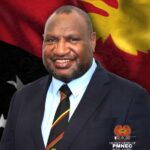
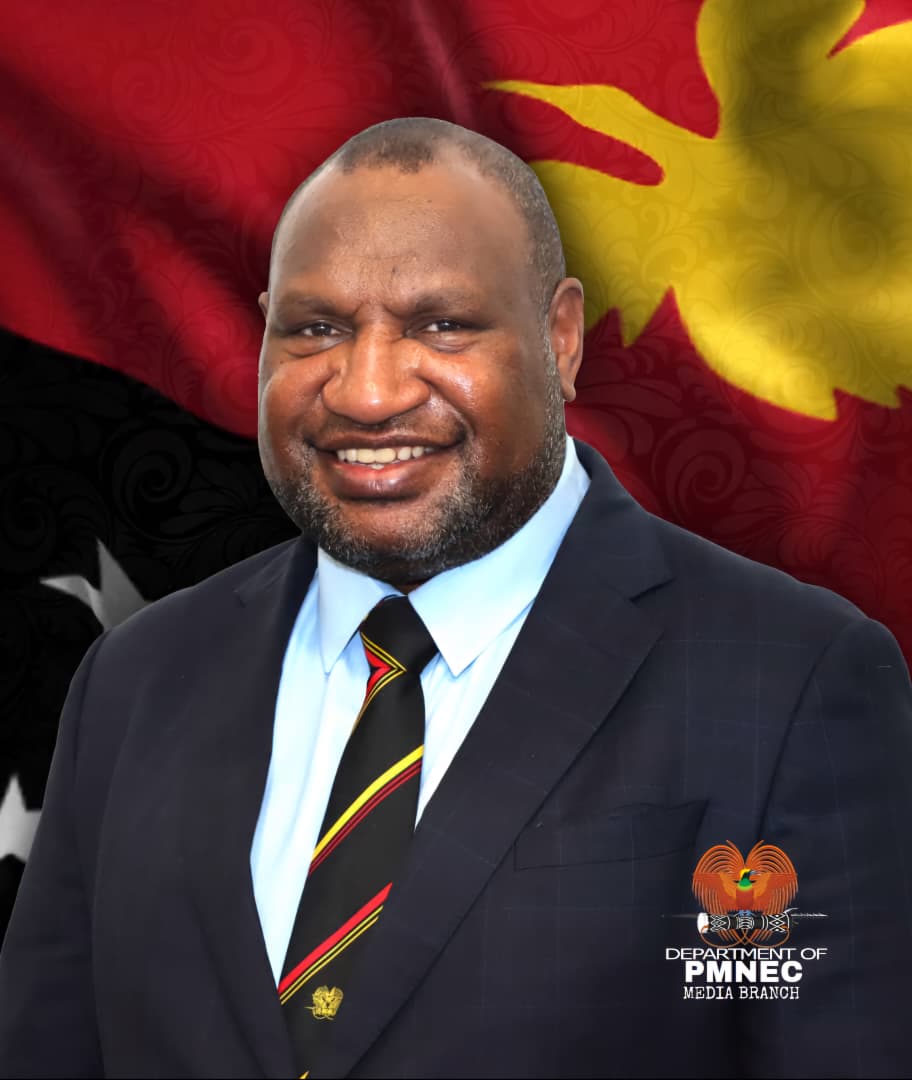

Prime Minister James Marape has reflected on the seventh anniversary of his resignation from the former O’Neill government, describing it as a defining moment of conviction, faith, and national purpose.
Marking April 11, 2026, Prime Minister Marape said his decision to resign on April 11, 2019, was driven by deep concern that the government of the day had lost touch with ordinary Papua New Guineans and was failing to protect the national interest.
“It was on this day seven years ago that I resigned — one man, one leader — with full conviction that I was doing the right thing for my country,” he said.
“After serving in government for seven years, I felt the administration had lost touch with our people. The focus was no longer on securing better benefits for our citizens, particularly from our resource projects.
“I saw firsthand the erosion of benefits in major projects such as Wafi-Golpu, issues in forestry licence distribution, and rural Papua New Guineans being left behind while attention remained on a few urban centres.”
Prime Minister Marape said he resigned alone, without certainty of what lay ahead.
“I stepped out into the unknown. I did not resign because I knew I would become Prime Minister. I stepped out in faith because I believed change was necessary.”
He noted that 49 days after his resignation, he was elected as the eighth Prime Minister of Papua New Guinea.
“Soon after I resigned, other leaders began making their own decisions. Within weeks, a sequence of resignations took place, and we were able to form government.
“That journey led us to PANGU Pati, whose philosophy aligned with our agenda to take back more for Papua New Guinea from our natural resources.”
Prime Minister Marape said his government’s focus since 2019 has remained consistent: to secure greater returns from the resource sector and to grow and diversify the economy.
“We have renegotiated major projects such as Porgera, ensuring better returns for our country.
“At the same time, we have worked to grow the non-resource sectors of the economy. Over the last four years, we have recorded consistent growth in agriculture and other sectors, reducing reliance on mining and petroleum.”
He emphasised that his core convictions and policy direction have not changed over time.
“My zeal, my advocacy, my policies, and my fight — especially the fight to take back more for our country — have not wavered. If anything, they are more deeply entrenched today,” Prime Minister Marape said.
“My commitment to Papua New Guinea remains as it was in 2019, and even as far back as 2002 when I first contested public office. My public policy position has been consistent — to serve our people and ensure our nation benefits fully from its resources.
“Today, that focus is even stronger. I remain the same in my commitment to our country.” Prime Minister Marape acknowledged that progress in some areas has been slow.
“Some reforms are taking time. Bureaucratic processes and performance in certain areas have not moved as fast as I would like. But the direction is clear, and progress is being made.”
He said his government has navigated multiple challenges over the past seven years, including the COVID-19 pandemic, economic disruptions, political instability, civil unrest, natural disasters, and global pressures such as rising fuel prices.
“Despite these challenges, we have maintained stability and continued to deliver on key priorities,” he said. He highlighted ongoing investments in education, health, infrastructure, and energy, noting that development is now reaching more parts of the country.
“We are restoring our education and health systems, expanding roads and bridges, upgrading ports and airports, and extending power infrastructure across Papua New Guinea.”
Prime Minister Marape said much work remains to be done as the country approaches the 2027 National General Election.
“If the people choose us again, we will continue the work we have started. If not, we will ensure a smooth transition, as the democratic process belongs to our people.”
He concluded by thanking the people of Papua New Guinea and Members of Parliament for their support.
“Looking back, I stepped out alone in 2019, not knowing what the future held. Forty-nine days later, I was given the honour to serve as Prime Minister.
“It is a reminder that when you commit to a cause, anything is possible. I thank firstly my God and secondly
the people and leaders of our country for their faith and support as we continue to build our nation.”