

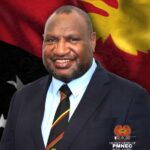

Prime Minister Hon. James Marape has announced a major Policy shift to address Papua New Guinea’s growing Urban challenges, with the restoration of a National Urbanisation Office to coordinate planning, settlement management, and sustainable city expansion across the country.
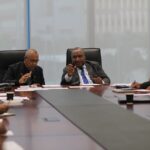
The announcement follows high-level deliberations held earlier today at Melanesian Haus, where Land, Housing, and Urbanisation were discussed as part of the Government’s broader Reset @ 50 Agenda.
Restoring a Central Urbanisation Authority
Prime Minister Marape said the re-establishment of the National Urbanisation Office will serve as a central coordinating body to bring together all stakeholders involved in urban development. “We are working to restore back the Urbanisation Office as a focal point to coordinate all this work in Urbanisation,” Prime Minister Marape stated.
He highlighted that fragmented approaches in the past have contributed to unplanned Settlement Growth and lack of coordination among Government agencies. “It appears that everybody else doesn’t know what somebody else is doing—we need a focal coordination point,” he emphasised.
Addressing Displacement and Unplanned Settlements
The Prime Minister expressed deep concern over the growing number of displaced people living without certainty or proper planning in urban areas. “It pains me to see people displaced in their own country—whether they are from Settlements like 2 Mile, Garden Hills, or even West Papuans—living without clear direction for their future,” he said.
He stressed the need for structured solutions, including:
– Repatriation to Home Provinces where appropriate;
– Formal Land Allocation and titling for those settled and employed in Urban centres;
– Proper planning of Settlements to ensure safety, service delivery, and governance.
Preparing for a Rapidly Urbanising Future
Prime Minister Marape warned that Papua New Guinea must urgently prepare for increasing urbanisation trends, noting global realities. “The world is becoming urbanised—60 to 70 percent of people globally now live in urban areas. While Papua New Guinea remains 85 percent rural, we must not be complacent,” he said.
He emphasised that urban migration is inevitable and must be managed proactively through policy, planning, and investment.
Coordinated National Planning with All Stakeholders
The restored National Urbanisation Office will work closely with:
– Provincial Governors;
– City Authorities and Municipal Administrations;
– Town Planners and Lands Department;
– Private Sector developers;
– Superannuation funds and employers.
“This Office will coordinate with all Governors, City Authorities, and Stakeholders so we can properly plan Land Expansion and Urban Growth,” the Prime Minister said.
Vision for PNG at 60 Years of Independence
Looking ahead, Prime Minister Marape outlined a clear National Vision: by Papua New Guinea’s 60th Independence Anniversary in 2035, all major Towns and Cities should be well-planned, structured, and properly governed.
“By the time we reach 60 years of nationhood, our Towns and Cities must be properly planned, suburbs must grow in an orderly way, and settlement issues must be resolved,” he said.
He added that coordinated urban planning will eliminate informal and unregulated settlements where Authorities currently lack visibility.
“We want to end the situation where people are living in areas unknown to Police and Government. This must be tidied up through proper planning,” he stressed.
A Whole-of-Government and Whole-of-Nation Approach
The Prime Minister reaffirmed that addressing Urbanisation is not solely a Government responsibility but requires collaboration across all Sectors.
“Working together with Private Sector, Super Funds, and Employers, we can fix these issues and build modern, organised cities for our people,” he said.
Prime Minister Marape’s directive to restore the National Urbanisation Office marks a critical step toward managing Papua New Guinea’s urban future. By placing coordination, planning, and inclusivity at the centre of Policy, the Government is positioning the nation to transition from unplanned growth to structured and sustainable urban development.
“Urbanisation is not something we can ignore—it is something we must prepare for, manage properly, and turn into an opportunity for national growth and better living standards for our people.”