

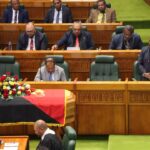
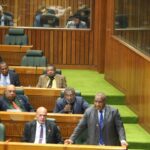
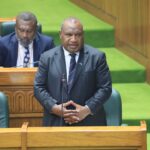

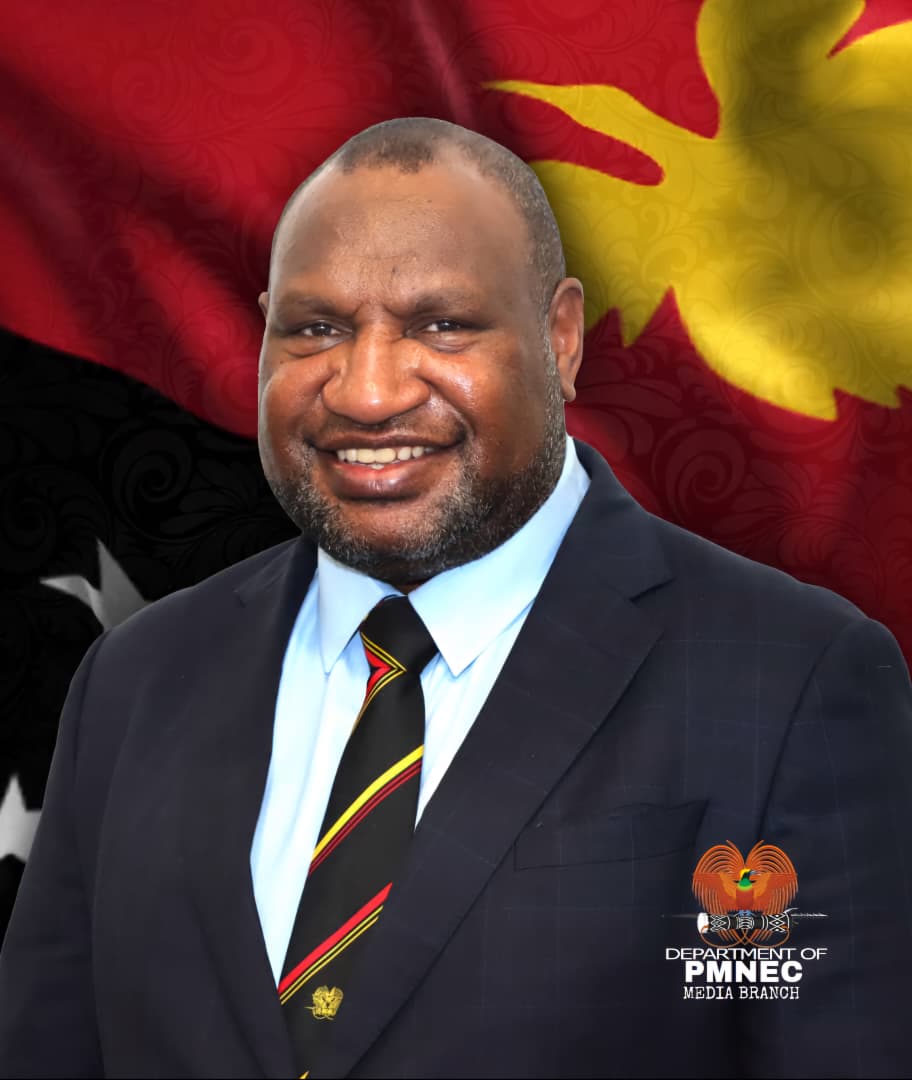

Prime Minister Hon. James Marape has described the passage of landmark legislation in Parliament today restructuring Papua New Guinea’s higher court system as one of the most significant achievements of his Government under the Reset Agenda at 50 years of Independence.
Prime Minister Marape said the reforms establish a clear, three-tier higher court structure comprising the National Court, a newly created Court of Appeal, and the Supreme Court, each operating independently with distinct roles and leadership.
“This is a major, major achievement of our government. It is a fundamental reset of our judicial architecture to meet the needs of a modern Papua New Guinea,” Prime Minister Marape said.
Under the new structure, the Supreme Court will be elevated to focus primarily on constitutional matters, including references under Sections 18 and 19 of the Constitution, as well as selected cases the court itself decides. A dedicated Court of Appeal will now sit between the Supreme Court and the National Court, ensuring a more efficient and structured appellate process.
Prime Minister Marape said the reforms respond to the growing demands on the country’s justice system.
“Our country, now more than 10 million people after 50 years of Independence, is more informed, more educated, and more litigious. The workload on our courts has increased significantly, and it will only grow as we move towards a population of 20 million in the coming decades,” he said.
“We must ensure that the structures of government — especially the judiciary — are fit for purpose, efficient, and capable of delivering timely justice.”
He emphasised that the reforms strengthen, rather than compromise, judicial independence by clearly separating the functions and leadership of each court tier.
“The judiciary remains fully independent. What we have done is to augment that independence by ensuring that each level of the court system operates distinctly, without overlap, and with clearly defined responsibilities,” Prime Minister Marape said.
“The National Court, Court of Appeal, and Supreme Court will function independently, ensuring more effective adjudication of disputes, constitutional matters, and appeals.”
The Prime Minister highlighted that the reforms also include improved conditions for judges and magistrates, with plans to significantly expand the judiciary.
“We are increasing the number of judges from around 60 to as many as 200 over time. We are also improving remuneration, securing pensions, and ensuring that magistrates and judges are among the best supported public servants in the country,” he said.
“We are even open to recruiting international judges where necessary, to strengthen capacity and ensure the highest standards of justice.”
Prime Minister Marape described the reforms as critical to safeguarding democracy in one of the world’s most diverse nations.
“In a country of over 800 languages, diverse cultures, and many competing interests, a strong, fair, and independent judiciary is the ultimate resting place for dispute resolution,” he said.
“There is no greater gift we can give our country than a judicial system that is efficient, independent, and trusted by our people.”
He said the reforms form part of a broader effort to strengthen the entire law and justice sector, including policing and correctional services.
“We will complement these reforms by strengthening police and correctional institutions so that investigations, prosecutions, and the delivery of justice are carried out expeditiously,” he said.
Prime Minister Marape acknowledged the contributions of key stakeholders, including Chief Justice Sir Gibbs Salika and the judiciary, Minister for Justice and Attorney-General Hon. Pila Niningi, and Members of Parliament from both Government and Opposition who supported the legislation.
“I commend the Chief Justice and his team for their strong support, Minister Ninigi for his leadership, and all Members of Parliament — including those from the Opposition — who stood together to pass these historic laws,” he said.
“This reform is part of our government’s commitment to resetting Papua New Guinea for the next 50 years — ensuring that our democracy is underpinned by a strong, independent, and functional judiciary.”
Prime Minister Marape said the reforms would stand as one of the defining contributions of his generation to the nation’s long-term stability and governance.
“In my view, this will rank among the greatest contributions we can make to our country — securing the rule of law through a properly structured, well-resourced, and independent court system for generations to come,” he said.