
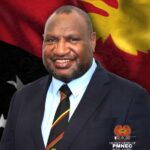
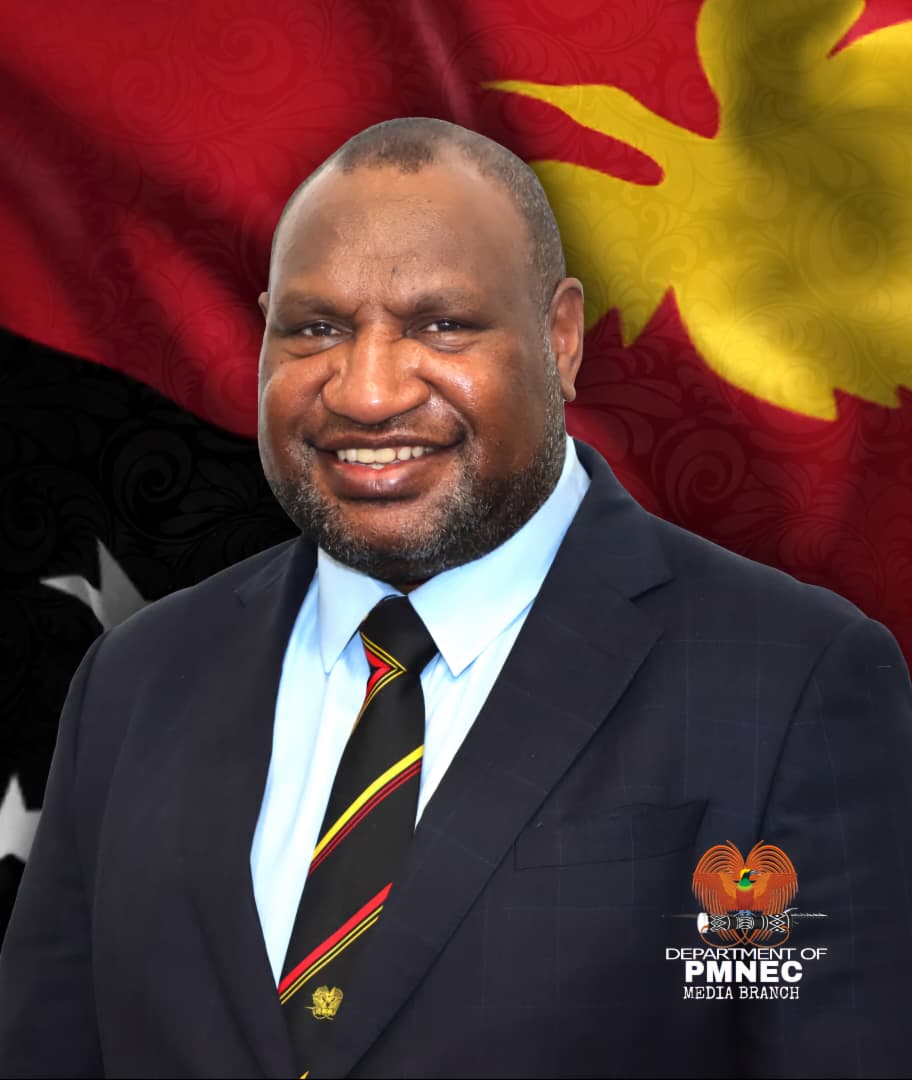

Prime Minister Hon. James Marape has welcomed and strongly supported the Parliamentary Committee Report on Land, presented in Parliament today by the Chairman of the Customary Land and Land Reforms Committee, Hon. Keith Iduhu, Member for Hiri-Koiari, describing it as a timely and critical step toward protecting Customary Land ownership while enabling Papua New Guineans to participate more meaningfully in the formal economy.
Prime Minister Marape commended Hon. Iduhu and Members of the Customary Land and Land Reforms Committee for their work, highlighting the importance of Bipartisan cooperation in addressing one of the most significant national issues affecting Papua New Guinea. “I want to congratulate the Chairman and his Committee for coming up with an excellent Report to Parliament,” Prime Minister Marape said during the Parliamentary debate. “This is a Bipartisan Committee, and Parliamentary Committees are very important, especially as we reflect in our 50th Year of Independence and National Reset.”
The Prime Minister noted that the work undertaken by the Committee reflects the collaborative nature of Papua New Guinea’s Democracy, where Government and Opposition Leaders can work together on national priorities. Despite having the Parliamentary numbers to change Committee leadership, the Government deliberately retained Hon. Keith Iduhu as Chair due to his passion and expertise on Land matters. “We had the majority to displace Hon. Keith Iduhu from this role, but we know he has a passion for this space,” Prime Minister Marape said. “As a lawyer and a son of Motu-Koitabu landowners who has seen Land issues firsthand around Port Moresby, he understands clearly the Laws and the realities affecting our people.”
Protecting Customary Ownership
Papua New Guinea remains unique globally for the strength of its Customary Land ownership system. Approximately 97 percent of Land in Papua New Guinea is held under Customary ownership, with only about 3 percent classified as State Land.
Prime Minister Marape emphasized that protecting this System has been a cornerstone of the country’s Constitutional framework since Independence in 1975. “I want to register my appreciation to the Founders and Fathers of our
country who ensured that Land remains in the hands of our people,” he said. “The overall architecture of our Constitution ensures that Land remains with our citizens and Customary owners.” The Prime Minister stressed that Reforms being discussed are not intended to alienate Land from traditional owners, but rather to strengthen their rights while enabling economic participation. “We do not want to alienate Land from our people. We want to maintain the inherent rights embedded in PNG’s customs and traditions.”
Linking Land to the Formal Economy
Prime Minister Marape said that properly registering Customary Land and improving Land Administration will be critical to unlocking Papua New Guinea’s economic potential. He noted that around 80 percent of Papua New Guineans live in rural areas, largely dependent on Subsistence Agriculture despite owning significant Land assets. “Land remains the number one asset base for any lending collateral,” Prime Minister Marape said. “The missing piece has been linking our people and their Land to the formal economy.”
The Government has been working toward this objective through Policies aimed at mobilising Customary Land for development while maintaining Ownership rights.
Key initiatives under the Marape-Rosso Government since 2019 include:
• Strengthening Land Administration and Registry systems
• Halting illegal or improper Land sales
• Reviewing Land laws to protect Customary owners
• Supporting infrastructure such as Connect PNG roads to unlock rural Land for agriculture and economic activity
• Promoting Land mobilisation for Agriculture, Tourism, and Small-to-Medium Enterprises.
The Prime Minister also cited the Connect PNG infrastructure program as an example of how roads are enabling rural communities to access markets and develop their Land productively. During a recent trip from Kupiano (Abau district, Central Province) to Alotau (Milne Bay Province), Prime Minister Marape recalled stopping numerous times to hear from local landowners eager to participate in the formal economy. “Almost every stop along the road people thanked us for the road and said they now want to get into the formal economy,” he said. “They have the most important collateral already — their Land.”
Urgent National Task
Prime Minister Marape stressed that Land Reform and proper registration must be pursued urgently while traditional knowledge of Land boundaries and ownership remains within older generations. “In the past our fathers and mothers knew the Land stories from our ancestors,” he said. “This generation risks losing those stories. While the older generation is still with us, we must work in haste to properly register Land across our country.” He said proper registration will ensure security of Land tenure, protection of Customary rights, and economic empowerment for future generations.
Government Support for Committee Recommendations
Prime Minister Marape confirmed that the Government will work closely with the Customary Land and Land Reforms Committee and the Department of Lands and Physical Planning to review and implement recommendations contained in the Report.
“This work by the Iduhu Committee is very timely and relevant,” he said. “Our Government stands ready to embrace these Recommendations and ensure that Land Reform protects our people while unlocking the greatest economic potential our nation possesses.”
Prime Minister Marape said Papua New Guinea’s 462,840 square kilometres of Land represent one of the country’s greatest assets, and ensuring that citizens benefit from it remains a national priority.
“This work is about giving certainty to the inherent rights of our people to their Land while linking them to productive economic activities for the future.”