
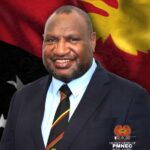


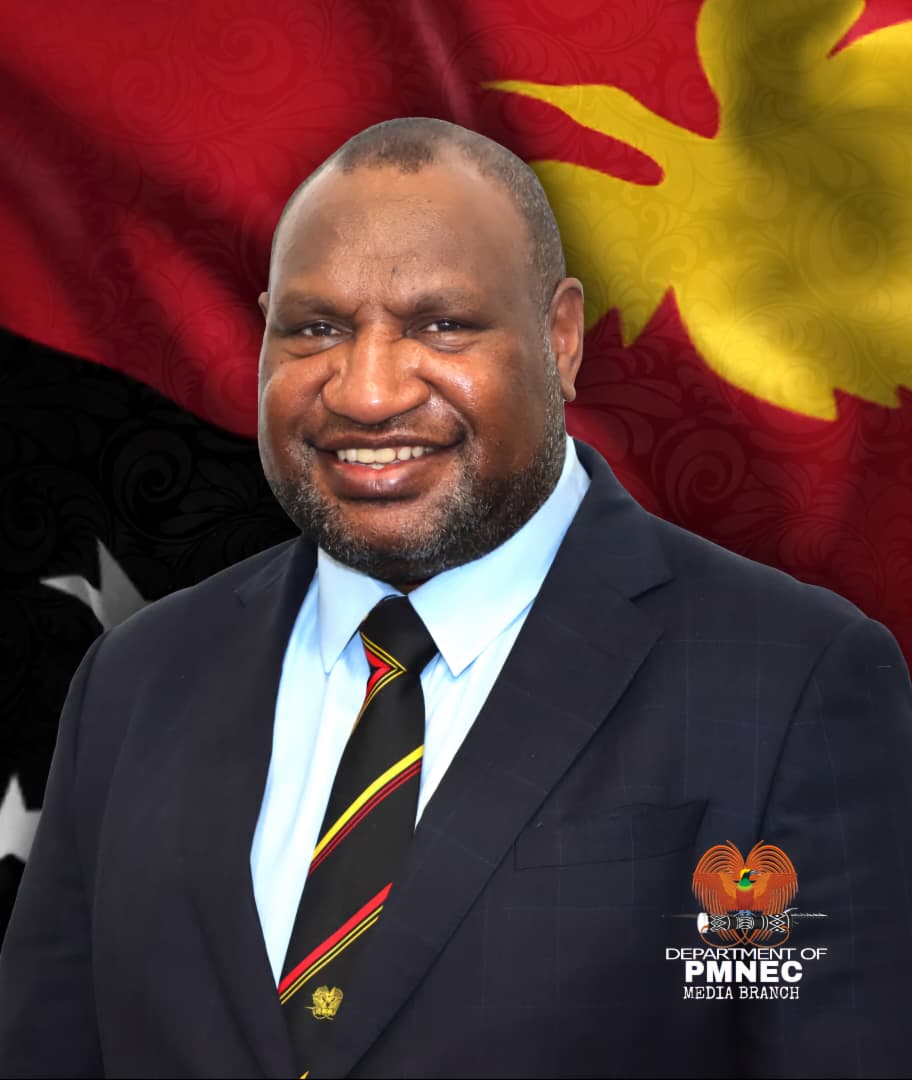

Prime Minister Hon. James Marape today addressed concerns following the latest designation of Papua New Guinea by the Financial Action Task Force (FATF) as a jurisdiction under increased monitoring— commonly referred to as the “grey list”.
The designation follows the conclusion of the FATF plenary on 13 February 2026, where Papua New Guinea and Kuwait were added to the list of countries working with international partners to strengthen their anti- money laundering and counter-terrorism financing frameworks.
Prime Minister Marape emphasised that his recent address to Heads of Departments was intended to reinforce Government efforts to lift transparency, accountability and compliance standards across public financial management and service delivery.
“My address to public sector heads was about stepping up in key areas — ensuring that Government systems are robust and that oversight is strengthened in critical financial processes,” Prime Minister Marape said. “The FATF decision should not be seen as a judgment against Papua New Guinea, but rather as a formal recognition that we are working constructively with international partners to address identified gaps and align our systems with global standards.”
The Prime Minister stressed that the Government has already taken historic and deliberate steps to strengthen the country’s integrity and accountability framework.
“This Government passed the ICAC legislation and established the independent Commission Against Corruption — a first in our nation’s history,” he said. “We also introduced Undisclosed Wealth provisions, which are now embedded within the Proceeds of Crime framework. These reforms were not symbolic; they were designed to fundamentally strengthen the rule of law and financial accountability.”
He said that with the legal and institutional architecture now in place, the responsibility lies with implementing agencies to fully exercise their statutory mandates.
“It is not the Prime Minister’s role to pursue individual cases on a daily basis,” Prime Minister Marape said. “Agencies such as the Royal Papua New Guinea Constabulary, ICAC, the Ombudsman Commission, the Financial Analysis and Supervision Unit, financial regulators and the banking sector all have clear legal responsibilities. Their duty is to ensure that all transactions within our country are lawful, transparent and legitimate.”
Prime Minister Marape said the Government has already begun strengthening coordination between the Departments of Finance, Treasury and National Planning, while also engaging private-sector accounting firms to audit public accounts and track displacement and compensation claims.
“We have engaged independent accounting firms to scrutinise public accounts and displacement claims, and we will step up audits as a fundamental Government responsibility,” he said. “At the same time, law- enforcement agencies have the authority and obligation to investigate and pursue matters that warrant full inquiry.”
The Prime Minister referenced recent enforcement actions, including the freezing of approximately K214 million held in a trust account by a law firm, as evidence that financial oversight and enforcement mechanisms are active and operational.
“Where accounts and transactions require investigation, they must be investigated transparently, professionally and in accordance with the law,” he said.
Addressing investor confidence, Prime Minister Marape reassured domestic and international investors that Papua New Guinea remains a stable and viable destination for long-term investment.
“Some commentators have raised concerns about potential impacts on foreign direct investment,” he said. “However, long-standing investors in mining, petroleum and broader commercial sectors understand our operating environment. They have remained engaged through multiple phases of reform and continue to express confidence in Papua New Guinea’s long-term economic prospects.”
Prime Minister Marape also noted that Papua New Guinea has previously exited the FATF grey list and reaffirmed the Government’s commitment to completing all required action points within agreed timelines.
“We have exited grey lists before, and we will do so again — by implementing reforms, strengthening institutional capacity, and meeting our international obligations in a timely and credible manner,” he said.
The Prime Minister concluded by reaffirming the Government’s commitment to working closely with domestic stakeholders, international partners and regulatory bodies to ensure Papua New Guinea meets global standards on anti-money laundering, counter-terrorism financing and financial transparency.