
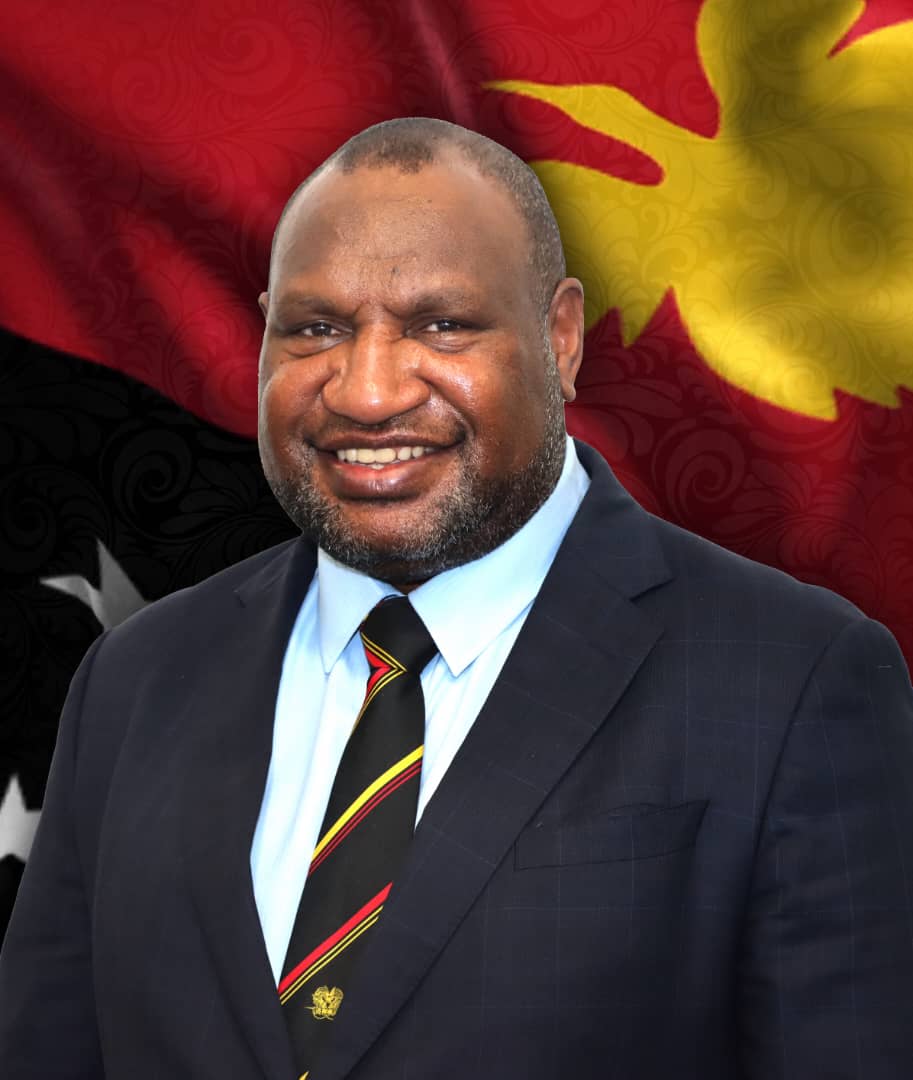

Prime Minister Hon. James Marape has used the lead-up to Christmas 2025—the 50th Christmas since Papua New Guinea became a sovereign nation—to thank citizens, public servants and international partners, while outlining major economic achievements and reforms that will shape the country’s next chapter beyond its Golden Jubilee.
In a press conference, Prime Minister Marape expressed appreciation to Papua New Guineans across the country for their patience, resilience and cooperation throughout what he described as a demanding but ultimately successful year.
“I want to say a big thank you to every citizen across our country, to our residents, and to all our international partners who have stood with Papua New Guinea throughout 2025,” he said. “Your tolerance, understanding and contribution—whether at worksites, in communities, or through trade and government partnerships—have been vital.”
Strong Revenue Collection Despite Tax Relief
The Prime Minister highlighted record performance by the Internal Revenue Commission (IRC) and Customs, noting that the Government achieved these results despite delivering the largest tax relief package in the country’s history.
He revealed that the IRC had collected 97 per cent of its total revenue forecast for 2025, with collections already K700 million higher than the same period last year, even before year-end figures were finalised.
“This is a monumental achievement,” Prime Minister Marape said. “We removed taxes from 13 essential household items and lifted the tax-free threshold to K20,000, sacrificing more than K300 million in revenue—yet collections are still up.”
He commended IRC leadership and staff for their performance and announced continued investment in modernising tax administration, including over K130 million committed to ICT and automation systems to reduce human error and improve transparency.
Customs also exceeded expectations, with collections reaching 102 per cent of forecast revenue, reinforcing confidence in the Government’s fiscal management as it prepares the 2026 Budget.
Infrastructure, Health and Aviation Milestones
Prime Minister Marape said 2025 marked significant progress in infrastructure delivery, with road construction and rehabilitation underway across the country, employing tens of thousands of Papua New Guineans and improving connectivity between regions.
He cited recent road drives from Kupiano to Alotau in Milne Bay and from Tabubil to Telefomin in West Sepik as practical examples of how long-term investments in roads are opening up previously isolated areas.
“These are not just roads in reports or budget papers—they are roads you can now drive on,” he said. “When you can travel by road from Kupiano to Alotau, or from Tabubil into Telefomin, you see nation-building in action. Roads connect farmers to markets, children to schools, patients to health services, and communities to opportunity.”
The Prime Minister said road connectivity remains central to the Government’s development strategy, particularly as nearly 80 per cent of Papua New Guineans live in rural areas.
“Roads lower the cost of living, improve service delivery and restore dignity to communities that for too long have been left behind,” he said. “This is how we physically unite our country and lay the foundation for sustainable economic growth.”
He also pointed to ongoing works at key airports, including Alotau, Mt Hagen and Wewak, and confirmed that larger aircraft had landed at Tokua Airport for the first time in many years—signaling renewed momentum in the aviation sector.
Reflecting on reforms at Air Niugini, the Prime Minister said the national airline’s A220 fleet renewal represents a critical reset for aviation in Papua New Guinea.
“The introduction of the A220 aircraft is not just about replacing old planes—it is about repositioning Air Niugini for the next 50 years,” Prime Minister Marape said. “These aircraft are more fuel-efficient, safer and better suited to our domestic and regional routes.”
He said the modern fleet would improve reliability, reduce operating costs and enhance passenger experience, while strengthening the airline’s long-term financial sustainability.
“Aviation is not a luxury for our country—it is a lifeline,” he said. “A stronger Air Niugini means better access for our people, stronger tourism, improved health referrals and more reliable links between our provinces.”
In health, the Prime Minister described 2025 as a breakthrough year, citing the country’s first successful kidney transplants and heart bypass surgery as milestones in specialist medical care.
“These achievements show that our focus on strengthening specialist health services is delivering results, particularly for lifestyle-related diseases affecting our most economically productive citizens,” he said.
Education and Second-Chance Pathways
Education remained a central priority, with Prime Minister Marape confirming that the sector would receive around 16 per cent of the national budget in 2026—the largest allocation ever.
He highlighted the expansion of Second Chance education programmes, now supporting more than 100,000 Papua New Guineans who previously dropped out of school, alongside overseas scholarships for top science and medical students studying in countries including the United States and China.
“This is an investment in our future,” he said. “Education is how we secure the next 50 years of our nation.”
AI, Meritocracy and 2026 Reform Agenda
Looking ahead, Prime Minister Marape said 2026 would be a decisive year, marking the final full year of the current Parliament before the 2027 General Election.
He announced plans to embed artificial intelligence and ICT systems across public service recruitment and government procurement to strengthen merit-based decision-making and eliminate political or personal interference.
“If you want a job, you apply online. If you want a government contract, you apply online. The best must get the job,” he said. “We will remove human hands from the process and let systems deliver fairness, efficiency and transparency.”
He confirmed that Cabinet ministers and departmental heads have been instructed to provide detailed performance reports for 2025 by early January, reinforcing a renewed push for accountability.
Call for Unity and Responsible Citizenship
As the country prepares to enter its first full year beyond the 50th anniversary of Independence, Prime Minister Marape urged citizens to reflect on their own responsibilities to the nation.
“If you do not know what you can contribute to your country, then contribute by respecting the law, respecting one another, and living within the values that hold us together,” he said.
He encouraged families to reconnect with their communities over Christmas, avoid excess and violence, attend church, and support peace through dialogue and mediation.
Christmas Message to the Nation
The Prime Minister closed by thanking the media for its role in holding leaders accountable and wished all Papua New Guineans a safe and peaceful Christmas.
“As we step into the first year after 50 years of nationhood, this is a time of refocus and reset,” he said. “Together, with discipline, unity and shared responsibility, we can build a stronger Papua New Guinea for the next 50 years.”
Prime Minister Marape said he would return home to Tari to spend Christmas with his family, noting that reconnecting with one’s roots and community remains central to national leadership and unity.