

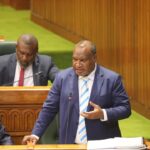
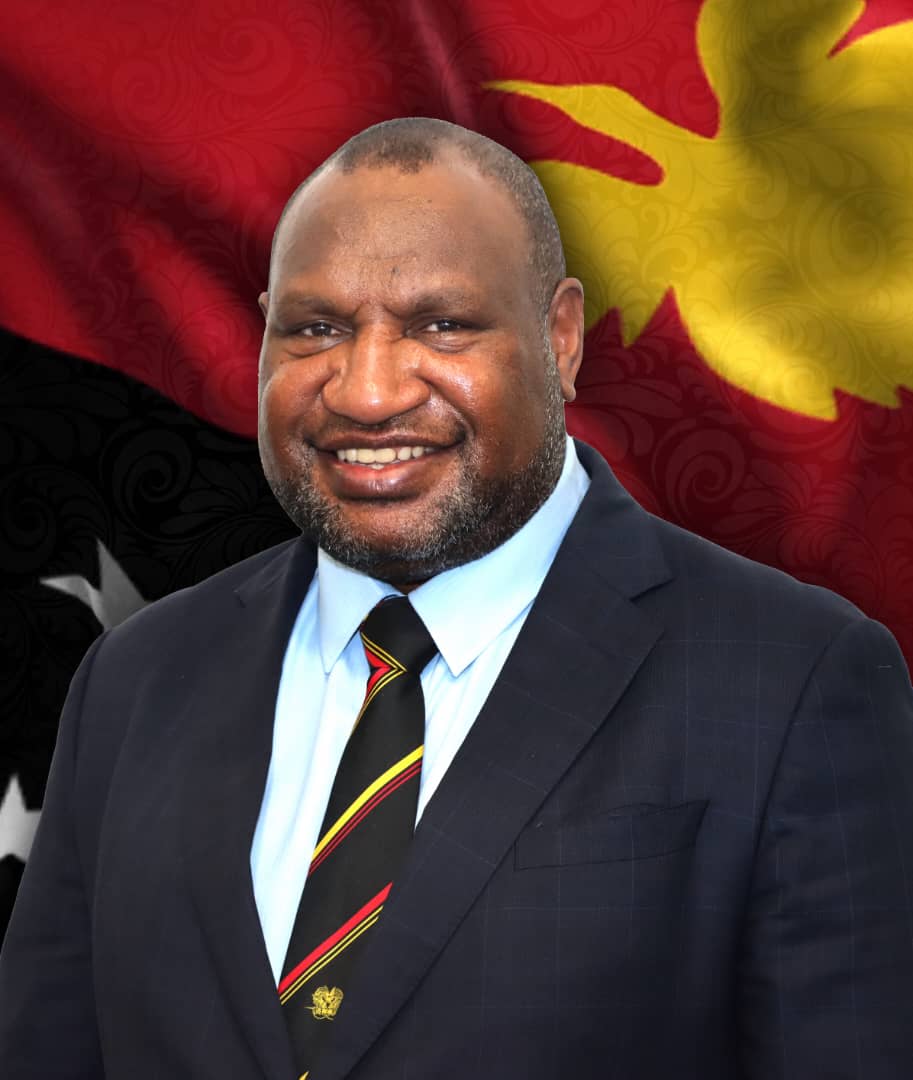

Prime Minister Hon. James Marape has welcomed the unanimous five-man bench Supreme Court ruling which upheld the constitutionality of the Government’s amendment to Section 145 of the Constitution.
The Court dismissed in full a challenge by the Opposition to the amendment under Section 18 of the Constitution.
The bench comprised Chief Justice Sir Gibbs Salika, Justice David Cannings, Justice Panuel Mogish, Justice George Manuhu, and Justice Derek Harthson of the National and Supreme Courts.
The amendment was introduced to ensure that another motion for a vote of no confidence against a sitting Prime Minister cannot be moved again within 18 months after a previous attempt has been defeated or has failed.
The Court, in its ruling, stated that the defeat of a motion of no confidence is, in effect, an affirmation of confidence in the Prime Minister. It operates as a signal that the Prime Minister has earned the privilege of being shielded, for a limited period of 18 months, from any further motions of no confidence.
It said in its unanimous decision that “this privilege is the same as that enjoyed by a member who is appointed Prime Minister due to a successful motion of no confidence in their predecessor. Upon appointment, the new Prime Minister would enjoy the grace period provided by s 145(4) of the Constitution.”
Justice David Cannings, who read the ruling on behalf of his brother judges — Chief Justice Sir Gibbs Salika, Justice Panuel Mogish, Justice George Manuhu, and Justice Derek Hartshorn — said “we reject the argument that Constitutional Amendment No 48 automatically provides for a 36-month grace period in which there can be no motions of no confidence in the Prime Minister. A grace period of that length is only enjoyed if the Prime Minister repels a motion of no confidence. We also reject the argument that a motion of no confidence is prohibited in the final 12-month term of a Parliament.”
The Court also considered whether Constitutional Amendment No 48 conflicts with existing constitutional provisions.
It stated that “Constitutional Amendment No 48 does not tamper with the basic structure of the Constitution. It does not undermine the principle of accountability of the Executive arm of government to the Parliament.
“We are not persuaded that Constitutional Amendment No 48 is inconsistent with other provisions of the Constitution (including ss 1 14 (voting in the Parliament) and 115 (parliamentary privileges etc) referred to by the applicant.
“To the extent that an opinion under s 50(2) of the Constitution is required, we consider that Constitutional Amendment No 48 is reasonably justifiable in a democratic society that has a proper regard for the rights and dignity of man- kind.”
Justice Cannings read this as part of their unanimous decision.
The ruling concluded: “the application for a declaration that Constitutional Amendment No 48 is unconstitutional will be refused. As to the question of costs of the proceedings, we do not consider that it would be appropriate to award costs against the applicant or the second intervener. We appreciate the validity of the concerns and the significance of the issues raised by the applicant and the quality of submissions of learned counsel for all parties.”
The Court accordingly ordered that all relief sought by the applicant be refused.
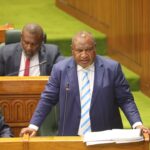
Prime Minister James Marape, in welcoming the decision, said there will be no further votes of no confidence until the next national general elections in 2027.
He said the Court had provided clear affirmation that the amendment was lawful, consistent with the Constitution, and did not violate the rights of Members of Parliament.
“It does not impinge on the rights of members of parliament to move a vote of no confidence against a Prime Minister or take a vote to elect or remove a Prime Minister via a VONC. But it says clearly it cannot be moved again if a previous motion of a no confidence vote has failed or fails,” he said.
PM Marape Hails Ruling as Upholding the Constitution
The Prime Minister said the Government respected the right of Governor Bird and the Opposition to seek legal clarity, but the Supreme Court has now spoken with unanimity.
“We left Parliament to come and give respect to the Supreme Court, as our country celebrates the 50th anniversary. We must understand that the Supreme Court is the last place in which all our disputes in our country are resolved… PM Marape said the government respects that.”
He said the ruling confirmed that Parliament acted within its powers.
“Today the Supreme Court found that the amendment we did is a good law or goes against Section 50 rights of members of Parliament. The Supreme Court
made it very clear this afternoon that the amendment we did is in fact in line with the constitution, does not affect any one single Member’s right or infringes or their right to move a motion for a vote of no confidence and right to elect a prime minister on the floor of parliament.”
He added that the amendment preserves the vote of no confidence mechanism but prevents repeated motions after a failed attempt.
“It says the section 145 vote of no confidence remain in place. But the intent of the amendment was that once a Motion for a Vote of No Confidence against the sitting Prime Minister is moved and is unsuccessful it cannot be moved again within an 18 months period.”
He said the Supreme Court reaffirmed that the law strengthens responsible government.
“The Supreme Court says the Subsection 5 insertion we did is very much congruent with the entire law, keeping the executive government checked, as far as the provision of Motion of No Confidence Vote against any Prime Minister is concerned.”
Appeal for National Respect and Acceptance
Prime Minister Marape called on the nation to respect the Court’s decision.
“I was prepared to come today to accept the ruling. If the court had ruled against us, we would have advised everyone to respect it and return to work. It was a fair ruling made by the five-man bench that ruled. Pick up a transcript of the ruling and read the law correctly.
“In summary it says the amendment we did to section 145, with insertion of subsection 5, is constitutionally congruent; it is a good law. It does not trample on any Member of Parliament in exercising their section 50 rights.
“Today the Supreme court just dismissed the application by the East Sepik Governor Allan Bird in its entirety and totality. I want to appeal to our citizens, I know you have your views, not everything we do satisfies all our citizens. That is your right. That is your section 50 rights. Exercise your section 50 right carefully in 2027.
“The parliamentarians are exercising their rights today and we have 13 more months before the next general elections and you have your opportunity to make your mark, construct your government and elect your leaders in 2027.
“But today, in as far as the Supreme Court is concerned, the amendment we did is in order. The court ruled in favour of the amendment and there will be no motion for a vote of no confidence until 2027 which is only 13 months down the line,” said PM Marape.
Legal Note
Under Section 18 of the PNG Constitution, the Supreme Court has the authority to hear and decide on constitutional questions directly. This “special reference” allows the Court to determine whether a law or amendment is consistent with the Constitution. The ruling in this case is final and binding on Parliament, the Executive, and all courts in the country.