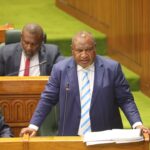
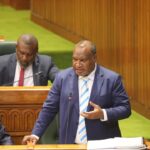
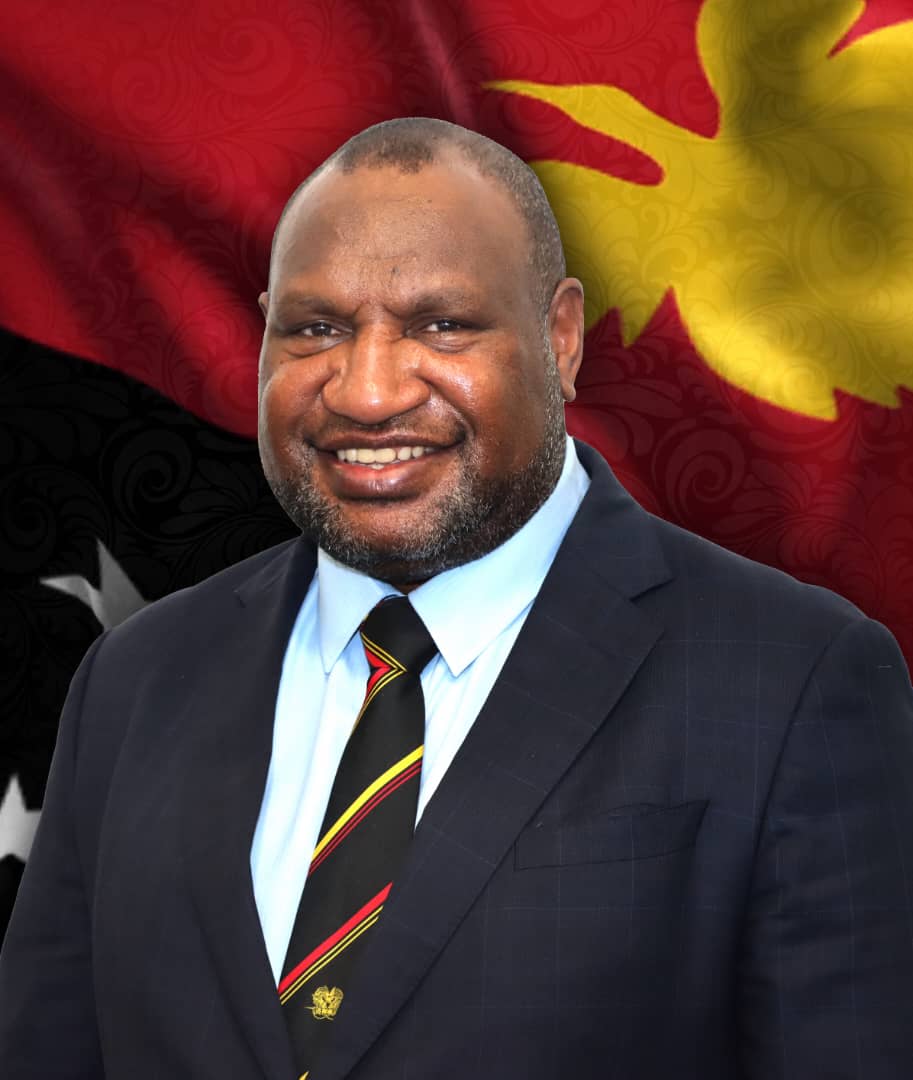

Prime Minister Hon. James Marape says the Government’s strengthened Household Assistance Package under the 2026 National Budget reflects a firm and deliberate commitment to helping Papua New Guinean families cope with rising living costs, while maintaining a responsible path toward long-term economic stability.
The Prime Minister stressed that this initiative is not a new announcement, but rather the continuation of a well-structured programme of relief introduced over several years to protect households during difficult global economic conditions.
Strong Focus on Supporting Papua New Guinean Families
Prime Minister Marape said the 2026 Budget reinforces the Government’s sustained efforts to put more money back into the pockets of citizens — especially low- and middle-income earners who feel the cost-of-living pressures most.
“My government has always prioritised the welfare of Papua New Guineans,” Prime Minister Marape said. “From 2022 onwards, every measure we introduced has been about one thing — helping families manage the cost of living. These supports continue because our people still need them.”
He said the Household Assistance Package is designed to ensure that families have higher disposable incomes, cheaper access to essential goods, and greater resilience during global price disruptions.
GST Relief on Essential Goods Extended to End of 2026
To continue easing pressure on household budgets, the Government will extend the GST exemption on essential goods for a further six months — from 30 June to 31 December 2026.
This targeted measure directly lowers supermarket prices on essential everyday items.
The full-year cost of the GST relief package totals K500 million, comprising:
• K420 million in foregone Internal GST revenue, and
• K80 million in foregone Ports GST.
Prime Minister Marape said these revenue sacrifices are intentional and focused squarely on supporting families.“Every kina saved at the checkout helps a family breathe a little easier,” he said. “We will continue to carry this burden on behalf of our people because their wellbeing remains our priority.”
Expanded Housing Support: Stamp Duty Removal for First-Time Home Buyers
Prime Minister Marape highlighted additional support aimed at helping young families secure homes and build financial security.
He announced that the Government has removed stamp duties for first-time home buyers purchasing new homes valued up to K700,000, an increase from the previous threshold.
“Any Papua New Guinean buying a new home valued up to K700,000, as a first- time home buyer, will now pay zero stamp duty,” he said.
He added that the Government is considering an even more significant step: “Next year, I am looking at removing the 10% GST on first-time home purchases. This will help young Papua New Guinean families to buy a home, build a home, and own a home much earlier.”
The Prime Minister said home ownership is one of the most empowering forms of economic security, and the Government is making deliberate efforts to make it achievable for more families.
K1.01 Billion in Household Support in 2026
Beyond GST relief, the Government will continue all existing assistance measures introduced since 2022.
These include:
1. Permanent Personal Income Tax Relief
• The K20,000 tax-free threshold remains in place.
• Value: K320 million in 2026.
2. School Project Fee Assistance
• K175 million allocated to help families meet school-related costs.
3. Stamp Duty Threshold Relief •
A higher stamp duty threshold maintained to ease costs for first-home buyers.
In total, K1.01 billion in direct household support will be provided in 2026 — the largest annual assistance ever delivered under a PNG Budget.
Five-Year Household Support Totals K3.332 Billion
Prime Minister Marape said these measures demonstrate a long-term and consistent commitment to Papua New Guinean families.
Between 2022 and 2026, the Government will have delivered:
• 2022: K587 million
• 2023: K590 million
• 2024: K460 million
• 2025: K685 million
• 2026: K1,010 million
Total: K3.332 billion
“This is not a new idea — it is a continuous programme of support,” Prime Minister Marape said. “Over five years, we have put more than K3.3 billion directly into helping Papua New Guineans manage daily living costs. No Government has ever done this at this scale.”
A Responsible and People-Centred Approach
Despite prioritising households, Prime Minister Marape said the Government has maintained fiscal discipline and a clear path toward economic recovery.
“We are helping families without raising taxes, without cutting essential services, and without compromising our goal of returning to surplus by 2027,” he said. “This is responsible leadership — protecting our people today while securing a stable future.”
A Prime Minister Who Understands the People’s Hardships
Prime Minister Marape added a deeply personal reflection, saying his decisions are shaped by his own upbringing.
“For me as Prime Minister, I come from that same class of people. I was raised in a simple, humble family — a pastor’s family, a missionary family — with no privileges or income opportunities. So I fully understand the hardships our people face.”
He said it is this lived experience that guides his leadership and strengthens his commitment to ensuring ordinary families receive the support they need.
“As I lead this Government, I am happy that we are giving something meaningful back to our people, showing them that we understand their struggles and that we are doing our absolute best in these difficult times.”
Putting Papua New Guineans First
Prime Minister Marape reaffirmed that the Government will continue monitoring cost-of-living pressures and adjusting support measures when necessary.
“Our people come first,” he said. “As long as cost-of-living pressures remain, my government will continue to cushion Papua New Guinean families. We stand firmly with our citizens — in good times and in difficult times alike.”