



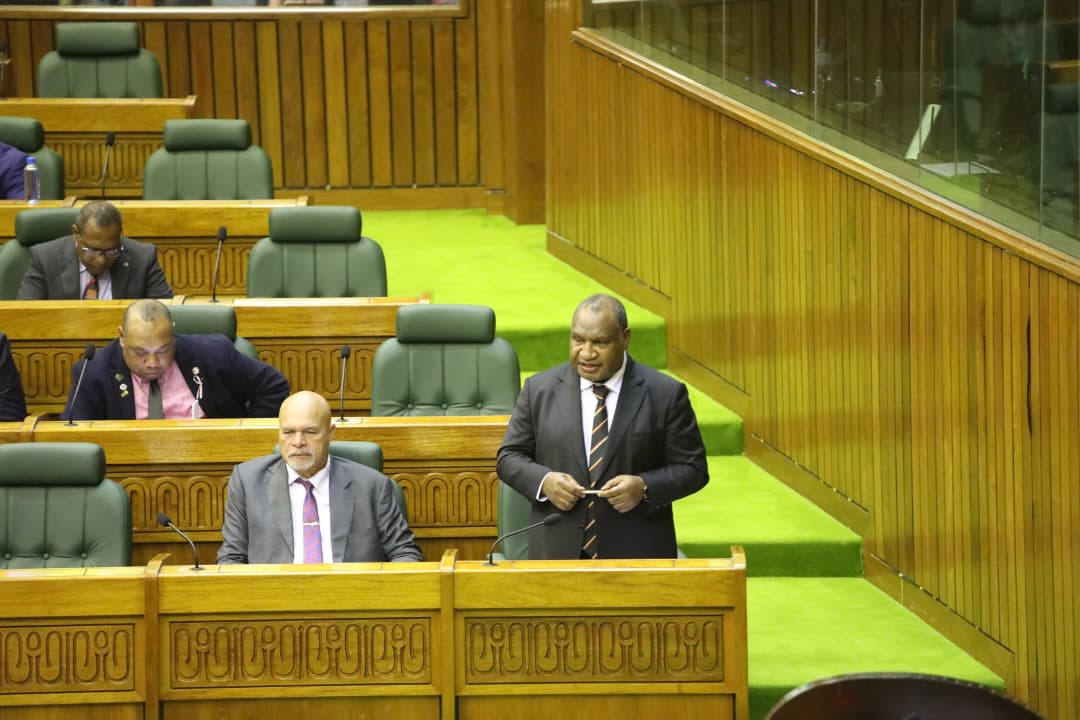

After 40 years, Papua New Guinea has finally revised its Foreign Policy White Paper which was presented and unanimously ratified by Parliament today (26.11.25).
This new White Paper is themed ‘Strategic Partnerships for Security and Eco- nomic Prosperity’, and comes after 40 years since the last White Paper in 1981 under the theme ‘Active and Selective Engagement.’
Work on reviewing the paper started in 2022 when the Marape-Rosso Government recognized the need to review PNG’s Foreign Policy paper to provide an up-to-date, modern and relevant Foreign Policy framework.
Prime Minister Hon. James Marape welcomed the revised policy framework, saying this paper pronounces the country’s changing foreign policy direction in an increasingly complex and dynamic international landscape, and arrives at the right time after 50 years of Independence to chart the course for PNG’s international relations in its next 50-year chapter.
“The 2025 Foreign Policy White Paper reinforces Papua New Guinea’s foundational foreign policy doctrine of ‘Friends to All; Enemies to None’. It is updated, modern and spells out the direction we must take as we enter into the next 50 years,” he said.
Minister for Foreign Affairs, Hon. Justin Tkatchenko, who presented the document to Parliament, said he was proud to announce the successful completion of the paper and asked for Parliament’s support in endorsement.
Under the theme ‘Strategic Partnerships for Security and Economic Prosperity’, the policy aligns PNG’s international engagement with its domestic goals, asserting a confident, principled and pragmatic role for our country on global stage.
“At its heart, this Foreign Policy aims to promote national security, economic prosperity, social well-being and a sense of national unity through dynamic partnerships and purposeful diplomacy,” Minister Tkatchenko said.
“The policy reaffirms PNG’s identity as a responsible global citizen and regional leader in the Pacific.”
“PNG’s Foreign Policy is grounded in a foundation of core values and principles, constitutional democracy, and human rights, and sovereignty reciprocity, peaceful co-existence constructive internationalism.”
There are eight pillars that enables its effectiveness as a foreign policy. They include:
1. Bilateral Relationships;
2. Effective Multilateralism;
3. Robust Institutions that protect PNG’s sovereignty and security;
4. Economic and Commercial diplomacy;
5. Development Cooperation;
6. National Branding and Soft Power; and
7. Departmental and Diplomatic Reform and Leadership and Coordination.
The Department of Foreign Affairs is the key government agency responsible for overseeing, coordinating and implementing this policy.