
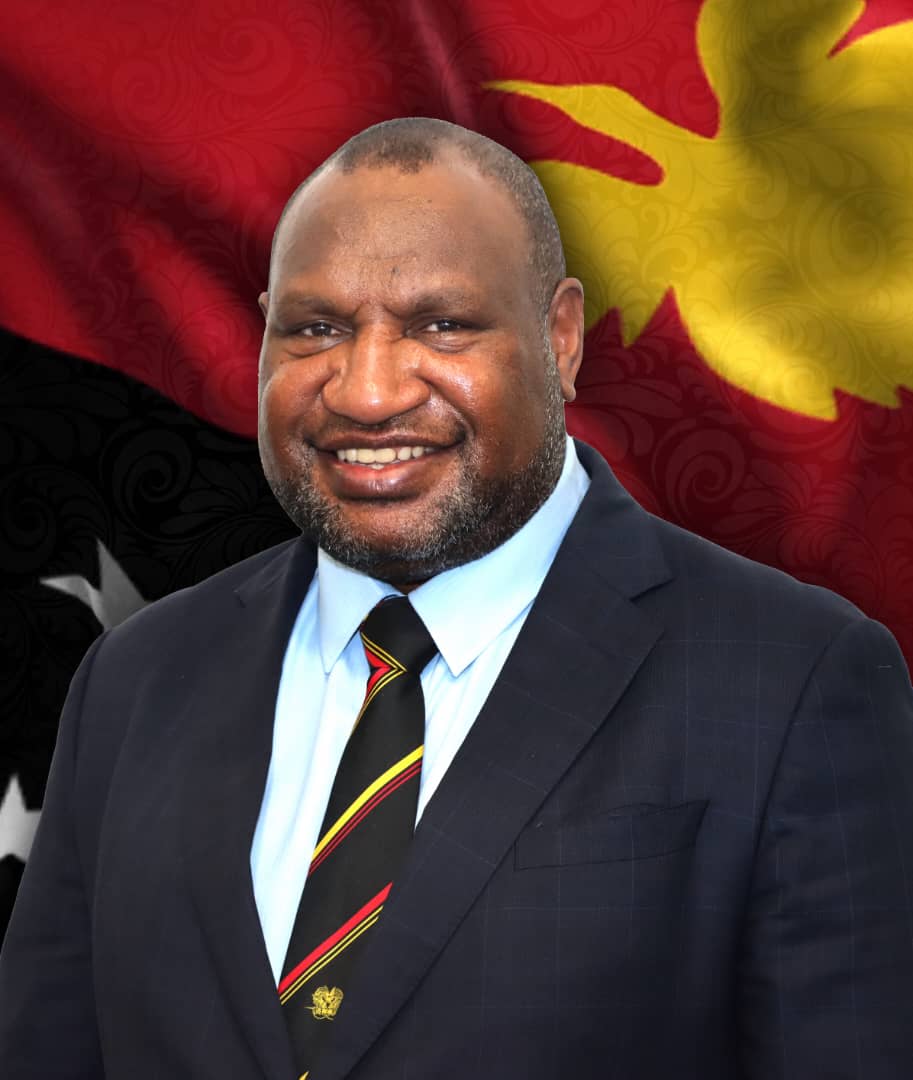

Prime Minister Hon. James Marape says the 2026 National Budget, to be delivered on Tuesday by Treasurer Hon. Ian Ling-Stuckey, will maintain the Government’s steady fiscal direction, strengthen essential services, and reinforce the long-term development priorities under MTDP IV and the national Reset PNG@50 programme.
For the first time, the National Budget will pass the K30 billion mark, with over 88% of it funded from domestic revenue — achieved without raising taxes.The Prime Minister said the Government’s fiscal position reflects the success of its disciplined long-term planning.
“This Budget is fully aligned with the Government’s 13-Year Budget Repair Plan, which lays out a clear pathway to reduce debt, strengthen revenue, and restore long-term fiscal stability. We remain firmly committed to this plan. Our debt-reduction programme is tracking on target, and in 2026 we will record one of the smallest deficits in our nation’s recent history — bringing us much closer to a balanced budget by 2027.
“Our domestic revenue performance continues to improve, not because we are introducing new taxes, but because the size and activity of the local economy are expanding. The increased volume of collections reflects real economic growth and stronger compliance across the system.”
Prime Minister Marape emphasised that this year’s Budget is not aimed at dramatic shifts or surprises, but rather consolidating gains made over the past five years while responsibly managing inflation and supporting frontline services.
“The 2026 Budget will present no surprises. It maintains stability, consistency, and disciplined planning. We are staying the course to ensure effective services and responsible growth,” he said.
Recurrent spending maintained with responsible adjustments
Prime Minister Marape said recurrent expenditures will be prioritised towards core services in 2026 ensuring salaries, goods, and services are fully supported for key priority areas .
He noted that the Government is committed to protecting core public services so that schools, hospitals, police, and frontline agencies continue to function without disruption.
“We are maintaining recurrent allocations at responsible levels. The public service must operate effectively and consistently, especially as we tighten procurement and reduce wastage. But we are allowing recurrent to grow where it provides frontline services – for teachers, doctors, nurses, police and other core areas”
He also confirmed that the GST relief on essential household items, introduced last year to great success, will continue to the end of 2026. “This measure remains in place because easing the cost of living for families is a priority, and we have already accounted for it in the Budget,” he said.
Development priorities remain firmly anchored in MTDP IV
The 2026 development budget continues to drive key areas that unlock growth, improve services, and connect communities. These include:
• Connect PNG — funding for national highways, missing links, bridges, and rural road access.
• Health infrastructure — investment in provincial hospitals, rural health facilities, and essential medical equipment.
• Education infrastructure — classrooms, student accommodation, teacher housing, and digital learning capacity.
• Law and justice — support for police expansion, judicial services, and community law-and-order programmes.
• Economic enablers — strengthening regulatory capacity and infrastructure that supports the resource and non-resource economies.
The Prime Minister emphasised that agriculture will again feature strongly. “Agriculture remains central to our economic diversification effort. We will continue to support coffee, cocoa, vanilla, oil palm, livestock, food crops, and downstream processing. This is where most of our people earn their livelihoods.”
Strong instructions on discipline and accountability
With five weeks remaining in the current fiscal year, Prime Minister Marape issued firm instructions to public servants, particularly Departmental Heads, Provincial Administrators, District CEOs, PHAs, and Section 32 Officers.
They must:
• Remain within their approved expenditure
• Retire commitments properly
• Follow annual work plans
• Avoid unplanned or rush spending in December
“Do not go outside your approved expenditure limit. Retire commitments properly and complete your 2025 responsibilities in an orderly manner. The December rush must stop.”
No Christmas parties or unnecessary extra spending
The Prime Minister made it clear that Government funds must not be used for non- essential activities.
“There will be no Christmas parties funded by public money. Gone are the days of excessive spending on hire cars, hotels, and celebrations. We celebrated our 50th Independence anniversary this year. Now it is time to focus on work.”
He said this directive aligns with the Government’s ongoing efforts to strengthen governance, accountability, and prudent financial management.
A budget grounded in the need for security with growth
Prime Minister Marape said the 2026 Budget is the first full financial instrument of the post-PNG@50 era and sets the tone for the nation’s next development chapter. “We are resetting our country for the next 50 years. This Budget is about discipline, responsible leadership, and making every kina count for our people. We must leave behind old habits and build a modern, efficient, and performance-driven public service.”
He urged all Government agencies and subnational authorities to work collaboratively, deliver results, and ensure that funding translates into visible improvements in services and infrastructure.
A message to the nation
The Prime Minister concluded by reaffirming that the 2026 National Budget will:
• Strengthen service delivery
• Support infrastructure and economic growth
• Maintain financial stability
• Reduce wastage
• Prepare PNG for long-term, sustainable development
“This is a Budget of continuity and confidence. It keeps the nation stable while pushing forward the programmes that matter most to our people.”