
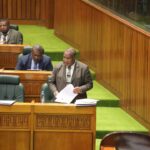
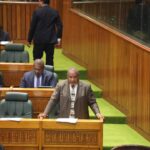
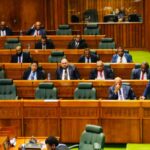
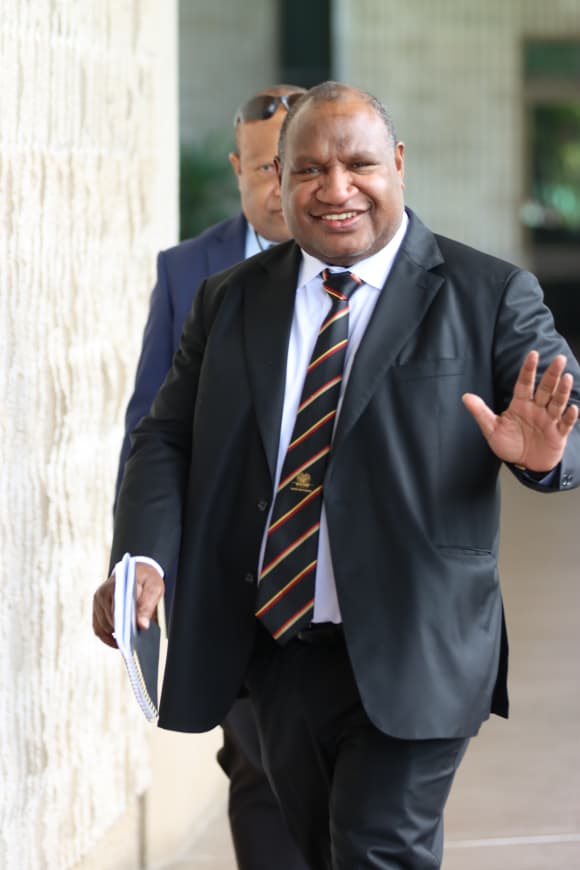

Prime Minister James Marape has told Parliament that no mining activity will proceed on Goodenough Island in Milne Bay without strict adherence to the law, proper landowner consultation, and full engagement with provincial and district authorities.
His remarks followed a strong warning from Opposition Leader and Kiriwina–Goodenough MP Hon. Douglas Tomuriesa, who raised concerns about secretive mining wardens’ visits, illegal foreign incursions, and reports of exceptionally rich gold deposits beneath the island.
Mr Tomuriesa told Parliament that a mining warden’s hearing conducted in October revealed that up to 80% of Goodenough Island may contain gold, with reported purity levels as high as 88%.
He said this had triggered:
• Increasing interest from outsiders
• Two recent incidents involving illegal foreign miners
• A mining warden’s visit conducted without notifying the district or provincial government
• Failure to inform landowners so they could attend and participate
• Community fears about potential displacement of the island’s 30,000 residents
“You cannot just go and mine 80% of the island and leave our people stranded,” Tomuriesa said.“If you displace my people, where will you put them? Why target a fully inhabited and culturally rich island when many uninhabited areas elsewhere have gold?”
He questioned why officers of the Mining Department were travelling into his electorate without notice and called for transparency and protection of customary land rights.
Prime Minister Marape told Parliament he had no prior visibility of the Mining Department’s visit but made clear that all government agencies must operate within the law.
He said:
• Landowners must be consulted before any mining activity occurs
• District and provincial administrations must be informed of all official visits
• No investor or government officer can act unilaterally
• Customary rights are paramount
“No one will come with a bulldozer and bulldoze your rights,” the Prime Minister told Parliament.“Our people have traditional and God-given rights over where they live. No official or foreign investor can force anything on them.”
PM Marape also noted that while mining is important for economic growth, it cannot override the welfare of local communities or the environment.
“We need mining exploration, but it must be done by taking our people with us. They must participate at every stage.”
The Prime Minister told Parliament he would immediately contact the Mining Department to determine what occurred on Goodenough Island and would provide the Opposition Leader with a full written briefing.
He said future visits by national agencies must include:
• Advance notice to provincial and district authorities
• Engagement with local leaders and public servants
• Clear communication to landowners before any hearings or inspections
PM Marape described Goodenough as a pristine island of cultural and environmental significance, telling Parliament that nothing will happen without the approval of its custodians.
“Goodenough is a resource-rich island, but its people are the custodians,” he said.
“Whatever happens must be for their benefit, with their full awareness and participation.”
He said he may release a public statement once he receives a full account from the department.
The debate comes amid rising reports of illegal mining activities across Papua New Guinea, especially in remote regions. Goodenough Island—long known for agriculture, cocoa, and traditional subsistence living—has suddenly become the focus of interest due to reports of extraordinarily high-grade gold.
PM Marape told Parliament he will:
• Review the conduct of departmental officers
• Provide a written report to Mr Tomuriesa
• Ensure all future departmental visits follow proper notice procedures
• Protect landowner rights and the island’s environment
For now, the Government’s position is clear: any mining or exploration on Goodenough Island can proceed only after due process and with informed landowner consent.